
Understanding What Your Credit Score Really Means
If you’ve ever applied for a credit card, financed a car, rented an apartment, or explored getting a mortgage, you’ve probably heard someone mention your credit score.
For many people, those two words can feel intimidating.
You may have heard that a “good” credit score opens doors, while a poor one creates obstacles.
But what exactly is a credit score?
How is it calculated?
And what does it actually tell lenders about you?
Perhaps most importantly:
What is considered a good credit score?
The answer is more nuanced than many people realize.
There isn’t one universal number that instantly determines your financial future.
Instead, your credit score is one piece of information that lenders and other organizations may use—alongside factors such as your income, existing debt, employment, and application details—when evaluating financial decisions.
Think of your credit score as a summary of how you’ve managed borrowed money over time.
It doesn’t measure your income.
It doesn’t determine your personal worth.
And it doesn’t permanently define your financial future.
Instead, it reflects patterns found in your credit history and can change as your financial habits change.
The encouraging news is that credit scores are not fixed.
Whether you’re building credit for the first time, recovering from past financial challenges, or simply trying to strengthen an already solid credit history, consistent financial habits can influence your score over time.
In this guide, you’ll learn:
- What a credit score is.
- What different credit score ranges generally mean.
- How lenders may use credit scores.
- The factors that influence your score.
- Common myths about credit.
- Practical ways to build and maintain healthy credit over time.
By the end of this guide, you’ll understand not only what a good credit score looks like but also how responsible financial habits can support many of your long-term financial goals.
💡 Action Moment: Build Financial Clarity Before Building Better Credit
Improving your credit score starts long before you apply for your next credit card or loan.
It begins with understanding your overall financial situation.
Ask yourself:
- How much debt do I currently have?
- Am I consistently paying my bills on time?
- How much of my available credit am I using?
- Do I have an emergency fund?
- What financial goals am I working toward?
These questions help you see the bigger picture.
That’s why 7 Days to Financial Clarity™ is an excellent place to begin.
The guide helps you organize your income, expenses, savings, debts, and financial priorities so you can make informed decisions that support both your credit health and your long-term financial goals.
Improving your credit becomes much easier when you understand how it fits into your overall financial plan.
What Is a Credit Score?
A credit score is a numerical representation of information contained in your credit history.
It helps lenders estimate the likelihood that a borrower will repay borrowed money according to the agreed terms.
While different credit scoring models exist, most assign a score within a specific numerical range based on information reported in your credit file.
The score itself doesn’t explain every detail of your financial history.
Instead, it summarizes patterns such as whether you’ve made payments on time, how much available credit you’re using, how long you’ve managed credit accounts, and other factors reflected in your credit report.
Because lenders have different lending policies and may use different scoring models, your credit score is typically one factor among several that may be considered during an application.
Your Credit Score Is Not Your Credit Report
Many people use the terms credit score and credit report interchangeably, but they are different.
Your credit report is a detailed record of your credit history.
It may include information such as:
- Credit accounts.
- Credit cards, loans, and other reported accounts.
- Payment history.
- A record of payments made over time.
- Credit inquiries.
- Records of certain requests to review your credit file.
- Publicly reported financial information where applicable.
- The type of information reported can vary depending on applicable laws and reporting practices.
Your credit score is a numerical summary generated from information contained within that credit history.
Think of it this way:
Your credit report is like a complete school transcript.
Your credit score is similar to an overall grade calculated from that transcript.
Both provide useful information, but they serve different purposes.
Why Credit Scores Matter
Credit scores may influence many financial decisions.
Depending on the situation, organizations may consider your credit history when evaluating applications for:
- Credit cards.
- Lenders may review your credit profile when deciding whether to approve an application and under what terms.
- Auto loans.
- Your credit history may be one factor considered when financing a vehicle.
- Mortgages.
- Mortgage lenders often review credit information alongside income, assets, and other financial details.
- Personal loans.
- Credit history may influence approval decisions and available loan terms.
- Rental applications.
- Some landlords review credit information as part of their tenant screening process, where permitted by law.
- Utility or service accounts.
- Certain providers may review credit information before establishing new accounts.
Each organization establishes its own approval criteria.
A credit score alone does not guarantee approval or denial.
Instead, it contributes to a broader evaluation of financial responsibility.
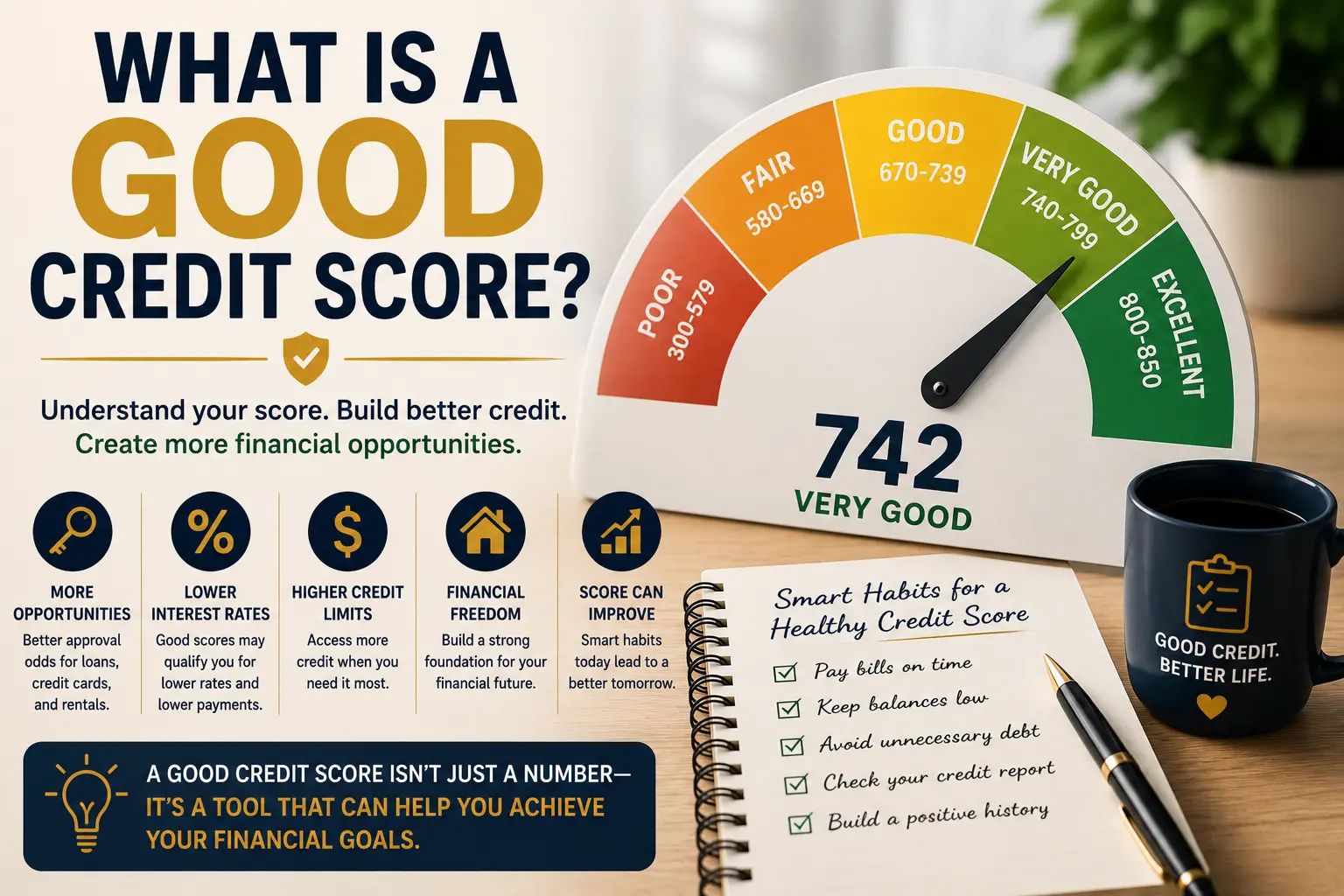
What Is Considered a Good Credit Score?
One of the biggest misconceptions is that there is a single number everyone should strive for.
In reality, many credit scoring models group scores into general ranges.
Although the exact ranges can vary by scoring model, many lenders and educational resources commonly describe them in categories similar to the following:
- Poor
- Scores in this range may indicate a history of greater credit risk, making it more difficult to qualify for some financial products.
- Fair
- Borrowers may qualify for certain products, although options and terms can differ significantly.
- Good
- Many lenders generally view scores in this range as demonstrating responsible credit management, though approval decisions still depend on multiple factors.
- Very Good
- Higher scores often reflect a strong history of managing credit responsibly over time.
- Excellent
- Scores near the top of the scoring range generally indicate long-term responsible credit habits and a well-established credit history.
Rather than becoming overly focused on reaching a specific number, it’s usually more productive to build healthy financial habits that naturally support long-term credit improvement.
Your Credit Score Changes Over Time
A credit score isn’t permanent.
It changes as new information is added to your credit history.
For example, your score may change when:
- You make payments consistently.
- Positive payment history can strengthen your credit profile over time.
- You miss payments.
- Late or missed payments may negatively affect your credit history.
- You reduce outstanding balances.
- Lower credit utilization may positively influence certain scoring models.
- You open or close credit accounts.
- Changes to your credit accounts can affect your overall credit profile.
Because your financial behavior continues to evolve, your credit score can evolve as well.
This means today’s score doesn’t determine tomorrow’s opportunities.
Responsible financial habits practiced consistently over time can help strengthen your credit profile.
Good Credit Is Built Through Habits
Many people search for a quick way to increase their credit score.
In reality, healthy credit is usually built through consistent financial habits rather than shortcuts.
Those habits often include:
- Paying bills on time.
- Payment history is widely recognized as an important component of many credit scoring models.
- Managing debt responsibly.
- Borrowing within your means helps maintain financial stability.
- Using available credit thoughtfully.
- Keeping balances manageable may support healthier credit utilization.
- Reviewing your credit information periodically.
- Monitoring your credit helps you identify inaccuracies and stay informed.
Small, responsible decisions repeated consistently often have a greater long-term impact than attempting rapid changes.
Credit Is a Tool—Not a Goal
It’s easy to become fixated on reaching a certain score.
But the purpose of building good credit isn’t simply to achieve a higher number.
Good credit supports broader financial goals.
It may help you qualify for financing when needed, expand your financial options, and demonstrate responsible credit management.
More importantly, responsible credit habits often go hand in hand with other healthy financial behaviors such as budgeting, saving, reducing unnecessary debt, and planning for the future.
When viewed this way, improving your credit score becomes part of building overall financial confidence rather than an isolated objective.
You’re already investing time in improving your finances, and that’s something to be proud of. Before you continue, download our free 7 Days To Financial Clarity™ workbook and start putting these ideas into action.

What Affects Your Credit Score?
If you’ve ever searched online for ways to improve your credit score, you’ve probably encountered countless tips, tricks, and shortcuts.
Some are helpful.
Others are misleading.
The truth is that credit scores are designed to reflect patterns of financial behavior over time rather than isolated actions.
You can’t usually transform your credit profile overnight.
Instead, stronger credit is typically built through consistent financial habits practiced month after month.
Understanding the factors that influence your credit score allows you to make informed decisions instead of relying on myths or guesswork.
Let’s explore the major elements that commonly affect credit scores.
Payment History
When people ask what’s most important in building good credit, payment history is usually one of the first things discussed.
Payment history reflects whether you’ve paid your credit obligations according to the agreed terms.
Consistently making payments on time demonstrates financial responsibility over an extended period.
On the other hand, missed or significantly late payments may negatively affect your credit history.
Even if you can’t pay more than the required minimum on a credit card, paying by the due date helps maintain a positive payment record.
Many people find it helpful to:
- Set automatic payments.
- Automation can reduce the risk of accidentally missing a due date.
- Use calendar reminders.
- Digital reminders provide an extra layer of protection.
- Schedule payments shortly after payday.
- Paying when income arrives may make budgeting easier.
Building a habit of paying on time is one of the simplest and most effective ways to support healthy credit over the long term.
Credit Utilization
Another important concept is credit utilization.
Credit utilization refers to how much of your available revolving credit you’re currently using.
For example, imagine you have a credit card with a $2,000 credit limit.
If your balance is $400, you’re using a relatively small portion of your available credit.
If your balance is $1,800, you’re using a much larger portion.
Many educational resources suggest that lower utilization may be viewed more favorably by certain credit scoring models, although no specific percentage guarantees a particular outcome.
The important idea isn’t chasing a magic number.
It’s avoiding the habit of consistently carrying balances that consume most of your available credit.
Using credit responsibly demonstrates that you’re managing available borrowing capacity thoughtfully rather than relying heavily on it.
Length of Credit History
Your credit history isn’t only about how you’ve managed credit.
It’s also about how long you’ve managed it.
Generally speaking, a longer record of responsible credit use provides lenders with more historical information.
This doesn’t mean young adults or people new to credit are automatically at a disadvantage forever.
Everyone begins somewhere.
As time passes and positive financial habits continue, your credit history naturally becomes more established.
Because of this, it’s often wise to think carefully before closing long-standing credit accounts, especially if they’re in good standing and fit within your overall financial strategy.
Every financial situation is different, but understanding how account history contributes to your overall credit profile can help you make informed decisions.
Types of Credit
You may also hear people discuss credit mix.
Credit mix refers to the variety of credit accounts appearing in your credit history.
Examples may include:
- Credit cards.
- Revolving credit that allows borrowing up to an approved limit.
- Auto loans.
- Installment loans used to finance vehicles.
- Student loans.
- Installment loans for education expenses.
- Mortgages.
- Long-term loans used to finance a home purchase.
Different scoring models may consider the variety of responsibly managed accounts as one aspect of a person’s overall credit profile.
However, opening unnecessary accounts simply to increase your credit mix is generally not a good financial strategy.
Only borrow money when it serves a genuine financial purpose.
New Credit Applications
Applying for new credit is a normal part of life.
You might apply for a new credit card, vehicle loan, mortgage, or personal loan.
Some credit applications may result in what’s commonly called a hard inquiry, which can become part of your credit report.
Occasional applications are generally expected.
However, submitting numerous credit applications within a short period may cause lenders to wonder whether you’re experiencing financial difficulty or taking on more debt than you can comfortably manage.
Rather than applying for every available credit offer, it’s usually more beneficial to research products carefully and apply only when they align with your financial needs.
Thoughtful borrowing often supports stronger long-term financial health.
What Doesn’t Directly Affect Your Credit Score?
Many people believe certain financial factors automatically influence their credit score.
Some of these beliefs are misconceptions.
For example, your credit score isn’t generally based directly on:
- Your salary.
- Earning a high income doesn’t automatically produce a high credit score.
- Your savings balance.
- Having substantial savings is excellent for financial security, but savings alone don’t determine your credit score.
- Your occupation.
- Your profession isn’t a direct factor in most credit scoring models.
- Your age.
- Responsible credit behavior matters more than your age.
These factors may still influence lending decisions in other ways, depending on the lender and the type of application.
However, they aren’t generally direct components of credit scoring models.
Common Credit Score Myths
Because credit scores affect many financial decisions, misconceptions spread easily.
Let’s examine a few of the most common myths.
Myth #1: Checking Your Own Credit Score Hurts It
Many people avoid checking their own credit because they’re worried it will lower their score.
In many situations, reviewing your own credit information is considered a soft inquiry and does not negatively affect your credit score.
Regularly reviewing your credit can actually help you identify inaccuracies, monitor progress, and stay informed about your financial health.
Myth #2: Carrying a Credit Card Balance Improves Your Credit
Some people believe they must carry debt every month to build good credit.
In reality, responsible credit management—not unnecessary interest charges—is what matters.
Paying your balance responsibly demonstrates that you can manage credit without relying on revolving debt as a long-term habit.
Myth #3: Closing Every Credit Card Improves Your Score
Closing a credit card isn’t automatically good or bad.
The effect depends on your overall financial situation.
For example, closing an account could change your available credit, potentially affecting your overall credit utilization.
Before closing an account, consider how the decision fits within your broader financial strategy.
Myth #4: One Mistake Ruins Your Credit Forever
Financial setbacks happen.
Perhaps you experienced unemployment, illness, or another unexpected challenge.
While negative events can affect your credit history, they don’t permanently define your financial future.
Consistent responsible habits over time can strengthen your credit profile moving forward.
Improving credit is usually a gradual process rather than an instant one.
Credit Scores Support Financial Goals
It’s easy to become focused on achieving a particular number.
However, your credit score isn’t the destination.
It’s a tool that may help support important financial goals.
For example, healthy credit habits may contribute to opportunities such as:
- Financing a vehicle.
- Responsible credit management can strengthen your overall borrowing profile.
- Purchasing a home.
- Mortgage lenders often consider credit information alongside many other financial factors.
- Starting a business.
- Some business financing options may include a review of personal credit history.
- Qualifying for certain financial products.
- Eligibility depends on the lender’s criteria and many factors beyond your credit score.
Rather than chasing a specific score for its own sake, focus on building financial habits that support both your credit health and your broader financial future.
💡 Action Moment: Connect Your Credit Score to Your Financial Goals
A stronger credit profile becomes more meaningful when it’s connected to something important in your life.
That’s where the LookingAtFinance Financial Goal Assessment can help.
Instead of asking, “How can I increase my credit score?”, the assessment encourages you to ask, “Why do I want stronger credit?”
Perhaps your goal is to:
- Purchase your first home.
- Understanding your financial priorities can help you prepare for the responsibilities of homeownership.
- Finance a reliable vehicle.
- Responsible credit habits may support future borrowing opportunities when combined with other financial strengths.
- Pay off existing debt.
- Improving your overall financial position often goes hand in hand with healthier credit habits.
- Build long-term financial security.
- Good credit can complement budgeting, saving, and investing as part of a balanced financial plan.
- Create greater financial freedom.
- Strong financial habits—including responsible credit management—can expand your options over time.
When your credit-building efforts support a clear purpose, it’s often easier to stay motivated and make consistent financial decisions.
Small Habits Create Long-Term Results
One of the biggest lessons about credit is that dramatic changes are rarely the result of dramatic actions.
Instead, strong credit is often built through small, responsible habits repeated consistently.
Pay your bills on time.
Borrow thoughtfully.
Monitor your credit information.
Keep learning about personal finance.
Avoid taking on unnecessary debt.
These decisions may seem ordinary today.
But over months and years, they help create a financial history that reflects reliability and responsibility.
Healthy credit isn’t built through shortcuts.
It’s built through consistency.
Knowing your balance is only the beginning. Use our free Debt Payoff Calculator to build a repayment strategy, compare payoff timelines, and take control of your debt with confidence.

How to Build and Improve Your Credit Score
Learning what affects your credit score is only the first step.
The next question most people ask is:
“What can I actually do to improve it?”
The encouraging news is that healthy credit habits are usually straightforward.
They don’t require complicated financial strategies or expensive services.
Instead, they involve making consistent decisions that demonstrate responsible money management over time.
Whether you’re establishing credit for the first time or rebuilding after financial setbacks, progress typically comes from small habits repeated consistently.
Let’s look at some of the most effective ways to strengthen your credit profile.
Pay Every Bill on Time
If there’s one habit that consistently supports healthy credit, it’s paying your bills on time.
Payment history is widely recognized as one of the most important factors considered by many credit scoring models.
Each payment you make becomes another opportunity to demonstrate responsible financial behavior.
Life can become busy, and it’s easy to overlook a due date.
Fortunately, there are practical ways to reduce the likelihood of missed payments.
Consider creating a system that works for you.
For example:
- Set up automatic payments.
- Automating at least the minimum payment can help reduce the risk of forgetting a due date.
- Use calendar reminders.
- Scheduling reminders several days before payments are due provides extra time to prepare.
- Review your bills weekly.
- Regular check-ins help you stay aware of upcoming financial obligations.
- Keep a monthly budget.
- Knowing how much money is available for bills makes it easier to plan ahead.
Paying consistently demonstrates reliability over time.
While occasional financial challenges can happen, developing a routine of paying obligations by their due dates supports both your credit profile and your overall financial health.
Keep Credit Card Balances Manageable
Many people focus only on whether they make their monthly payments.
While that’s important, it’s also helpful to consider how much of your available revolving credit you’re using.
Imagine two people who both have credit cards with a $5,000 credit limit.
The first person carries a balance of $300.
The second person carries a balance of $4,700.
Even though both individuals may make their payments on time, their overall credit usage looks quite different.
Maintaining manageable balances can demonstrate that you’re using credit responsibly rather than depending heavily on borrowed money.
Whenever possible:
- Avoid consistently maxing out credit cards.
- High balances may place greater pressure on your overall financial situation.
- Pay more than the minimum payment when your budget allows.
- Reducing balances gradually may strengthen your overall financial position.
- Monitor your spending throughout the month.
- Staying aware of purchases can help prevent balances from growing unexpectedly.
Responsible credit use isn’t about avoiding credit altogether.
It’s about using it thoughtfully.
Build Credit Gradually
One of the biggest misconceptions is that strong credit can be built quickly.
In reality, credit histories develop over time.
Each month of responsible financial behavior contributes another piece to your overall credit profile.
Think of building credit like growing a tree.
You can’t plant a seed today and expect a mature tree tomorrow.
But with consistent care, growth becomes visible over time.
Patience is an important part of the process.
Rather than searching for shortcuts, focus on maintaining healthy habits month after month.
Review Your Credit Reports Regularly
Your credit report contains the information used to generate many credit scores.
Reviewing your report periodically allows you to:
- Verify that personal information is accurate.
- Incorrect identifying information should be corrected promptly.
- Confirm account information.
- Review accounts to ensure they belong to you and reflect accurate reporting.
- Identify possible errors.
- Mistakes sometimes occur, and reviewing your report helps you recognize them.
- Monitor your financial progress.
- Seeing improvements over time can help keep you motivated.
If you notice information you believe is inaccurate, contact the appropriate credit reporting agency and the organization that reported the information to begin the dispute process.
Accurate information benefits both consumers and lenders.
Avoid Applying for Unnecessary Credit
Receiving credit card offers can be tempting.
You may also see advertisements encouraging you to apply for multiple financial products.
Before submitting an application, ask yourself:
- Do I actually need this account?
- Does it support one of my financial goals?
- Can I comfortably manage another financial obligation?
Opening new credit occasionally is a normal part of financial life.
However, applying for accounts simply because they’re available may complicate your financial situation without providing meaningful benefits.
Thoughtful borrowing often supports stronger long-term financial health.
Build an Emergency Fund
At first glance, emergency savings may not seem directly connected to your credit score.
In reality, they often complement one another.
Imagine your car suddenly needs an unexpected repair.
Without savings, you might feel pressured to rely heavily on credit cards or personal loans.
With an emergency fund, however, you may have more flexibility to handle unexpected expenses without increasing debt.
Emergency savings help protect your overall financial stability.
When unexpected expenses arise, having cash available can reduce financial stress and support more consistent credit management.
Strong credit and strong savings often work together.
Reduce Debt Strategically
If you’re carrying several debts, trying to pay everything down at once can feel overwhelming.
Many people find it helpful to create a structured repayment plan.
Some common approaches include:
- Focusing on high-interest debt first.
- Reducing expensive debt may lower the total interest paid over time.
- Paying off smaller balances first.
- Eliminating individual debts can create a sense of momentum for some people.
- Making consistent extra payments when possible.
- Even modest additional payments can gradually reduce balances.
The best strategy depends on your personal financial situation, income, expenses, and overall goals.
What’s most important is choosing a realistic plan you can consistently follow.
If You’re New to Credit
Many young adults and first-time borrowers worry because they don’t yet have a lengthy credit history.
That’s perfectly normal.
Everyone starts somewhere.
Building credit responsibly often begins with simple steps, such as:
- Opening an appropriate credit account when it fits your financial needs.
- Borrow only when you’re prepared to manage the account responsibly.
- Paying every bill on time.
- Consistency is more important than speed.
- Keeping balances manageable.
- Responsible use helps establish positive habits early.
- Monitoring your credit information.
- Understanding your financial profile becomes easier when you review it regularly.
There’s no need to rush.
Responsible habits practiced from the beginning create a strong foundation for the future.
If You’re Rebuilding Your Credit
Financial setbacks can happen for many reasons.
Job loss.
Medical expenses.
Family emergencies.
Unexpected life events.
If your credit has been affected, remember that today’s situation doesn’t determine tomorrow’s possibilities.
Rebuilding credit usually involves returning to the same healthy habits that build strong credit in the first place.
Focus on:
- Paying current obligations consistently.
- Reliable payment history becomes increasingly valuable over time.
- Reducing existing debt where possible.
- Lower balances may improve your overall financial position.
- Avoiding unnecessary borrowing.
- Thoughtful financial decisions support long-term progress.
- Remaining patient.
- Credit improvement is often gradual rather than immediate.
Progress may feel slow at times.
But steady improvement is still progress.
💡 Action Moment: See How Strong Financial Habits Support Financial Freedom
A healthy credit profile doesn’t exist in isolation.
It’s one part of a much larger financial picture.
That’s why the LookingAtFinance Financial Freedom Calculator can be so valuable.
Rather than focusing only on your credit score, the calculator helps you explore how responsible financial habits may influence your long-term financial future.
For example, you can examine scenarios such as:
- Reducing debt over time.
- Explore how consistent debt repayment may improve your overall financial position while freeing up money for other goals.
- Increasing savings and investments.
- Consider how money that once went toward debt payments might eventually be redirected toward emergency savings, retirement, or investing.
- Building multiple financial strengths.
- Strong credit, healthy savings, manageable debt, and thoughtful investing often work together to support greater financial stability.
The calculator isn’t intended to predict future outcomes or guarantee specific borrowing terms.
Instead, it helps you understand how consistent financial decisions can move you closer to long-term financial freedom.
Common Credit Score Mistakes to Avoid
Building good credit isn’t only about doing the right things.
It’s also about avoiding habits that may slow your progress.
Here are several common mistakes.
Ignoring Bills Until They Become Overdue
Missing payments often creates unnecessary financial stress.
Using reminders, automatic payments, or a budget can help you stay organized.
Spending Beyond Your Means
Credit cards are valuable financial tools.
However, treating available credit as additional income can lead to balances that become difficult to repay.
Whenever possible, make purchases you can comfortably manage within your overall budget.
Believing Quick-Fix Credit Repair Claims
Some advertisements promise dramatic credit improvements in only a few days or weeks.
Be cautious of claims that sound too good to be true.
Healthy credit is generally built through responsible financial behavior over time rather than secret strategies.
Closing Accounts Without a Plan
Closing a credit account may be appropriate in some situations.
However, making changes without understanding how they affect your broader financial picture can have unintended consequences.
Whenever possible, consider the long-term implications before making significant changes to your credit accounts.
Giving Up Too Soon
Perhaps the biggest mistake is becoming discouraged.
Many people expect immediate improvement.
In reality, credit often improves gradually.
Every on-time payment.
Every reduced balance.
Every responsible financial decision.
These actions build momentum over time.
Patience is one of the most valuable tools in building healthy credit.
Healthy Credit Reflects Healthy Financial Habits
One of the most important lessons about credit is that strong scores are often a by-product of responsible financial management.
When you budget carefully, save consistently, borrow thoughtfully, pay bills on time, and avoid unnecessary debt, you’re not just improving your credit profile.
You’re strengthening your overall financial foundation.
That’s why credit should never be viewed as a separate financial goal.
It’s part of a larger journey toward financial confidence, stability, and freedom.
Every financial journey is different. Take our free
Financial Goal Assessment
to discover which area deserves your attention first and receive a clear direction for your next financial milestone.

A Real-Life Example: Two Borrowers, Two Different Outcomes
A credit score doesn’t improve by accident.
It’s usually the result of many financial decisions made over time.
Consider the stories of two fictional borrowers, Alex and Maria.
Both started with similar incomes.
Both had access to credit cards.
Both wanted to build a better financial future.
However, their financial habits led them down very different paths.
Alex’s Story
When Alex received his first credit card, he viewed it as extra spending money.
He regularly made purchases without thinking about whether he could comfortably repay them.
Some months he paid only the minimum payment.
Other months he forgot payment deadlines altogether.
Whenever another credit card offer arrived in the mail, he applied for it.
Eventually, several cards carried high balances.
Unexpected expenses made the situation even more difficult because Alex had very little emergency savings.
Over time, managing multiple debts became stressful.
Although Alex continued working hard, his financial flexibility became increasingly limited because much of his income was committed to debt payments.
The biggest challenge wasn’t one single financial decision.
It was a pattern of small decisions repeated over many months.
Maria’s Story
Maria also received her first credit card around the same time.
Instead of treating it as additional income, she viewed it as a financial tool.
Before making purchases, she asked herself whether she could comfortably repay them.
She tracked her spending using a monthly budget.
Whenever possible, she paid her balance in full or reduced it steadily over time.
She also built an emergency fund so unexpected expenses wouldn’t automatically lead to additional borrowing.
When she considered applying for new credit, she did so thoughtfully rather than impulsively.
As the years passed, Maria’s responsible financial habits helped her establish a strong credit history.
More importantly, those same habits strengthened her overall financial health.
The Difference Wasn’t Income
Many people assume that higher income automatically leads to better credit.
While having a larger income can certainly make financial management easier, income alone doesn’t determine your credit score.
The difference between Alex and Maria wasn’t how much they earned.
It was how they managed the financial tools available to them.
Maria understood that responsible borrowing, consistent payments, thoughtful budgeting, and emergency savings all worked together.
Her credit score reflected those healthy habits.
Credit Score Improvement Checklist
Use this checklist to evaluate your current credit habits and identify areas where you can continue strengthening your financial foundation.
Build Strong Payment Habits
☐ Pay every bill by its due date.
☐ Set up automatic payments or reminders.
☐ Review your monthly bills regularly.
☐ Address payment issues early if financial challenges arise.
☐ Make budgeting part of your monthly routine.
Manage Credit Responsibly
☐ Keep credit card balances manageable.
☐ Avoid relying on credit for everyday living expenses.
☐ Borrow only when necessary.
☐ Understand the terms of any credit product before applying.
☐ Review your available credit periodically.
Strengthen Your Financial Foundation
☐ Build and maintain an emergency fund.
☐ Reduce unnecessary debt over time.
☐ Monitor your credit reports for accuracy.
☐ Continue learning about personal finance.
☐ Connect your credit decisions to long-term financial goals.
Think Long Term
☐ Focus on consistency rather than perfection.
☐ Avoid “quick fix” credit repair promises.
☐ Review your financial goals annually.
☐ Celebrate steady progress.
☐ Remember that healthy financial habits benefit more than just your credit score.
Frequently Asked Questions
What credit score is considered good?
Different credit scoring models use different ranges, so there isn’t one universal definition of a “good” credit score.
Generally, scores in the “good” range indicate a history of responsible credit management. However, lenders may also consider factors such as income, existing debt, employment, and the specific type of credit you’re applying for.
Rather than focusing only on a number, concentrate on building healthy financial habits that support long-term credit improvement.
How long does it take to improve a credit score?
There’s no single timeline.
Improvement depends on factors such as your current credit history, payment behavior, debt levels, and the information being reported to the credit bureaus.
Some changes may be reflected relatively quickly, while building a long history of responsible credit management often takes much longer.
Consistency is usually more important than speed.
Can I build good credit without carrying debt?
Responsible use of credit doesn’t necessarily require carrying unnecessary debt from month to month.
Managing credit accounts responsibly, making payments on time, and borrowing thoughtfully are generally more important than maintaining ongoing balances simply for the sake of your credit score.
Should I close old credit cards?
The answer depends on your individual financial situation.
Closing an account may affect your overall credit profile, including your available credit and the length of your credit history.
Before closing any account, consider how the decision fits into your overall financial plan.
If you’re unsure, speaking with a qualified financial professional may be helpful.
What should I do if I find an error on my credit report?
Review the information carefully.
If you believe something is inaccurate, contact both the credit reporting agency and the organization that reported the information.
Keeping your credit reports accurate is an important part of managing your financial health.
Is a perfect credit score necessary?
No.
Many people achieve important financial goals without having the highest possible credit score.
Instead of striving for perfection, focus on developing responsible financial habits that support your broader financial objectives.
Strong financial management is far more important than chasing a perfect number.
Final Thoughts
A credit score is an important financial tool, but it should never become your only measure of financial success.
At its core, a good credit score reflects a pattern of responsible behavior.
Paying bills on time.
Managing debt wisely.
Borrowing thoughtfully.
Planning ahead.
Those habits don’t just support your credit profile.
They strengthen your overall financial life.
Remember that your credit score isn’t fixed.
It changes as your financial habits change.
If you’re just beginning your credit journey, every responsible decision helps build your history.
If you’re rebuilding after financial setbacks, every positive step moves you forward.
Improving your credit isn’t about finding shortcuts.
It’s about creating a financial lifestyle that supports lasting stability and opportunity.
Over time, those consistent habits may not only strengthen your credit profile but also improve your confidence in managing money.
Your Next Steps
Understanding your credit score is an important first step.
Putting that knowledge into action is where real progress begins.
Here’s how to continue building a stronger financial future.
Step 1: Build Financial Clarity
Download 7 Days to Financial Clarity™ to organize your finances before focusing on improving your credit.
The guide helps you understand:
- Your income.
- Knowing how much money comes in each month helps you plan realistic financial goals.
- Your expenses.
- Understanding where your money goes can reveal opportunities to strengthen your financial habits.
- Your debt.
- Seeing all of your obligations in one place makes it easier to create a repayment strategy.
- Your savings.
- Building financial security through savings often complements responsible credit management.
- Your financial priorities.
- Clear priorities make it easier to stay focused when making financial decisions.
A clear financial picture provides the foundation for stronger credit and healthier money management.
Step 2: Identify Your Financial Goals
Complete the LookingAtFinance Financial Goal Assessment to understand how your credit score supports your broader financial journey.
Your assessment may reveal priorities such as:
- Buying your first home.
- Financing a reliable vehicle.
- Paying off debt.
- Building an emergency fund.
- Preparing for retirement.
- Creating greater financial freedom.
When your credit-building efforts support meaningful personal goals, it’s easier to stay motivated and make consistent financial decisions.
Step 3: Plan for Long-Term Financial Freedom
Use the LookingAtFinance Financial Freedom Calculator to explore how healthy financial habits can support your long-term goals.
The calculator allows you to examine scenarios such as:
- Reducing debt over time.
- Explore how paying down balances may free up money for savings and investing.
- Increasing long-term savings.
- See how redirecting money toward future goals can strengthen your financial foundation.
- Building multiple financial strengths.
- Understand how budgeting, saving, responsible borrowing, and investing work together over time.
The calculator doesn’t guarantee specific financial outcomes.
Instead, it helps you visualize how consistent financial habits can contribute to greater financial freedom over the years.
Key Takeaway
A good credit score isn’t built through shortcuts or perfect financial decisions. It’s the result of consistently managing your money responsibly over time. By paying your bills on time, borrowing thoughtfully, keeping debt manageable, monitoring your credit, and connecting your financial habits to meaningful goals, you can strengthen both your credit profile and your overall financial future.
You have invested time learning today. Now take the next step by downloading our free 7 Days To Financial Clarity™ workbook and begin building a stronger financial future. Discover practical strategies to save more, improve your credit, protect your finances, and build lasting wealth with confidence.
