
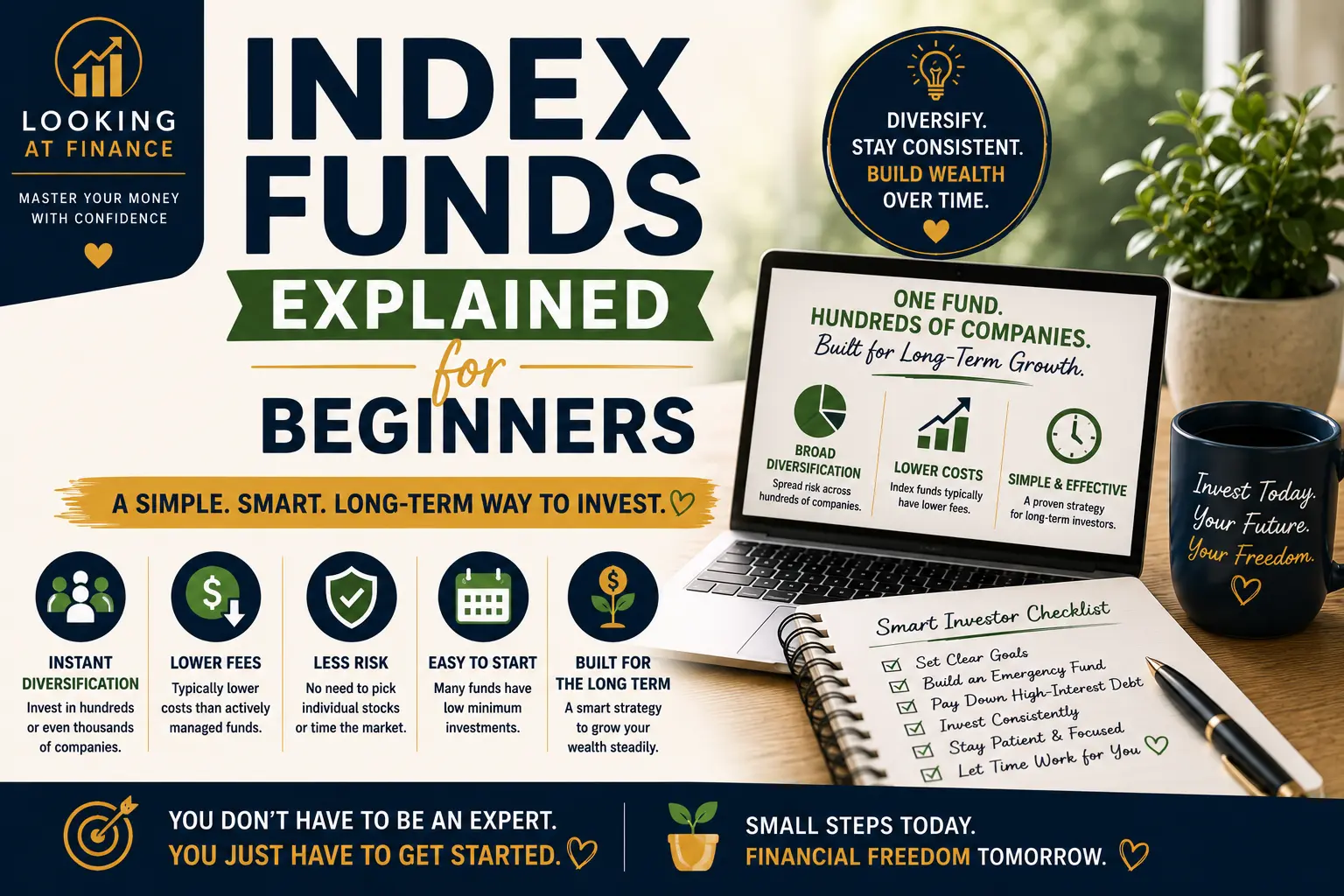
Understanding One of the Simplest Ways to Start Investing
For many beginners, investing feels complicated.
You hear people talking about the stock market, mutual funds, exchange-traded funds (ETFs), dividends, market indexes, portfolio diversification, and economic trends.
Some investors spend hours each day researching companies, reading financial news, and trying to predict which stocks will rise next.
It’s no surprise that many people decide investing simply isn’t for them.
Others delay investing for years because they’re afraid of making a costly mistake.
They worry about buying at the wrong time, choosing the wrong company, or losing their savings during a market downturn.
While those concerns are understandable, there’s an important fact many new investors don’t realize.
You don’t have to become a stock market expert to begin building wealth.
In fact, many experienced investors—including some of the world’s most successful long-term investors—have consistently supported a surprisingly simple approach for most people: investing in index funds.
Rather than trying to identify the next winning company, index funds allow you to invest in hundreds or even thousands of businesses through a single investment.
Instead of relying on one company’s success, you participate in the performance of an entire section of the market.
This approach helps reduce risk, keeps investing simple, and allows many people to focus on what matters most: investing consistently over the long term.
That doesn’t mean index funds are risk-free.
Like all investments, their value can rise and fall with market conditions.
However, understanding how index funds work can help you make more informed decisions and approach investing with greater confidence.
In this guide, you’ll learn what index funds are, how they work, why they’re popular with beginners, their advantages and disadvantages, the risks involved, and how they may fit into a long-term financial plan.
Whether you’re investing your first $100 or planning for retirement decades from now, understanding index funds is one of the most valuable investing lessons you can learn.
💡 Action Moment: Build Your Financial Foundation First
Before investing, it’s important to understand your overall financial picture.
Investing works best when it’s part of a balanced financial plan rather than a reaction to headlines or social media trends.
Take a few moments to think about questions such as:
- Do I have a monthly budget that I follow?
- Have I started building an emergency fund?
- Am I managing high-interest debt?
- What am I investing for—retirement, a home, education, or long-term wealth?
- How much money could I comfortably invest on a regular basis?
These questions help ensure you’re investing with purpose instead of simply following what others are doing.
That’s exactly why 7 Days to Financial Clarity™ is a valuable first step.
The guide helps you organize your income, expenses, savings, debts, and financial priorities so you can understand where investing fits into your overall financial journey.
A strong financial foundation makes it much easier to invest consistently and confidently over the long term.
What Is an Index Fund?
An index fund is an investment fund designed to track the performance of a particular market index.
Instead of trying to outperform the market by selecting individual companies, an index fund aims to mirror the performance of the index it follows.
To understand this concept, it helps to know what a market index is.
A market index is simply a way of measuring the performance of a group of investments.
Think of it like a scoreboard.
Rather than showing the performance of one company, it reflects how a collection of companies performs over time.
For example, an index might track large companies, companies in a specific industry, or businesses from a particular country.
When the companies in the index perform well overall, the index generally rises.
When they perform poorly overall, the index generally falls.
An index fund seeks to reflect those movements by investing in the companies that make up the index.
A Simple Analogy
Imagine you’re invited to judge the quality of an entire fruit orchard.
One approach would be to pick a single apple from one tree and assume it represents the whole orchard.
If that apple happens to be excellent, you might conclude the orchard is excellent.
If it’s poor, you might wrongly assume every tree produces poor fruit.
A better approach would be to sample fruit from many different trees.
Doing so gives you a much broader picture.
Investing in a single company is somewhat like judging the orchard by one apple.
Investing through an index fund is more like sampling fruit from hundreds of trees at once.
If one tree has a poor season, the others may help balance the overall result.
This illustrates one of the biggest strengths of index funds: diversification.
What Is Diversification?
Diversification means spreading your investments across multiple assets rather than relying on just one.
The goal isn’t to eliminate risk.
No investment can do that.
Instead, diversification helps reduce the impact that one poorly performing investment may have on your overall portfolio.
Imagine investing all your money in a single company.
If that company experiences serious financial difficulties, your investment could lose significant value.
Now imagine owning small portions of hundreds of companies operating in different industries.
Even if a few companies struggle, others may perform well at the same time.
This broader approach can make your investment journey less dependent on the success or failure of any single business.
That’s one reason diversification is considered a fundamental principle of long-term investing.
How Do Index Funds Work?
An index fund follows a relatively straightforward process.
The fund is designed to hold investments that closely resemble the market index it’s tracking.
For example, if the underlying index includes hundreds of companies, the fund generally invests in those companies in similar proportions.
As the index changes over time, the fund adjusts its holdings to remain aligned with the index.
Because the goal is to follow the index rather than outperform it, this approach is often described as passive investing.
Unlike actively managed funds, where professional managers frequently decide which investments to buy or sell, index funds generally require fewer investment decisions.
This simpler approach often results in lower operating costs, which can benefit investors over the long term.
Passive Investing vs. Active Investing
To understand why index funds have become so popular, it’s helpful to compare passive and active investing.
With active investing, professional managers research companies, analyze financial reports, study economic conditions, and attempt to select investments they believe will outperform the market.
This approach requires ongoing research and frequent buying and selling.
With passive investing, the objective is different.
Rather than trying to beat the market, an index fund seeks to follow it.
The fund simply tracks the chosen index as closely as possible.
Neither approach guarantees better results.
However, many investors appreciate the simplicity, transparency, and generally lower costs associated with passive investing.
Why Index Funds Appeal to Beginners
One reason beginners often feel overwhelmed is the belief that successful investing requires predicting the future.
Questions quickly arise.
Which stock should I buy?
When should I buy?
When should I sell?
What happens if I choose the wrong company?
Index funds reduce much of that uncertainty.
Instead of relying on one investment decision, you’re participating in the performance of an entire market segment.
This allows many new investors to spend less time worrying about individual companies and more time developing consistent investing habits.
For beginners, that shift in focus can be incredibly valuable.
You’re already investing time in improving your finances, and that’s something to be proud of. Before you continue, download our free 7 Days To Financial Clarity™ workbook and start putting these ideas into action.

Part 2: Why So Many Investors Choose Index Funds
Once you understand what an index fund is, the next question naturally becomes:
“Why are so many people investing in them?”
The answer isn’t because index funds promise quick riches.
In fact, they’re often recommended for the opposite reason.
Index funds encourage patience, consistency, and long-term thinking rather than chasing the latest market trend.
Instead of trying to predict which individual company will become the next success story, index fund investors focus on participating in the long-term growth of the overall market.
For many people, this approach feels less stressful and easier to maintain over time.
Let’s explore some of the reasons why.
Diversification: One Investment, Many Companies
One of the greatest advantages of index funds is diversification.
Rather than investing in a single company, an index fund typically spreads your investment across many businesses.
Imagine investing all of your money in one company.
If that business experiences financial trouble, your investment could lose a significant amount of value.
Now imagine owning small portions of hundreds of companies operating across different industries.
Even if some businesses struggle, others may continue growing.
Because your investment is spread across many companies, you’re generally less dependent on the success or failure of any one business.
Diversification doesn’t eliminate investment risk.
The value of an index fund can still rise and fall with market conditions.
However, it helps reduce the impact that one poorly performing company may have on your overall portfolio.
Lower Costs Can Make a Big Difference
Another reason index funds have become so popular is their relatively low operating costs.
Every investment fund has expenses.
These costs are often expressed as an expense ratio, which represents the annual cost of managing the fund.
Because index funds are designed to follow an existing market index rather than constantly buying and selling investments, they generally require less day-to-day management than actively managed funds.
Lower operating costs may leave more of your investment working for you over time.
Although the difference between a higher and lower expense ratio may appear small in a single year, those costs can accumulate over many years of investing.
That’s one reason experienced investors often pay close attention to fees before selecting any investment.
Simplicity Reduces Emotional Investing
One of the biggest challenges for new investors isn’t understanding the market.
It’s managing emotions.
Markets naturally rise and fall.
During periods of strong growth, people often feel excited and want to invest more.
During market declines, fear can tempt investors to sell at exactly the wrong time.
Index funds encourage a different mindset.
Instead of reacting to daily headlines or short-term market movements, many index fund investors focus on investing consistently over many years.
This long-term perspective can make it easier to stay disciplined during periods of market uncertainty.
Rather than asking,
“What will the market do next week?”
They ask,
“Where could my investments be in ten, twenty, or thirty years?”
That shift in thinking often leads to more consistent investing habits.
Index Funds Don’t Try to Beat the Market
Some investment managers spend enormous amounts of time trying to outperform the stock market.
They research companies, analyze financial statements, study economic reports, and adjust their portfolios based on changing market conditions.
Index funds take a different approach.
Instead of trying to outperform the market, they simply aim to follow it.
This doesn’t mean index funds always produce positive returns.
Like the overall market, they experience periods of growth and periods of decline.
However, many investors appreciate knowing exactly what the fund is designed to do.
Its goal isn’t to predict the future.
Its goal is to participate in the long-term performance of the market it tracks.
Why Time Is One of Your Greatest Investing Advantages
Many beginners focus on how much money they need before they can start investing.
In reality, time is often one of the most valuable resources an investor has.
Consider two people.
One begins investing modest amounts in their twenties.
The other waits until their forties before making much larger contributions.
Although the second investor contributes more money each month, the first investor may still accumulate greater wealth over time because their investments have had more years to grow.
This is one reason financial educators often encourage people to begin investing as early as they reasonably can.
Starting early doesn’t guarantee better investment performance.
However, it gives your investments more time to experience long-term market growth and the potential benefits of compounding.
Understanding Your Risk Tolerance
Every investment involves some level of risk.
Index funds are no exception.
The value of your investment may increase or decrease depending on market conditions.
That’s why understanding your risk tolerance is so important.
Risk tolerance refers to your ability—and your willingness—to experience fluctuations in the value of your investments.
Some people remain calm when markets decline because they understand that short-term volatility has historically been part of long-term investing.
Others become anxious whenever their account balance decreases, even temporarily.
Neither reaction is right or wrong.
The important thing is choosing an investment strategy you can comfortably maintain through different market conditions.
Investing in a way that constantly causes stress may lead to emotional decisions that undermine long-term goals.
Your Investment Timeline Matters
Not every financial goal has the same deadline.
Someone saving for retirement thirty years from now may have a very different investment approach than someone planning to buy a home next year.
Generally speaking, longer investment timelines provide more opportunity to recover from temporary market downturns.
Shorter timelines may require a more cautious approach because there is less time for investments to recover if markets decline shortly before the money is needed.
Before investing in index funds—or any investment—ask yourself:
- When will I likely need this money?
- Can I leave it invested for many years?
- How would I feel if the market declined shortly after I invested?
Answering these questions helps you select investments that align with your financial objectives rather than simply following popular trends.
💡 Action Moment: Invest With a Purpose
Successful investing begins with clear goals.
Buying an index fund simply because someone else recommended it isn’t a strategy.
Understanding why you’re investing is.
That’s why the LookingAtFinance Financial Goal Assessment is an important step before building your investment portfolio.
The assessment helps you identify which financial priorities deserve your attention.
For example:
- If your goal is building long-term wealth, index funds may become an important part of a disciplined investment strategy because they offer broad market exposure and encourage consistent investing.
- If you’re saving for retirement, understanding your timeline can help determine how index funds might fit into your retirement planning.
- If your priority is buying a home within a few years, you may decide to balance investment growth with preserving money you’ll need in the near future.
- If you’re paying off high-interest debt, your assessment may suggest focusing on strengthening your financial foundation before increasing long-term investments.
- If your objective is financial freedom, regularly investing in diversified assets over many years may support that journey as part of a broader financial plan.
Investments are tools.
Choosing the right tool becomes much easier when you’re clear about the destination you’re trying to reach.
Common Misconceptions About Index Funds
Although index funds are relatively simple, several misunderstandings still cause confusion.
Let’s address a few of the most common ones.
“Index Funds Are Risk-Free”
They aren’t.
Because index funds invest in financial markets, their value rises and falls along with the markets they track.
There will be periods when account balances decline.
Understanding this reality helps investors maintain realistic expectations.
“You Need Thousands of Dollars to Start”
Many beginners believe investing requires a large amount of money.
Today, many investment platforms allow people to begin investing with relatively modest contributions, depending on the account type and provider.
The important habit isn’t necessarily starting with a large amount.
It’s developing the discipline to invest consistently over time.
“You Must Constantly Monitor the Market”
Some new investors believe successful investing requires watching stock prices every day.
For long-term index fund investors, frequent monitoring is often unnecessary.
Checking your investments occasionally to ensure they still align with your financial goals can be useful, but reacting to every market movement may encourage emotional decision-making rather than thoughtful planning.
“Index Funds Guarantee High Returns”
No investment can guarantee future performance.
Index funds reflect the performance of the markets they track, and markets experience both periods of growth and decline.
Investing should always involve realistic expectations and a long-term perspective.
Patience Is Often More Important Than Perfection
Many beginners delay investing because they worry about choosing the perfect investment or starting at the perfect time.
The truth is that very few people consistently predict market movements with accuracy.
Successful long-term investing is often less about making perfect decisions and more about maintaining good habits.
Regular contributions, patience, diversification, and staying focused on long-term goals have helped many investors build wealth gradually over time.
The objective isn’t to eliminate every risk.
It’s to develop an investment strategy you can confidently follow through different market conditions.
Successful investing isn’t about guessing—it’s about understanding long-term growth. Use our free Investment Growth Calculator to see how regular investing can build wealth over time.

Part 3: How to Start Investing in Index Funds
By now, you’ve learned what index funds are and why they’ve become such a popular choice for long-term investors.
The next question is one almost every beginner asks:
“How do I actually get started?”
The good news is that investing in index funds is often much simpler than people expect.
You don’t need to predict the next market winner.
You don’t need to watch financial news every day.
You don’t need to spend hours researching individual companies.
Instead, the focus shifts toward developing consistent investing habits that you can maintain for years.
Let’s explore the steps involved.
Step 1: Define Your Investment Goal
Every investment should have a purpose.
Before purchasing an index fund, ask yourself why you’re investing.
Perhaps you’re saving for retirement.
Maybe you want to build long-term wealth.
Perhaps you’re planning for your children’s education or hoping to create additional financial security for the future.
Your investment goal influences many later decisions, including:
- How much you’ll invest.
- Your monthly contribution should fit comfortably within your overall budget.
- How long you’ll remain invested.
- Longer timelines often allow greater opportunity for long-term growth.
- How much investment risk you’re comfortable accepting.
- Your goals and timeline help determine an appropriate investment strategy.
Investing becomes much easier when every dollar has a purpose.
Step 2: Choose an Investment Account
Before purchasing an index fund, you’ll typically need an investment account through a brokerage or financial institution.
The types of accounts available depend on your country and financial goals.
Some accounts are designed for retirement savings.
Others are intended for general investing.
Each account type may have different rules regarding taxes, withdrawals, contribution limits, or eligibility.
Before opening an account, take time to understand:
- Any applicable fees.
- Lower account costs may allow more of your money to remain invested.
- Available investment options.
- Not every provider offers the same selection of index funds.
- Educational resources.
- Beginner-friendly tools and support can make the learning process much easier.
Choosing the right account is part of building a solid investing foundation.
Step 3: Understand the Difference Between Index Mutual Funds and Index ETFs
As you begin researching index funds, you’ll often encounter two common investment structures:
- Index mutual funds
- Index exchange-traded funds (ETFs)
Both can provide diversified exposure to a market index.
The primary difference is how they’re bought and sold.
Index mutual funds are generally purchased directly through the fund provider or an investment platform.
Their price is typically calculated once at the end of each trading day.
Index ETFs trade on stock exchanges throughout the day in a manner similar to individual stocks.
Their prices can change while markets are open.
For many long-term investors, both structures can serve similar purposes.
The better choice often depends on factors such as account type, investment preferences, trading flexibility, and costs.
Rather than asking which structure is universally better, ask which one best supports your long-term investing strategy.
Step 4: Start With What You Can Afford
One of the biggest myths about investing is that you need thousands of dollars before you can begin.
That simply isn’t true for many people today.
Many investment platforms allow investors to begin with relatively modest contributions, depending on the provider and account type.
More important than the amount you start with is developing the habit of investing consistently.
Imagine two people.
One waits five years until they feel they have a large amount to invest.
The other begins investing smaller amounts consistently during those same five years.
Although investment returns are never guaranteed, building the habit of regular investing often places the second person in a stronger position because they started earlier.
The goal isn’t perfection.
The goal is consistency.
Why Consistency Often Matters More Than Timing
Many beginners spend months waiting for the “perfect” time to invest.
They hope the market will decline before they buy.
Then, when prices fall, they worry the market may continue falling and delay again.
Eventually, years may pass without investing at all.
The reality is that consistently investing over many years has historically been a more practical strategy for many long-term investors than trying to predict short-term market movements.
No one can consistently forecast every rise and fall of the market.
Rather than attempting to guess the perfect moment, many investors choose to invest regularly according to a schedule that fits their budget.
This approach reduces the pressure of trying to make perfect decisions every time money is invested.
Understanding Compound Growth
One of the most powerful concepts in long-term investing is compound growth.
Compounding occurs when investment earnings remain invested and have the opportunity to generate additional earnings over time.
Imagine planting a small tree.
During the first few years, growth appears slow.
As the tree matures, however, it develops more branches, more leaves, and stronger roots.
Its growth gradually becomes more noticeable.
Long-term investing can work in a similar way.
Early progress may appear modest.
Over many years, however, continued contributions and potential investment growth can create momentum that would have been difficult to achieve through short-term investing alone.
Although future investment returns are never guaranteed, giving your investments time to grow is one reason patience plays such an important role in successful investing.
Market Ups and Downs Are Normal
Every investor experiences market fluctuations.
There will be years when markets perform well.
There will also be years when markets decline.
For beginners, these declines can feel alarming.
Seeing an investment account temporarily lose value may create the temptation to sell immediately.
However, it’s important to remember that short-term market volatility has historically been a normal part of investing.
Markets respond to many factors, including:
- Economic conditions.
- Changes in employment, inflation, and business activity can influence investor confidence.
- Interest rates.
- Borrowing costs may affect company profits and market performance.
- Global events.
- Political developments, natural disasters, and international events can influence financial markets.
- Investor sentiment.
- Optimism and fear often contribute to short-term price movements.
While these events may influence markets temporarily, long-term investors often focus on maintaining their strategy rather than reacting emotionally to every headline.
Reinvesting Can Support Long-Term Growth
Some index funds distribute income generated from dividends or other investment earnings.
Depending on your account and investment options, you may have the opportunity to receive those distributions as cash or reinvest them by purchasing additional fund shares.
Reinvesting means any distributions are used to buy more of the investment instead of being withdrawn.
Over time, this may increase the number of shares you own, allowing future growth or distributions to apply to a larger investment base.
Whether reinvesting is appropriate depends on your financial goals, cash flow needs, and personal circumstances.
For investors focused on long-term growth, reinvesting is often an option worth understanding.
Avoid Trying to “Beat the Market”
Many new investors begin with index funds but eventually become tempted to chase the latest investment trend.
They hear about a rapidly growing company or a popular investment on social media and begin wondering whether they should abandon their long-term strategy.
Occasionally, an individual investment performs exceptionally well.
Unfortunately, predicting those outcomes consistently is extremely difficult.
Many investors discover that constantly buying and selling investments based on short-term news creates unnecessary stress while making it harder to remain disciplined.
Index fund investing encourages a different mindset.
Instead of asking,
“Which investment will double next year?”
The focus becomes,
“How can I continue building wealth steadily over the next several decades?”
💡 Action Moment: See How Consistency Can Make a Difference
Understanding compound growth is much easier when you can explore real numbers.
That’s why the LookingAtFinance Investment Growth Calculator is such a valuable planning tool.
Instead of guessing how your investments might grow, the calculator allows you to estimate potential long-term outcomes based on your own assumptions.
You can experiment with factors such as:
- Your starting investment.
- See how different initial amounts may influence long-term growth.
- Monthly contributions.
- Explore how regularly investing smaller amounts may compare with making infrequent larger investments.
- Investment time horizon.
- Compare the potential impact of investing for 10, 20, or 30 years.
- Estimated annual rate of return.
- Model different scenarios while remembering that actual investment performance will vary and cannot be guaranteed.
The calculator isn’t intended to predict future market returns. Instead, it helps illustrate how consistent investing and time can work together as part of a long-term financial plan.
Common Beginner Mistakes to Avoid
Even though index funds simplify investing, there are still several mistakes new investors should avoid.
Expecting Immediate Results
Investing is generally a long-term process.
Many beginners become discouraged if they don’t see dramatic growth within a few months.
Building wealth usually takes years, not weeks.
Investing Money You’ll Need Soon
Money intended for near-term expenses—such as a house down payment next year or emergency savings—is often better kept in accounts designed for short-term needs rather than long-term market investments.
Your investment timeline should match the purpose of the money.
Ignoring Fees
Even relatively small fees can affect investment growth over many years.
Comparing expense ratios and account fees before investing can help you keep more of your money working toward your financial goals.
Stopping Contributions During Market Declines
Some investors become frightened during market downturns and stop investing altogether.
While every financial situation is different, abandoning a long-term strategy solely because markets have temporarily declined may interrupt the discipline that long-term investing requires.
Staying focused on your goals rather than short-term market movements often supports better long-term decision-making.
Forgetting to Review Your Plan
Although index fund investing doesn’t usually require constant attention, it shouldn’t be completely ignored either.
Review your investments periodically to ensure they still align with your goals, timeline, and overall financial situation.
As your life changes, your investment strategy may need adjustments as well.
Investing Is a Journey, Not a Race
It’s easy to compare yourself with other investors.
You may hear stories about people who started earlier, invested more money, or achieved impressive returns.
Remember that investing isn’t a competition.
Your financial journey is unique.
The most successful investment strategy is often the one you can maintain consistently through changing markets, changing life circumstances, and changing financial goals.
Building wealth is rarely about making one perfect investment.
It’s much more often about making many thoughtful decisions over a long period of time.
Every financial journey is different. Take our free
Financial Goal Assessment to discover which area deserves your attention first
and receive a clear direction for your next financial milestone.

A Real-Life Example: Two Investors, Two Different Approaches
One of the biggest misconceptions about investing is that success depends on finding the perfect investment at exactly the right time.
In reality, many successful investors build wealth through consistent habits rather than perfect predictions.
Consider the stories of two fictional investors, Daniel and Emma.
Both were thirty years old.
Both had steady incomes.
Both wanted to build wealth for retirement.
However, they approached investing very differently.
Daniel’s Story
Daniel spent months researching the stock market.
Every week he found a new article recommending a different company.
One expert suggested technology stocks.
Another predicted healthcare companies would outperform the market.
A third believed energy stocks were the future.
Daniel became overwhelmed.
Instead of investing, he continued researching.
Months turned into years.
Whenever he felt ready to begin, another market headline convinced him to wait a little longer.
He kept searching for the perfect investment and the perfect time to buy.
Unfortunately, neither ever seemed to arrive.
Emma’s Story
Emma also wanted to invest, but she accepted that she couldn’t predict the future.
Instead of trying to identify the next winning company, she chose a broadly diversified index fund that matched her long-term goals.
She developed a simple routine.
Every month, she invested an amount that comfortably fit within her budget.
She didn’t panic when markets declined.
She didn’t dramatically increase her investments when markets surged.
Instead, she focused on consistency.
As the years passed, her portfolio experienced both gains and losses.
Yet she remained committed to her long-term plan.
Rather than reacting emotionally to market headlines, she trusted the disciplined investment strategy she had established from the beginning.
The Difference Wasn’t Intelligence
Daniel wasn’t less intelligent than Emma.
He simply believed successful investing required perfect decisions.
Emma understood that successful investing often depends more on consistent habits than perfect market timing.
Neither investor controlled the market.
Neither could predict future returns.
The biggest difference was that Emma invested according to a plan instead of waiting for certainty.
That’s a lesson many beginner investors find reassuring.
Index Fund Investing Checklist
Before purchasing your first index fund, review this checklist to make sure you’re building a strong foundation.
Build Your Financial Foundation
☐ Create a realistic monthly budget.
☐ Establish an emergency fund for unexpected expenses.
☐ Review high-interest debt and develop a repayment strategy where appropriate.
☐ Understand your current financial situation.
☐ Define why you’re investing.
Prepare Your Investment Strategy
☐ Identify your long-term financial goals.
☐ Decide how much you can invest consistently.
☐ Understand your investment timeline.
☐ Consider your comfort with investment risk.
☐ Choose an investment strategy you can realistically maintain.
Choose Your Investments Carefully
☐ Understand what market index your fund follows.
☐ Compare expense ratios and other applicable fees.
☐ Learn whether you’re investing through an index mutual fund or an index ETF.
☐ Review the investment provider’s educational resources and account features.
☐ Make sure the investment aligns with your long-term goals.
Develop Good Investing Habits
☐ Invest consistently whenever possible.
☐ Avoid reacting emotionally to short-term market movements.
☐ Review your portfolio periodically rather than daily.
☐ Reassess your strategy after major life changes.
☐ Stay focused on long-term progress instead of short-term market noise.
Frequently Asked Questions
Are index funds good for beginners?
Many beginners appreciate index funds because they provide broad diversification, are generally easy to understand, and don’t require selecting individual companies.
While they still involve investment risk, they can be a practical starting point for people who want to build long-term wealth through a disciplined investing strategy.
Can I lose money investing in an index fund?
Yes.
Like other market investments, index funds can decline in value.
Short-term losses are possible, especially during periods of market volatility.
For that reason, index funds are generally considered more suitable for long-term investing rather than money you’ll need in the near future.
How much money do I need to start?
The minimum amount varies depending on the investment platform, account type, and specific fund.
Many providers now allow investors to begin with relatively modest contributions.
Developing the habit of investing consistently is often more important than starting with a large amount.
Should I choose an index mutual fund or an index ETF?
Both structures can provide diversified exposure to a market index.
The choice often depends on factors such as how you prefer to invest, account features, trading flexibility, and fees.
Understanding how each works can help you decide which approach better fits your investment strategy.
How often should I check my investments?
Reviewing your portfolio periodically can help ensure it continues supporting your financial goals.
Constantly checking daily market movements, however, may encourage emotional decision-making rather than thoughtful long-term investing.
Many long-term investors focus more on their overall strategy than on short-term market fluctuations.
Are index funds guaranteed to make money?
No.
No investment can guarantee positive returns.
Index funds reflect the performance of the markets they track, and markets experience periods of growth as well as decline.
Investing should always involve realistic expectations and an understanding that past performance does not guarantee future results.
Final Thoughts
Index funds have changed the way many people think about investing.
Instead of trying to predict which company will become tomorrow’s success story, they offer a straightforward way to participate in the long-term growth of many businesses through a single investment.
That simplicity is one of their greatest strengths.
You don’t need to become a market expert.
You don’t need to spend hours analyzing financial statements.
You don’t need to react to every headline or market swing.
What matters most is building an investment strategy that aligns with your goals, fits your financial situation, and encourages consistent, disciplined habits.
It’s also important to remember that investing should never be viewed in isolation.
Before investing aggressively, make sure your broader financial foundation is in place.
A realistic budget, manageable debt, an emergency fund, and clearly defined financial goals all contribute to making investing more sustainable over the long term.
Markets will rise.
Markets will fall.
Those fluctuations are a normal part of investing.
The investors who often experience the greatest long-term success aren’t necessarily the ones who make the boldest predictions.
They’re frequently the ones who remain patient, continue learning, and consistently follow a thoughtful plan through changing market conditions.
Index funds won’t eliminate investment risk.
But for many beginners, they offer a practical, diversified, and disciplined way to begin building wealth over time.
Your Next Steps
Learning about index funds is an important first step.
The next step is creating a financial plan that supports long-term investing.
Here’s how to move forward with confidence.
Step 1: Build Financial Clarity
Download 7 Days to Financial Clarity™ and organize your complete financial picture.
Review your:
- Income.
- Monthly expenses.
- Emergency savings.
- Outstanding debts.
- Financial priorities.
- Long-term goals.
Understanding where your money goes today makes it much easier to decide how much you can realistically invest tomorrow.
Step 2: Define Your Investment Goals
Complete the LookingAtFinance Financial Goal Assessment to identify what you’re investing for.
You may discover that your highest priorities include:
- Building long-term wealth.
- Saving for retirement.
- Purchasing a home.
- Funding education.
- Achieving greater financial independence.
- Creating additional financial security for your family.
Once your goals are clear, selecting appropriate investments becomes much more straightforward.
Step 3: See the Power of Long-Term Investing
Use the LookingAtFinance Investment Growth Calculator to explore how consistent investing may grow over time.
The calculator allows you to estimate potential outcomes by adjusting factors such as:
- Starting investment.
- Compare different initial investment amounts.
- Monthly contributions.
- Explore how consistent investing may influence long-term growth.
- Investment period.
- See how extending your timeline from 10 years to 20 or 30 years changes potential outcomes.
- Estimated annual return.
- Model different scenarios while remembering that actual investment performance cannot be predicted or guaranteed.
The purpose of the calculator isn’t to forecast future returns.
It’s to help you understand how consistency, time, and compound growth can work together as part of a disciplined investment strategy.
Key Takeaway
Index funds provide a simple, diversified way to invest in the broader market without selecting individual stocks. While they don’t eliminate investment risk or guarantee returns, they encourage long-term thinking, disciplined investing, and broad diversification. Combined with a solid financial foundation and consistent contributions, index funds can become an important part of a long-term wealth-building strategy.
🚀 Ready To Keep Going?
You have invested time learning today. Now take the next step by downloading our free 7 Days To Financial Clarity™ workbook and begin building a stronger financial future.
