
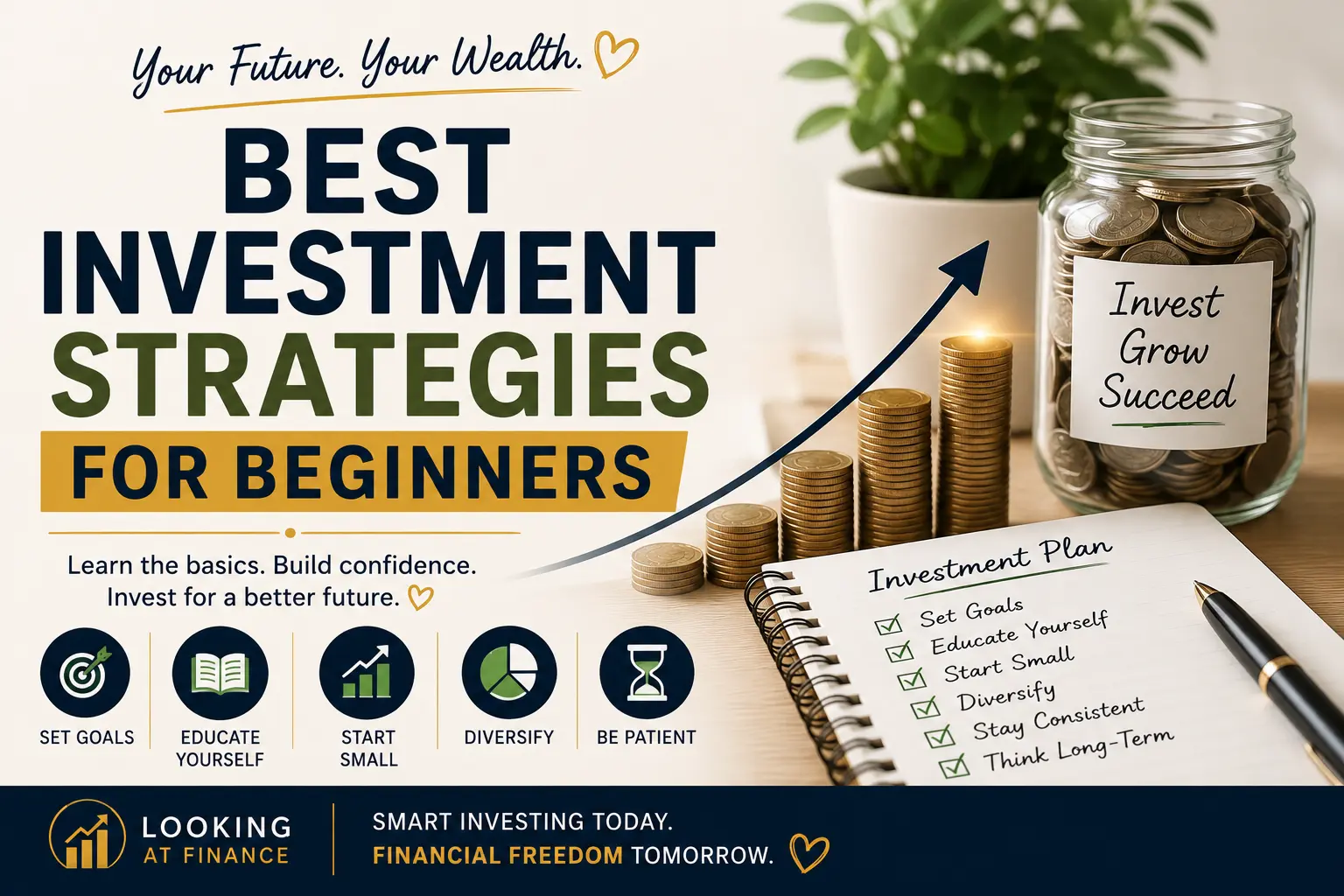
For many people, investing seems complicated.
Words like stocks, bonds, mutual funds, ETFs, market volatility, and diversification can make investing feel like something reserved for financial professionals.
The good news is that successful investing doesn’t require predicting the stock market, choosing the next big company, or constantly watching financial news.
In fact, some of the most successful long-term investors follow surprisingly simple strategies.
They invest consistently.
They stay patient.
They diversify their investments.
And they allow time to work in their favor.
If you’re just beginning your investing journey, you don’t need to know everything before getting started.
You simply need to understand a few key principles that can help you make informed decisions and avoid common beginner mistakes.
One of the biggest misconceptions about investing is that you need thousands of dollars before you can begin.
While having more money certainly creates more opportunities, many investment accounts today allow people to start with relatively small amounts and gradually increase their contributions over time.
What often matters most isn’t how much you start with.
It’s that you start.
Another common misunderstanding is that investing is only for people who enjoy taking risks.
While every investment involves some level of risk, thoughtful investing isn’t about gambling.
It’s about making informed decisions with a long-term perspective and understanding that markets naturally experience periods of growth and decline.
This guide will help you understand:
- What investing really is.
- Why investing matters.
- The difference between saving and investing.
- Beginner-friendly investment strategies.
- Common investment options.
- Mistakes new investors should avoid.
- How to build an investment plan that aligns with your financial goals.
By the end of this guide, you’ll have a solid understanding of the foundational principles that many successful long-term investors use to build wealth gradually over time.
💡 Action Moment: Build a Strong Financial Foundation Before You Invest
Investing is one of the most effective ways to build long-term wealth—but it works best when it’s supported by healthy financial habits.
Before investing, ask yourself:
- Do I understand my monthly budget?
- Am I consistently paying my bills on time?
- Have I started building an emergency fund?
- Do I know how much I can realistically invest each month without creating financial stress?
These questions help ensure that your investment decisions support your overall financial well-being rather than creating unnecessary pressure.
That’s exactly what 7 Days to Financial Clarity™ is designed to help you accomplish.
The guide walks you through organizing your income, expenses, savings, and financial priorities so you can approach investing with greater confidence and a clearer understanding of your financial situation.
Investing is most effective when it’s part of a well-organized financial plan—not a substitute for one.
What Is Investing?
Investing is the process of putting money into assets with the goal of increasing its value over time.
Unlike simply saving money in a bank account, investing involves purchasing assets that have the potential to grow in value or generate income.
Examples include:
- Stocks.
- Bonds.
- Mutual funds.
- Exchange-Traded Funds (ETFs).
- Real estate investments.
- Certain retirement investments.
When you invest, you’re accepting some level of risk in exchange for the possibility of earning higher long-term returns than you might receive from keeping all of your money in cash.
No investment can guarantee profits.
Values may rise or fall over time, and it’s possible to lose money.
However, many people invest because they want their money to grow over the long term rather than being reduced by the effects of inflation.
Saving vs. Investing
Although saving and investing are both important parts of a healthy financial plan, they serve different purposes.
Saving is generally intended for:
- Emergency funds.
- Short-term financial goals.
- Planned purchases.
- Unexpected expenses.
Money held in savings is typically easier to access and is generally exposed to less risk, though it may also offer lower potential returns.
Investing, on the other hand, is usually intended for longer-term goals such as:
- Retirement.
- Building wealth.
- Buying a home many years from now.
- Funding a child’s education.
- Achieving long-term financial independence.
Because investments can fluctuate in value, money needed in the near future is often better suited to savings rather than investments.
Understanding when to save and when to invest helps create a balanced financial strategy.
Why Investing Matters
One reason investing is so important is that it gives your money the opportunity to work for you.
Instead of relying solely on income from your job or business, investing allows your savings to potentially grow over time.
For many people, investing can help support goals such as:
- Building long-term wealth.
- Preparing for retirement.
- Keeping pace with inflation.
- Reaching major financial milestones.
- Creating additional financial security.
While investing involves uncertainty, remaining entirely in cash for decades may also carry risk because inflation can reduce the purchasing power of your money over time.
Investing offers the possibility of long-term growth, helping your money maintain or increase its value over many years.
Why Starting Early Can Make a Difference
One of the greatest advantages new investors have isn’t necessarily a large amount of money.
It’s time.
The earlier you begin investing, the longer your investments have the opportunity to grow.
Even relatively small, consistent contributions can become meaningful over many years because each contribution has additional time to potentially earn returns.
This doesn’t mean you should rush into investments you don’t understand.
Instead, it highlights why learning the basics and developing good investing habits early can be valuable.
If you’re starting later in life, don’t be discouraged.
Beginning today is generally more beneficial than continuing to postpone investing while waiting for the “perfect” time.
Understanding Risk and Reward
Every investment carries some level of risk.
Generally speaking, investments with the potential for higher returns also involve greater uncertainty.
This relationship between risk and potential reward is one of the most important concepts for beginner investors to understand.
Risk doesn’t necessarily mean an investment is bad.
It simply means the value may change over time.
For example, some investments experience larger price fluctuations than others.
Successful investing isn’t about eliminating all risk.
It’s about understanding your comfort level with risk and choosing investments that align with your financial goals and time horizon.
What Is Risk Tolerance?
Risk tolerance describes how comfortable you are with changes in the value of your investments.
Some people are comfortable seeing their investments fluctuate because they’re focused on long-term growth.
Others prefer investments that generally experience smaller price changes, even if that means accepting lower potential returns.
Several factors influence risk tolerance, including:
- Age.
- Financial goals.
- Investment timeline.
- Income stability.
- Personal comfort with market fluctuations.
There’s no universally “correct” level of risk.
The best investment strategy is one that you can stick with consistently through both good markets and challenging ones.
You’re already investing time in improving your finances, and that’s something to be proud of. Before you continue, download our free 7 Days To Financial Clarity™ workbook and start putting these ideas into action.

Understanding Diversification
Diversification means spreading your investments across different types of assets instead of relying heavily on a single investment.
Rather than putting all of your money into one company or one type of investment, diversification helps reduce the impact that any single investment may have on your overall portfolio.
Diversification doesn’t eliminate investment risk.
However, it can help reduce the effects of poor performance in one area by balancing it with other investments.
This is one reason diversified investment funds are popular among beginner investors.
Investing Is a Marathon, Not a Sprint
One of the biggest mistakes beginners make is expecting rapid results.
Successful investing usually happens gradually.
Markets naturally rise and fall over time.
There will likely be periods when investments perform well and periods when they decline.
Long-term investors understand that temporary market fluctuations are a normal part of investing.
Rather than reacting emotionally to every market movement, they remain focused on their long-term financial goals.
Patience, consistency, and discipline often matter more than trying to predict short-term market movements.
Building Confidence Before Building Wealth
Every experienced investor was once a beginner.
The difference isn’t that successful investors never made mistakes.
It’s that they continued learning, stayed consistent, and focused on long-term progress instead of short-term market noise.
Learning the basic principles now gives you a stronger foundation for making informed investment decisions in the future.
Best Investment Strategies for Beginners
If you’ve never invested before, it’s easy to believe that success comes from finding the “perfect” investment.
In reality, long-term investing is usually built on habits rather than lucky guesses.
Many experienced investors succeed not because they predict the market correctly every time, but because they follow consistent strategies through both good markets and challenging ones.
Let’s explore some of the most effective beginner-friendly investment strategies.
Invest Consistently
One of the simplest—and often most effective—investment strategies is to invest regularly instead of waiting for the “perfect” time.
This approach involves contributing a set amount of money on a consistent schedule, such as monthly or every payday.
Regular investing offers several benefits:
- Builds a long-term investing habit.
- Reduces the temptation to time the market.
- Makes investing part of your monthly budget.
- Allows your investments to grow gradually over time.
Consistency is often more important than making occasional large investments.
Even modest monthly contributions can become meaningful over many years when combined with patience and discipline.
Focus on Long-Term Growth
Many beginners become discouraged when they see investments rise and fall over short periods.
Market fluctuations are normal.
Prices move every day because of economic news, company performance, interest rates, investor sentiment, and countless other factors.
Long-term investors recognize that temporary market declines don’t necessarily change their long-term goals.
Instead of reacting emotionally to short-term headlines, they remain focused on where they want their investments to be many years from now.
A long-term mindset can help reduce unnecessary buying and selling while allowing investments more time to potentially grow.
Diversify Your Investments
Diversification means spreading your money across different investments rather than concentrating it in a single company, industry, or asset type.
Imagine two investors.
One invests everything in a single company.
The other spreads investments across hundreds or even thousands of companies through diversified funds.
If one company performs poorly, the diversified investor may experience a smaller overall impact because other investments continue contributing to the portfolio.
Diversification doesn’t eliminate risk.
However, it can help reduce the effect of individual investment losses and create a more balanced portfolio.
Consider Broad Market Index Funds
Many beginners worry about choosing individual stocks.
Fortunately, selecting individual companies isn’t the only way to invest.
Broad market index funds are designed to track the performance of a large group of companies rather than relying on the success of just one business.
Because they provide built-in diversification, many investors appreciate them for their simplicity and broad market exposure.
Potential advantages include:
- Diversification across many companies.
- Straightforward investment approach.
- Reduced dependence on selecting individual stocks.
- Suitable for long-term investing.
Like all investments, index funds can rise and fall in value, but they provide beginners with a simple way to participate in the broader market.
Reinvest Earnings
Some investments generate income through dividends, interest, or other distributions.
Instead of withdrawing those earnings, many investors choose to reinvest them.
Reinvesting allows those earnings to purchase additional investments, which may then generate their own future earnings.
Over long periods, this process can contribute to the growth of an investment portfolio.
Many investment accounts offer automatic reinvestment options, making this strategy easy to maintain.
Increase Your Contributions Over Time
You don’t need to invest large amounts immediately.
Many successful investors begin with modest contributions and gradually increase them as their income grows.
For example, you might increase your monthly investment after:
- Receiving a salary increase.
- Paying off a loan.
- Eliminating credit card debt.
- Reducing monthly expenses.
- Completing another financial goal.
Small increases may not seem significant at first, but over many years they can substantially increase the amount invested.
Avoid Emotional Investing
One of the greatest challenges for new investors isn’t understanding investments.
It’s managing emotions.
During strong markets, some people become overly confident and invest more than they intended.
During market declines, others panic and sell investments out of fear.
Both reactions can interfere with a long-term investment strategy.
Instead of allowing emotions to drive decisions, successful investors often rely on:
- Clear financial goals.
- Diversification.
- Consistent investing.
- Periodic portfolio reviews.
- Patience.
Having a plan before markets become volatile can make it easier to stay focused during uncertain times.
Invest According to Your Goals
Every investor has different priorities.
Some are saving for retirement.
Others hope to purchase a home.
Some want to build wealth for future generations.
Others are investing for financial independence.
Because goals differ, investment strategies should also differ.
Questions worth asking include:
- When will I need this money?
- How comfortable am I with investment risk?
- What am I investing for?
- How long can I remain invested?
Your answers will help shape the investment approach that’s appropriate for your circumstances.
Start With What You Can Afford
Many beginners delay investing because they believe they don’t have enough money.
In reality, developing the habit of investing consistently is often more important than waiting until you can invest a large sum.
Starting with an amount that comfortably fits your budget allows you to gain experience while reducing financial stress.
As your income grows, you can gradually increase your contributions.
Remember:
An investment plan you can maintain consistently is generally more valuable than an ambitious plan that’s difficult to sustain.
Common Investment Options for Beginners
Choosing an investment strategy is easier when you understand the types of investments available.
Let’s look at some of the most common investment options.
Stocks
When you buy a stock, you’re purchasing a small ownership interest in a company.
If the company performs well, the value of your investment may increase.
Some companies also distribute a portion of their profits to shareholders through dividends.
Potential benefits include:
- Long-term growth potential.
- Dividend income from some companies.
- Ownership in businesses.
Potential risks include:
- Prices can fluctuate significantly.
- Individual companies may underperform.
- Investment values can decline.
Bonds
Bonds are generally considered loans made to governments, municipalities, or corporations.
In return, investors typically receive interest payments according to the bond’s terms.
Compared with stocks, bonds have historically experienced different levels of risk and return, although values can still fluctuate and losses are possible.
Some investors include bonds as part of a diversified portfolio.
Mutual Funds
A mutual fund pools money from many investors to purchase a diversified collection of investments.
Professional fund managers generally oversee the investment selections.
Potential benefits include:
- Diversification.
- Professional management.
- Convenience.
However, investors should also understand any associated fees and expenses before investing.
Exchange-Traded Funds (ETFs)
ETFs are investment funds that trade on stock exchanges throughout the trading day.
Many ETFs are designed to track indexes, industries, or investment sectors.
Potential advantages include:
- Diversification.
- Flexibility.
- Broad investment choices.
- Often relatively low costs compared with some actively managed funds.
Like other investments, ETF values fluctuate with market conditions.
Index Funds
Index funds aim to match the performance of a specific market index rather than outperform it.
Many beginner investors appreciate index funds because they offer:
- Broad diversification.
- Straightforward investment strategies.
- Long-term focus.
- Lower turnover compared with many actively managed funds.
They’re often discussed as a practical option for investors seeking a simple, diversified approach.
Retirement Accounts
Many countries offer retirement accounts that may provide tax advantages for long-term retirement savings.
The specific rules, contribution limits, and tax treatment depend on where you live.
If retirement is one of your goals, learning about the retirement accounts available in your country can be an important part of your investment plan.
Cash Equivalents
Cash equivalents include investments designed to preserve capital while providing relatively easy access to funds.
Examples may include certain money market investments and other short-term savings vehicles.
Although these investments generally offer lower growth potential than stocks, they can play an important role in short-term financial planning and emergency savings.
💡 Action Moment: Choose an Investment Strategy That Matches Your Financial Goals
One of the biggest investing mistakes is following someone else’s strategy without considering your own financial situation.
Ask yourself:
- Am I investing primarily for retirement?
- Do I hope to buy a home within the next several years?
- Is building an emergency fund my first priority?
- Should I focus on paying off high-interest debt before increasing my investments?
- How comfortable am I with investment risk?
The LookingAtFinance Financial Goal Assessment can help you identify where investing fits into your overall financial journey.
For some people, investing may be the next logical step.
For others, strengthening their emergency fund or reducing high-interest debt first may create a stronger financial foundation.
The best investment strategy is the one that supports your financial goals—not someone else’s.
Successful Investing Is Usually Boring
This may sound surprising, but many successful long-term investors don’t constantly chase exciting opportunities.
Instead, they:
- Invest consistently.
- Diversify their portfolios.
- Stay focused on long-term goals.
- Ignore short-term market noise.
- Continue learning.
- Review their investments periodically.
While dramatic headlines often attract attention, patient, disciplined investing has historically been one of the most reliable approaches to building long-term wealth.
Best Investment Strategies for Beginners
If you’ve never invested before, it’s easy to believe that success comes from finding the “perfect” investment.
In reality, long-term investing is usually built on habits rather than lucky guesses.
Many experienced investors succeed not because they predict the market correctly every time, but because they follow consistent strategies through both good markets and challenging ones.
Let’s explore some of the most effective beginner-friendly investment strategies.
Invest Consistently
One of the simplest—and often most effective—investment strategies is to invest regularly instead of waiting for the “perfect” time.
This approach involves contributing a set amount of money on a consistent schedule, such as monthly or every payday.
Regular investing offers several benefits:
- Builds a long-term investing habit.
- Reduces the temptation to time the market.
- Makes investing part of your monthly budget.
- Allows your investments to grow gradually over time.
Consistency is often more important than making occasional large investments.
Even modest monthly contributions can become meaningful over many years when combined with patience and discipline.
Focus on Long-Term Growth
Many beginners become discouraged when they see investments rise and fall over short periods.
Market fluctuations are normal.
Prices move every day because of economic news, company performance, interest rates, investor sentiment, and countless other factors.
Long-term investors recognize that temporary market declines don’t necessarily change their long-term goals.
Instead of reacting emotionally to short-term headlines, they remain focused on where they want their investments to be many years from now.
A long-term mindset can help reduce unnecessary buying and selling while allowing investments more time to potentially grow.
Diversify Your Investments
Diversification means spreading your money across different investments rather than concentrating it in a single company, industry, or asset type.
Imagine two investors.
One invests everything in a single company.
The other spreads investments across hundreds or even thousands of companies through diversified funds.
If one company performs poorly, the diversified investor may experience a smaller overall impact because other investments continue contributing to the portfolio.
Diversification doesn’t eliminate risk.
However, it can help reduce the effect of individual investment losses and create a more balanced portfolio.
Consider Broad Market Index Funds
Many beginners worry about choosing individual stocks.
Fortunately, selecting individual companies isn’t the only way to invest.
Broad market index funds are designed to track the performance of a large group of companies rather than relying on the success of just one business.
Because they provide built-in diversification, many investors appreciate them for their simplicity and broad market exposure.
Potential advantages include:
- Diversification across many companies.
- Straightforward investment approach.
- Reduced dependence on selecting individual stocks.
- Suitable for long-term investing.
Like all investments, index funds can rise and fall in value, but they provide beginners with a simple way to participate in the broader market.
Reinvest Earnings
Some investments generate income through dividends, interest, or other distributions.
Instead of withdrawing those earnings, many investors choose to reinvest them.
Reinvesting allows those earnings to purchase additional investments, which may then generate their own future earnings.
Over long periods, this process can contribute to the growth of an investment portfolio.
Many investment accounts offer automatic reinvestment options, making this strategy easy to maintain.
Increase Your Contributions Over Time
You don’t need to invest large amounts immediately.
Many successful investors begin with modest contributions and gradually increase them as their income grows.
For example, you might increase your monthly investment after:
- Receiving a salary increase.
- Paying off a loan.
- Eliminating credit card debt.
- Reducing monthly expenses.
- Completing another financial goal.
Small increases may not seem significant at first, but over many years they can substantially increase the amount invested.
Avoid Emotional Investing
One of the greatest challenges for new investors isn’t understanding investments.
It’s managing emotions.
During strong markets, some people become overly confident and invest more than they intended.
During market declines, others panic and sell investments out of fear.
Both reactions can interfere with a long-term investment strategy.
Instead of allowing emotions to drive decisions, successful investors often rely on:
- Clear financial goals.
- Diversification.
- Consistent investing.
- Periodic portfolio reviews.
- Patience.
Having a plan before markets become volatile can make it easier to stay focused during uncertain times.
Invest According to Your Goals
Every investor has different priorities.
Some are saving for retirement.
Others hope to purchase a home.
Some want to build wealth for future generations.
Others are investing for financial independence.
Because goals differ, investment strategies should also differ.
Questions worth asking include:
- When will I need this money?
- How comfortable am I with investment risk?
- What am I investing for?
- How long can I remain invested?
Your answers will help shape the investment approach that’s appropriate for your circumstances.
Start With What You Can Afford
Many beginners delay investing because they believe they don’t have enough money.
In reality, developing the habit of investing consistently is often more important than waiting until you can invest a large sum.
Starting with an amount that comfortably fits your budget allows you to gain experience while reducing financial stress.
As your income grows, you can gradually increase your contributions.
Remember:
An investment plan you can maintain consistently is generally more valuable than an ambitious plan that’s difficult to sustain.
Common Investment Options for Beginners
Choosing an investment strategy is easier when you understand the types of investments available.
Let’s look at some of the most common investment options.
Stocks
When you buy a stock, you’re purchasing a small ownership interest in a company.
If the company performs well, the value of your investment may increase.
Some companies also distribute a portion of their profits to shareholders through dividends.
Potential benefits include:
- Long-term growth potential.
- Dividend income from some companies.
- Ownership in businesses.
Potential risks include:
- Prices can fluctuate significantly.
- Individual companies may underperform.
- Investment values can decline.
Bonds
Bonds are generally considered loans made to governments, municipalities, or corporations.
In return, investors typically receive interest payments according to the bond’s terms.
Compared with stocks, bonds have historically experienced different levels of risk and return, although values can still fluctuate and losses are possible.
Some investors include bonds as part of a diversified portfolio.
Mutual Funds
A mutual fund pools money from many investors to purchase a diversified collection of investments.
Professional fund managers generally oversee the investment selections.
Potential benefits include:
- Diversification.
- Professional management.
- Convenience.
However, investors should also understand any associated fees and expenses before investing.
Exchange-Traded Funds (ETFs)
ETFs are investment funds that trade on stock exchanges throughout the trading day.
Many ETFs are designed to track indexes, industries, or investment sectors.
Potential advantages include:
- Diversification.
- Flexibility.
- Broad investment choices.
- Often relatively low costs compared with some actively managed funds.
Like other investments, ETF values fluctuate with market conditions.
Index Funds
Index funds aim to match the performance of a specific market index rather than outperform it.
Many beginner investors appreciate index funds because they offer:
- Broad diversification.
- Straightforward investment strategies.
- Long-term focus.
- Lower turnover compared with many actively managed funds.
They’re often discussed as a practical option for investors seeking a simple, diversified approach.
Retirement Accounts
Many countries offer retirement accounts that may provide tax advantages for long-term retirement savings.
The specific rules, contribution limits, and tax treatment depend on where you live.
If retirement is one of your goals, learning about the retirement accounts available in your country can be an important part of your investment plan.
Cash Equivalents
Cash equivalents include investments designed to preserve capital while providing relatively easy access to funds.
Examples may include certain money market investments and other short-term savings vehicles.
Although these investments generally offer lower growth potential than stocks, they can play an important role in short-term financial planning and emergency savings.
💡 Action Moment: Choose an Investment Strategy That Matches Your Financial Goals
One of the biggest investing mistakes is following someone else’s strategy without considering your own financial situation.
Ask yourself:
- Am I investing primarily for retirement?
- Do I hope to buy a home within the next several years?
- Is building an emergency fund my first priority?
- Should I focus on paying off high-interest debt before increasing my investments?
- How comfortable am I with investment risk?
The LookingAtFinance Financial Goal Assessment can help you identify where investing fits into your overall financial journey.
For some people, investing may be the next logical step.
For others, strengthening their emergency fund or reducing high-interest debt first may create a stronger financial foundation.
The best investment strategy is the one that supports your financial goals—not someone else’s.
Successful investing isn’t about guessing—it’s about understanding long-term growth. Use our free Investment Growth Calculator to see how regular investing can build wealth over time.

Successful Investing Is Usually Boring
This may sound surprising, but many successful long-term investors don’t constantly chase exciting opportunities.
Instead, they:
- Invest consistently.
- Diversify their portfolios.
- Stay focused on long-term goals.
- Ignore short-term market noise.
- Continue learning.
- Review their investments periodically.
While dramatic headlines often attract attention, patient, disciplined investing has historically been one of the most reliable approaches to building long-term wealth.
Common Investing Mistakes Beginners Should Avoid
Everyone makes mistakes when learning something new.
Investing is no different.
The good news is that many of the most common investing mistakes are completely avoidable once you understand what they are.
Rather than trying to become a perfect investor, focus on developing habits that help you make thoughtful decisions over many years.
Let’s explore some of the mistakes that often prevent beginners from reaching their financial goals.
Waiting Too Long to Start Investing
One of the biggest mistakes isn’t choosing the wrong investment.
It’s waiting indefinitely for the “right time.”
Many people delay investing because they believe they need:
- More money.
- More knowledge.
- Better market conditions.
- A higher income.
While preparing yourself financially is important, waiting for perfect conditions can mean losing valuable time.
Remember:
The market will always experience periods of uncertainty.
Successful investors often begin with what they have and continue learning as they gain experience.
Even modest investments made consistently over many years can potentially make a meaningful difference.
Trying to Time the Market
Many beginners believe they should wait until prices are low before investing.
Unfortunately, accurately predicting short-term market movements is extremely difficult.
Even experienced professionals cannot consistently forecast when markets will rise or fall.
Waiting for the “perfect” moment often results in waiting much longer than intended.
Meanwhile, valuable time in the market is lost.
Rather than attempting to predict short-term price movements, many long-term investors focus on investing consistently according to their financial plan.
Chasing Popular Investments
Every year, certain investments receive enormous media attention.
Headlines often highlight:
- Companies with rapidly rising stock prices.
- Emerging industries.
- Popular investment trends.
- Social media investment ideas.
While some popular investments may perform well, making decisions solely because something is trending can increase risk.
Before investing, ask yourself:
- Do I understand this investment?
- Does it fit my financial goals?
- Am I investing because of research or because everyone else is talking about it?
Thoughtful investing usually produces better long-term results than reacting to headlines.
Investing Money You’ll Need Soon
Investments fluctuate in value.
For that reason, money needed for short-term expenses generally shouldn’t be exposed to unnecessary investment risk.
Examples include money set aside for:
- Rent or mortgage payments.
- Emergency expenses.
- Upcoming tuition.
- Vacation planned within the next year.
- Home repairs.
- Medical expenses.
Maintaining separate savings for short-term needs allows your long-term investments more time to recover from normal market fluctuations if they occur.
Ignoring Diversification
Putting all of your money into a single investment can expose you to unnecessary risk.
If that investment performs poorly, your entire portfolio may suffer.
Diversification helps reduce this risk by spreading investments across different assets.
Although diversification cannot eliminate losses, it can reduce dependence on the success of any one investment.
Letting Emotions Drive Investment Decisions
Investing naturally involves emotions.
When markets rise quickly, excitement can encourage investors to buy more than planned.
When markets decline, fear may encourage selling at the worst possible time.
Successful investing often requires doing the opposite of what emotions encourage.
Instead of reacting to short-term market movements, many investors rely on their long-term investment plan.
Keeping your goals in focus can make temporary market fluctuations easier to manage.
Forgetting to Review Your Portfolio
While long-term investing doesn’t require constant attention, it also shouldn’t be ignored completely.
A periodic review helps ensure your investments continue supporting your financial goals.
During a review, consider:
- Has my financial situation changed?
- Have my goals changed?
- Am I still comfortable with my level of investment risk?
- Am I investing consistently?
For many beginner investors, reviewing investments once or twice a year is often sufficient.
Building a Simple Investment Plan
One reason some people struggle with investing is that they never create a clear plan.
Without a plan, every market headline can feel like a reason to change direction.
A simple investment plan provides structure and helps reduce emotional decision-making.
Step 1: Define Your Goal
Begin by identifying why you’re investing.
Examples include:
- Retirement.
- Buying a home.
- Financial independence.
- Building long-term wealth.
- Education savings.
Clear goals make it easier to stay motivated during periods of market uncertainty.
Step 2: Determine Your Time Horizon
Ask yourself:
When will I need this money?
Someone investing for retirement several decades away may have a very different approach from someone saving for a home purchase in five years.
Your timeline influences the types of investments that may be appropriate for your situation.
Step 3: Understand Your Risk Tolerance
Every investor has a different comfort level with market fluctuations.
Some people remain calm during market declines.
Others find even small losses stressful.
Building a portfolio that matches your personal comfort level makes it easier to stay invested over the long term.
Step 4: Invest Consistently
Once your plan is in place, consistency becomes one of your greatest advantages.
Regular investing removes much of the guesswork from investing.
Instead of deciding every month whether to invest, many people automate contributions whenever possible.
This turns investing into a routine rather than a difficult monthly decision.
Step 5: Stay Patient
Building wealth takes time.
Successful investing rarely happens overnight.
Instead of focusing on short-term performance, continue measuring progress toward your long-term financial goals.
Patience allows your investment strategy time to work.
💡 Action Moment: See How Consistent Investing Can Add Up Over Time
One of the most exciting parts of investing isn’t necessarily choosing an investment.
It’s seeing what consistent investing may accomplish over many years.
Imagine investing a manageable amount every month.
Over time, your contributions—and any potential investment growth—can build on each other.
The LookingAtFinance Investment Growth Calculator allows you to explore different scenarios by estimating how:
- Monthly contributions may accumulate over time.
- Starting earlier may influence long-term growth.
- Increasing your monthly investment could affect future results.
- Time can become one of your greatest investing advantages.
The calculator isn’t designed to predict future investment performance, since markets are unpredictable.
Instead, it’s a planning tool that helps you visualize how consistency and long-term investing may support your financial goals.
Every financial journey is different. Take our free
Financial Goal Assessment to discover which area deserves your attention first
and receive a clear direction for your next financial milestone.

Stay Focused During Market Ups and Downs
Markets naturally move through periods of growth, decline, and recovery.
These changes can feel uncomfortable, especially for new investors.
However, experienced investors generally understand that volatility is a normal part of long-term investing.
Instead of reacting to every headline, focus on questions such as:
- Am I still investing according to my plan?
- Have my long-term goals changed?
- Has my financial situation changed significantly?
- Does my investment strategy still match my objectives?
If the answers remain the same, temporary market movements alone may not require major changes.
Keep Learning as You Invest
Investing isn’t something you master after reading one article.
The most successful investors continue learning throughout their lives.
You can strengthen your knowledge by:
- Reading reputable investing books.
- Following trusted financial education resources.
- Learning about different asset classes.
- Understanding investment fees.
- Reviewing your portfolio periodically.
- Asking questions before making major investment decisions.
The more you learn, the more confident you’ll become in making informed financial choices.
Remember: Good Investing Habits Often Matter More Than Perfect Investments
Many beginners spend enormous amounts of time searching for the perfect stock or the perfect investment opportunity.
In reality, long-term success often comes from consistently practicing simple habits.
Those habits include:
- Investing regularly.
- Staying diversified.
- Thinking long term.
- Continuing to learn.
- Remaining patient.
- Avoiding emotional decisions.
Over time, these habits can become more valuable than trying to predict short-term market movements.
Real-Life Example: Two Investors, Two Different Outcomes
Let’s look at two fictional investors who both wanted to build wealth for the future.
They earned similar incomes and had similar opportunities.
The biggest difference wasn’t how much they earned—it was how they approached investing.
Jessica’s Approach
Jessica decided to start investing shortly after creating her monthly budget.
She didn’t have thousands of dollars to invest, but she committed to investing a manageable amount every month.
Her plan was simple:
- Invest consistently.
- Diversify her investments.
- Increase contributions whenever her income increased.
- Reinvest investment earnings.
- Ignore short-term market headlines.
- Review her portfolio once each year.
There were years when the market performed well and years when it declined.
Instead of panicking during downturns, Jessica continued following her long-term investment plan.
Over time, her portfolio steadily grew through a combination of regular contributions and long-term investment growth.
Most importantly, investing became one of her financial habits rather than something she only thought about occasionally.
David’s Approach
David wanted to invest but kept waiting for the “perfect” opportunity.
Whenever markets were rising, he worried prices were too high.
When markets declined, he became concerned they would fall even further.
As a result, he delayed investing year after year.
Occasionally, he invested after hearing exciting stories about popular companies or investment trends.
When those investments declined, he became discouraged and sold them.
Without a consistent strategy, David spent more time reacting to market news than following a long-term financial plan.
Years later, he realized that much of his delay came from trying to predict the market instead of simply participating in it consistently.
The Lesson
Jessica didn’t succeed because she found secret investments.
She succeeded because she developed good investing habits.
David wasn’t unsuccessful because he lacked intelligence.
He struggled because uncertainty kept him from building consistency.
The lesson is simple:
You don’t have to predict the future to become a successful long-term investor.
You simply need a thoughtful plan, patience, and the discipline to continue investing through changing market conditions.
Beginner Investing Checklist
Use this checklist as a guide whenever you’re preparing to start—or reviewing—your investment journey.
Before You Invest
☐ Create a monthly budget.
☐ Build or continue building an emergency fund.
☐ Pay down high-interest debt where appropriate.
☐ Understand your financial goals.
☐ Decide how much you can comfortably invest each month.
Build Your Portfolio
☐ Diversify your investments.
☐ Learn about different investment options.
☐ Consider broad market investment funds if they align with your goals.
☐ Avoid putting all your money into one investment.
☐ Invest according to your time horizon.
Manage Investment Risk
☐ Understand your personal risk tolerance.
☐ Keep short-term savings separate from long-term investments.
☐ Avoid making emotional decisions.
☐ Review your investments periodically.
☐ Continue learning about investing.
Stay Consistent
☐ Invest regularly.
☐ Increase contributions when possible.
☐ Reinvest earnings if appropriate.
☐ Ignore short-term market noise.
☐ Focus on long-term progress.
Review Your Plan
☐ Revisit your goals annually.
☐ Update your investment strategy after major life changes.
☐ Confirm your investments still align with your objectives.
☐ Continue building healthy financial habits.
Frequently Asked Questions
How much money do I need to start investing?
The amount needed depends on the investment account and platform you choose.
Many people begin with relatively small, regular contributions that fit comfortably within their monthly budget.
The key is developing a sustainable investing habit rather than waiting until you have a large amount of money.
Should I pay off debt before investing?
It depends on your financial situation.
For many people, paying off high-interest debt before increasing long-term investments can strengthen their financial foundation.
Lower-interest debt and long-term investing may sometimes be managed simultaneously, depending on your goals, income, and overall financial plan.
What is diversification?
Diversification means spreading your investments across different assets instead of relying heavily on one company, industry, or investment type.
While diversification doesn’t eliminate investment risk, it can help reduce the impact of poor performance from any single investment.
Are index funds good for beginners?
Many investors consider broad market index funds a practical option for beginners because they provide diversification and a straightforward long-term investing approach.
Like all investments, however, they can fluctuate in value, and it’s important to understand how they fit within your overall financial goals.
Can I lose money investing?
Yes.
All investments involve some degree of risk, and values may rise or fall over time.
Investing with a long-term perspective, maintaining diversification, and avoiding emotional decisions can help you manage risk, but no investment can guarantee positive returns.
How often should I review my investments?
Many long-term investors review their portfolios once or twice a year or after significant life events.
Frequent checking isn’t always necessary and may encourage emotional decision-making based on short-term market movements.
Is investing better than saving?
Saving and investing serve different purposes.
Savings are generally intended for short-term needs, emergencies, and planned expenses.
Investing is typically used for long-term financial goals where you’re willing to accept some investment risk in exchange for the possibility of long-term growth.
Many healthy financial plans include both.
Final Thoughts
Investing doesn’t have to be complicated.
While financial markets can seem intimidating at first, the principles that support long-term investing are often surprisingly straightforward.
Successful investors don’t usually build wealth by predicting every market movement or finding the next popular investment.
Instead, they focus on habits they can maintain for years:
- Investing consistently.
- Staying diversified.
- Thinking long term.
- Continuing to learn.
- Reviewing their plans periodically.
- Remaining patient during market fluctuations.
These habits won’t eliminate uncertainty, but they can help you make thoughtful decisions that support your financial goals over time.
Remember, investing isn’t about becoming wealthy overnight.
It’s about giving your money the opportunity to grow gradually while supporting the future you want to build.
Whether your goal is retiring comfortably, purchasing a home, funding your children’s education, or achieving greater financial independence, every consistent investment is another step toward that goal.
The most important step isn’t finding the perfect investment.
It’s getting started with a plan you can confidently follow.
Your Next Steps
Now that you understand the fundamentals of beginner investing, here are three practical actions you can take today.
1. Organize Your Financial Foundation
Download 7 Days to Financial Clarity™ to better understand your income, expenses, savings, and financial priorities.
Having a clear picture of your finances can help you determine how investing fits into your overall financial plan.
2. Identify Your Financial Priorities
Complete the LookingAtFinance Financial Goal Assessment to determine your next financial milestone.
Whether your current priority is:
- Building an emergency fund,
- Paying off debt,
- Saving for retirement,
- Buying a home,
- Or growing long-term wealth,
understanding your priorities will help you choose an investment strategy that supports your goals.
3. Explore Your Long-Term Growth Potential
Use the LookingAtFinance Investment Growth Calculator to estimate how regular monthly investing could grow over time.
Experiment with different contribution amounts and investment timeframes to see how consistency and patience may influence your long-term financial journey.
Remember, the calculator provides estimates for planning purposes—it isn’t a guarantee of future investment performance.
Key Takeaway
The best investment strategy for beginners isn’t about finding the hottest stock or perfectly timing the market. It’s about investing consistently, staying diversified, keeping a long-term perspective, and making informed decisions that support your financial goals.
When investing becomes a regular part of your financial plan rather than a reaction to market headlines, you’re building more than an investment portfolio—you’re building a foundation for long-term financial confidence.
🚀 Ready To Keep Going?
You have invested time learning today. Now take the next step by downloading our free 7 Days To Financial Clarity™ workbook and begin building a stronger financial future.
