
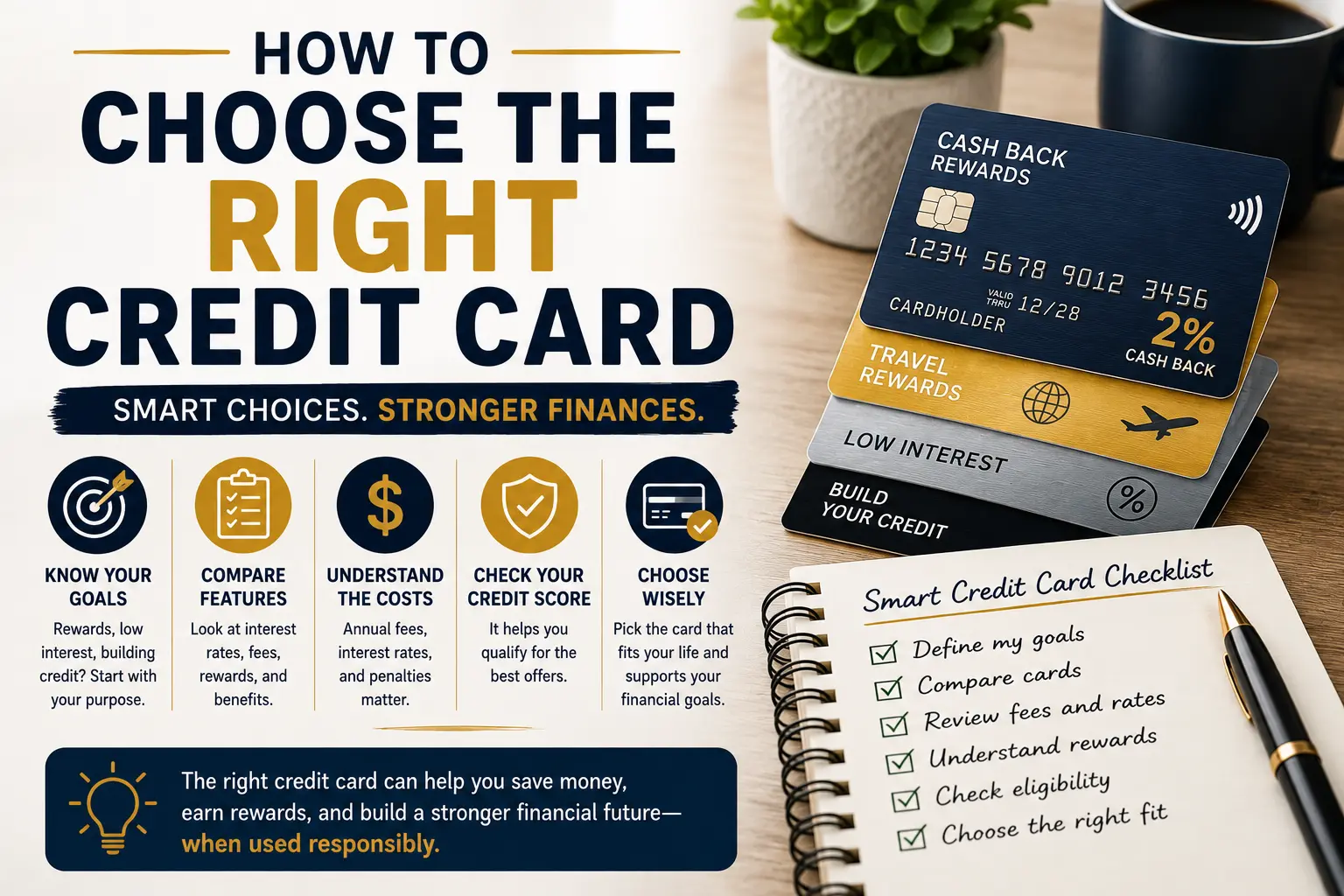
Choosing a credit card can feel surprisingly overwhelming.
A quick online search reveals hundreds of options, each claiming to offer exceptional rewards, low interest rates, exclusive travel benefits, cashback opportunities, or generous welcome bonuses.
At first glance, many of these offers seem similar.
But choosing a credit card isn’t simply about selecting the one with the biggest promotional offer.
The right credit card depends on how you plan to use it, how you manage your finances, and what financial goals you’re working toward.
A card that’s perfect for someone who travels frequently may be a poor choice for someone who wants to build credit.
Likewise, a rewards card with a high annual fee might provide excellent value for one person but cost another far more than the rewards are worth.
That’s why understanding your own financial habits is far more important than chasing flashy advertisements.
A credit card is a financial tool.
Used responsibly, it can help you build a strong credit history, provide purchase protection, simplify budgeting, and even earn valuable rewards.
Used carelessly, it can lead to expensive interest charges, growing debt, and unnecessary financial stress.
The encouraging news is that you don’t need to become a financial expert to make a smart decision.
Once you understand the different types of credit cards, the costs involved, and the features that matter most, comparing your options becomes much easier.
In this guide, you’ll learn how credit cards differ, what features to evaluate before applying, how to avoid common mistakes, and how to choose a card that supports your financial goals rather than working against them.
Whether you’re applying for your very first credit card or considering replacing an existing one, this guide will help you make a confident and informed decision.
💡 Action Moment: Start With Financial Clarity
Before comparing credit card offers, it’s worth taking a step back and looking at your overall financial picture.
Ask yourself:
- Why do I want a credit card?
- Will I pay my balance in full each month?
- Am I trying to build credit, earn rewards, or finance a large purchase?
- Do I already have outstanding debt?
- How does a new credit card fit into my overall financial plan?
These questions help you focus on choosing a card that supports your goals instead of simply responding to marketing promotions.
That’s exactly why 7 Days to Financial Clarity™ is such a valuable place to begin.
This free guide helps you organize your income, expenses, debts, savings, and financial priorities, giving you a clearer understanding of how a credit card should fit into your financial life.
When you have financial clarity, you’re much more likely to choose a card you’ll use responsibly and confidently.
Why Choosing the Right Credit Card Matters
It’s easy to assume that one credit card is much like another.
After all, they all allow you to make purchases now and pay later.
However, the differences between cards can have a significant impact on your finances over time.
Some cards are designed to reward everyday spending.
Others prioritize low borrowing costs.
Some help individuals establish or rebuild their credit history.
Others provide premium travel benefits, purchase protection, or exclusive perks.
Choosing a card that matches your financial habits can save you money, simplify your finances, and make it easier to achieve your goals.
Choosing the wrong one, however, may result in unnecessary fees, expensive interest charges, or rewards you’ll rarely use.
That’s why selecting a credit card shouldn’t begin with advertisements.
It should begin with understanding your own needs.
Start by Defining Your Purpose
One of the simplest ways to narrow your options is to identify why you want a credit card in the first place.
For some people, the goal is establishing a positive credit history.
Others want to earn cashback on everyday purchases.
Some need a card with a lower interest rate because they occasionally carry a balance.
Others travel frequently and want airline miles or hotel rewards.
There isn’t one universally “best” credit card.
There is only the card that’s best suited to your circumstances.
Understanding your primary purpose immediately eliminates many options that aren’t relevant to you.
That makes comparing the remaining choices much more manageable.
Understand the Main Types of Credit Cards
Although credit cards come in many variations, most fall into a few broad categories.
Understanding these categories helps you recognize which type aligns most closely with your financial goals.
Cashback Credit Cards
Cashback cards return a percentage of your eligible spending as cash rewards.
For many households, these cards provide value because they reward purchases that are already part of everyday life, such as groceries, fuel, dining, or utility bills.
The amount you earn depends on the card’s reward structure and your spending habits.
Travel Rewards Credit Cards
Travel cards typically reward spending with airline miles, hotel points, or flexible travel rewards.
These cards can provide excellent value for frequent travelers.
However, they often include annual fees or reward structures that only benefit people who travel regularly.
If you rarely travel, those benefits may not justify the additional costs.
Low Interest Credit Cards
Some credit cards focus on keeping borrowing costs lower rather than offering extensive rewards.
These cards may appeal to individuals who occasionally carry a balance from month to month.
Although paying your balance in full remains the ideal approach, a lower interest rate can reduce borrowing costs when carrying a balance becomes unavoidable.
Balance Transfer Credit Cards
These cards allow eligible cardholders to transfer existing credit card balances, often with a promotional introductory interest rate for a limited period.
They may help reduce interest costs while paying down debt, but it’s important to understand promotional deadlines, transfer fees, and the standard interest rate that applies after the introductory period ends.
Secured Credit Cards
Secured credit cards are often designed for individuals with limited or damaged credit histories.
They usually require a refundable security deposit that helps reduce the lender’s risk.
Used responsibly, secured cards can help establish positive payment history and improve credit over time.
Credit Cards Are About More Than Rewards
Many advertisements focus heavily on cashback percentages or welcome bonuses.
While rewards are certainly appealing, they shouldn’t be the only factor influencing your decision.
A card offering generous rewards may also charge a substantial annual fee.
Another card may offer lower rewards but include stronger purchase protection, extended warranties, fraud protection, or lower ongoing costs.
Instead of asking,
“Which card offers the biggest rewards?”
A better question is,
“Which card provides the greatest overall value for the way I actually spend money?”
That perspective often leads to better long-term decisions.
Consider Your Spending Habits
Before comparing cards, take a close look at where your money typically goes each month.
Someone who spends heavily on groceries may benefit from a card offering enhanced grocery rewards.
A frequent commuter may appreciate fuel rewards.
Someone who rarely spends in bonus categories may be better served by a simple flat-rate cashback card.
The best credit card is often the one that complements your existing spending habits rather than encouraging unnecessary purchases simply to earn rewards.
Rewards should be a bonus for responsible spending—not a reason to spend more.
You’re already investing time in improving your finances, and that’s something to be proud of. Before you continue, download our free 7 Days To Financial Clarity™ workbook and start putting these ideas into action.

Part 2: What to Compare Before Choosing a Credit Card
Once you’ve identified why you want a credit card, the next step is learning how to compare your options.
At first glance, many credit card offers appear almost identical.
They may all advertise rewards, introductory promotions, or special perks.
However, the details hidden beneath the headlines often make a significant difference over time.
Looking beyond the marketing allows you to choose a card based on its long-term value rather than a short-term promotion.
Instead of asking,
“Which card has the biggest bonus?”
Ask,
“Which card fits the way I manage my money?”
That simple question leads to much better financial decisions.
Understand the Annual Percentage Rate (APR)
One of the first features you’ll notice when comparing credit cards is the Annual Percentage Rate, commonly called the APR.
The APR represents the yearly cost of borrowing money if you carry a balance beyond the grace period.
For example, imagine you purchase a new laptop but don’t pay the balance in full by the due date.
The card issuer may begin charging interest on the remaining balance.
The higher the APR, the more expensive that borrowing becomes over time.
For people who consistently pay their statement balance in full each month, the APR may have very little impact because interest charges are generally avoided.
However, if you think you might occasionally carry a balance, choosing a lower APR can help reduce borrowing costs.
The best strategy is still to pay your balance in full whenever possible.
Doing so allows you to enjoy the convenience of a credit card while avoiding interest altogether.
Annual Fees: Are They Worth Paying?
Some credit cards charge an annual fee simply for having the account.
Others don’t.
An annual fee isn’t automatically a bad thing.
In some cases, premium cards provide benefits that easily outweigh the cost.
For example, a travel rewards card might include airport lounge access, travel insurance, or generous reward rates that frequent travelers use regularly.
Someone who travels every month may receive far more value than the annual fee costs.
On the other hand, someone who rarely travels may never use those benefits.
In that situation, a no-annual-fee card could provide better overall value.
Rather than assuming a fee is either good or bad, compare the benefits you expect to use against the amount you’ll pay each year.
How Rewards Programs Really Work
Rewards programs are one of the biggest reasons many people apply for credit cards.
However, understanding how rewards work is just as important as earning them.
Some cards offer a flat reward rate on every purchase.
Others provide higher rewards in specific categories such as groceries, restaurants, gas stations, or travel.
Before choosing a rewards card, ask yourself:
Do these reward categories match the way I actually spend money?
Imagine a card offers exceptional travel rewards, but you rarely leave your local area.
Those rewards may have very little practical value.
Meanwhile, another card offering consistent cashback on groceries and fuel could save you much more throughout the year because it aligns with your everyday spending.
The most valuable rewards program is usually the one that reflects your normal lifestyle—not one that encourages additional spending.
Don’t Chase Welcome Bonuses Alone
Credit card advertisements often highlight attractive welcome bonuses.
These offers may include cashback, bonus reward points, airline miles, or statement credits after spending a certain amount within the first few months.
While welcome bonuses can certainly provide value, they should never be the primary reason for choosing a card.
Ask yourself:
- Will I naturally meet the required spending amount?
- Avoid making unnecessary purchases simply to qualify for a bonus.
- Does the card still provide value after the promotional period ends?
- Long-term benefits usually matter more than temporary incentives.
- Are there annual fees that reduce the value of the bonus?
- A generous promotion may be less attractive if ongoing costs are high.
Welcome bonuses are best viewed as an extra benefit rather than the foundation of your decision.
Understand the Grace Period
A grace period is one of the most valuable features of responsible credit card use.
It refers to the time between the end of your billing cycle and your payment due date.
If you pay your full statement balance during this period, you can typically avoid paying interest on new purchases.
For example, suppose you make purchases throughout the month and receive your statement on the first day of the following month.
If you pay the statement balance in full by the due date, those purchases generally won’t accumulate interest.
This is one reason many financially responsible cardholders use credit cards regularly while paying little or no interest over time.
The grace period rewards disciplined repayment.
Consider Foreign Transaction Fees
If you travel internationally or frequently make purchases from businesses located outside your country, foreign transaction fees deserve careful attention.
Some credit cards charge an additional percentage on purchases processed in another currency.
Others waive these fees entirely.
Even a relatively small percentage can add up over multiple purchases during a vacation or business trip.
If international spending is part of your lifestyle, choosing a card without foreign transaction fees could save you a meaningful amount of money over time.
Credit Limits and Responsible Borrowing
Many people assume a higher credit limit automatically means more spending power.
While that’s technically true, a higher limit also brings greater responsibility.
A larger credit limit shouldn’t be viewed as permission to spend more.
Instead, it provides flexibility while helping maintain a lower credit utilization ratio—the percentage of your available credit that you’re using.
For example, imagine two people each carry a $1,000 balance.
One has a $2,000 credit limit.
The other has a $10,000 limit.
Although they owe the same amount, the person using a smaller percentage of their available credit may appear less risky to lenders.
The important lesson is that your credit limit is a financial tool—not a spending target.
Customer Service and Mobile Banking Matter More Than You Think
When comparing credit cards, many people focus only on rewards and interest rates.
However, the overall customer experience can be equally important.
Imagine needing to report a lost card while traveling.
Or disputing an unfamiliar transaction.
Or temporarily locking your card through a mobile app after misplacing your wallet.
A credit card issuer with responsive customer support and an easy-to-use mobile app can make these situations much less stressful.
Look for features such as:
- Account alerts.
- Notifications help you monitor spending and detect suspicious activity quickly.
- Mobile payment compatibility.
- Convenient digital wallet options simplify everyday purchases.
- Card locking features.
- Temporarily disabling your card can provide additional security if it’s misplaced.
- Spending summaries.
- Helpful budgeting tools make it easier to track where your money is going.
Convenience and security may not appear in bold headlines, but they often become some of the most valuable features after you begin using a card.
💡 Action Moment: Choose a Card That Supports Your Financial Goals
A credit card shouldn’t simply fit your spending habits.
It should also support your broader financial objectives.
That’s why it’s helpful to complete the LookingAtFinance Financial Goal Assessment before submitting an application.
Your results can help clarify which type of card best aligns with your priorities.
For example:
- If your goal is building credit, a straightforward card with manageable terms and responsible use may be your best choice.
- If you’re paying off debt, you may benefit more from a lower-interest card or a balance transfer option than a premium rewards card.
- If your focus is saving money, a cashback card that matches your everyday spending categories could help reduce overall expenses.
- If you’re working toward financial security, choosing a card with low fees and strong budgeting tools may support better long-term money management.
- If your goal is financial freedom, selecting a card that encourages disciplined spending while complementing your overall financial strategy can help you make steady progress.
A credit card should support your financial plan—not distract you from it.
Read the Fine Print Before Applying
Once you’ve narrowed your options, take a few minutes to read the card’s terms and conditions.
While this may not be the most exciting part of the process, it can prevent unpleasant surprises later.
Pay attention to details such as:
- How long introductory offers last.
- Promotional rates and bonuses often expire after a set period.
- Penalty fees.
- Late payments or returned payments may result in additional charges.
- Reward redemption rules.
- Some programs have expiration dates or minimum redemption thresholds.
- Interest calculations.
- Understanding when and how interest is charged helps you avoid unnecessary costs.
Reading the fine print doesn’t mean expecting problems.
It means making an informed decision before committing to a financial product that may remain part of your life for years.
The Best Card Is the One You’ll Use Responsibly
Advertisements often encourage people to focus on rewards, luxury benefits, or exclusive promotions.
Those features certainly have value.
But none of them matter if a card encourages spending beyond your means.
The best credit card isn’t necessarily the one with the highest rewards.
It’s the one that helps you manage your money responsibly while supporting your financial goals.
When you understand the costs, compare the features carefully, and choose based on your own circumstances, you’re much more likely to build healthy credit habits that benefit you for years to come.
Knowing your balance is only the beginning. Use our free Debt Payoff Calculator to build a repayment strategy, compare payoff timelines, and take control of your debt with confidence.

Part 3: How to Compare Credit Cards and Make the Right Choice
By now, you understand the major types of credit cards and the features that deserve careful attention.
The next step is putting that knowledge into practice.
Choosing a credit card shouldn’t feel like guessing.
Instead, it should be a thoughtful comparison process that helps you identify the option offering the greatest long-term value for your financial situation.
Many people spend more time researching a new smartphone than they do selecting a financial product that could affect their credit score, borrowing costs, and financial opportunities for years.
Taking a little extra time today can help you avoid expensive mistakes tomorrow.
Know Your Credit Score Before Applying
One of the biggest reasons credit card applications are declined is that applicants choose cards designed for credit profiles they don’t currently have.
Before submitting an application, it’s helpful to understand your credit standing.
Although different lenders have different approval requirements, credit cards are often marketed toward people with particular credit ranges.
Some are intended for individuals who are just beginning to build credit.
Others are designed for people with established credit histories.
Premium rewards cards may require stronger credit profiles because they typically offer more generous benefits.
Knowing your approximate credit score allows you to focus on cards you’re more likely to qualify for.
This improves your chances of approval while reducing unnecessary applications.
Avoid Applying for Multiple Cards at Once
It can be tempting to submit several applications at the same time, hoping at least one will be approved.
However, this approach may not work in your favor.
Each application may involve a review of your credit report.
Multiple applications submitted within a short period can sometimes signal to lenders that you may be seeking additional credit aggressively.
Instead of applying broadly, spend time comparing your options first.
Choose the card that best matches your needs and your credit profile.
A well-informed application is often more effective than submitting several applications without a clear strategy.
Compare the Total Value—Not Just One Feature
Many people become distracted by one impressive benefit.
Perhaps it’s a large welcome bonus.
Maybe it’s an attractive cashback percentage.
Or an impressive travel rewards program.
While those features certainly deserve consideration, they should never be evaluated in isolation.
Imagine two different credit cards.
The first offers generous travel rewards but charges a significant annual fee.
The second has no annual fee, provides solid cashback on everyday purchases, and includes useful budgeting tools.
For someone who rarely travels, the second card may deliver greater overall value despite offering fewer premium benefits.
Always compare the complete picture.
Ask yourself:
- How much will this card cost me each year?
- Which rewards will I realistically use?
- Does this card encourage responsible financial habits?
- Will it continue providing value after any introductory offers expire?
Looking at the entire package leads to better long-term decisions.
Think About How You’ll Use the Card
A credit card should fit naturally into your everyday financial routine.
Some people use their credit card for nearly every purchase before paying the balance in full each month.
Others reserve it for emergencies.
Some use it only for travel.
Others use it to earn cashback on groceries and fuel.
There isn’t one correct approach.
What’s important is selecting a card that supports your own spending habits.
If you’re unlikely to travel, expensive travel perks may provide little benefit.
If you frequently purchase groceries and household essentials, a card rewarding everyday spending could be far more valuable.
Choosing a card that reflects your lifestyle often produces better financial outcomes than selecting one based on marketing alone.
Consider Your Long-Term Financial Goals
Many people focus only on their immediate needs when selecting a credit card.
However, it’s worth thinking several years ahead.
Ask yourself:
Will this card still serve me well after my financial situation changes?
Perhaps today you’re focused on building credit.
A few years from now, you may be more interested in travel rewards or premium benefits.
Some people eventually maintain more than one credit card, with each serving a different purpose.
One card may offer excellent cashback for daily expenses.
Another may be reserved exclusively for travel.
Another may help manage business expenses.
The important thing is ensuring every card supports a clear purpose within your overall financial plan.
Read Customer Experiences Carefully
While product advertisements naturally highlight strengths, customer experiences often reveal how a card performs in everyday situations.
Reading reviews can provide insight into areas such as:
- Mobile app reliability.
- A well-designed app makes managing your account much easier.
- Customer service quality.
- Helpful representatives become especially valuable when problems arise.
- Reward redemption.
- Customers often share whether earning and redeeming rewards is straightforward.
- Fraud resolution.
- Understanding how quickly issues are handled can provide additional confidence.
Remember that no financial product receives perfect reviews.
Instead of focusing on one unusually positive or negative experience, look for consistent patterns across many customer comments.
These trends often provide a more balanced picture.
Don’t Let Rewards Encourage Overspending
Rewards can be enjoyable.
Receiving cashback or travel points for purchases you already planned to make feels satisfying.
However, rewards should never become an excuse to spend more money than necessary.
Imagine earning 2% cashback on a $500 purchase you didn’t actually need.
Although receiving $10 in rewards sounds appealing, you’ve still spent $490 unnecessarily.
The purpose of rewards is to enhance responsible spending—not justify unnecessary purchases.
One helpful question to ask before every purchase is:
“Would I still buy this if my credit card offered no rewards at all?”
If the answer is yes, the rewards become an added benefit.
If the answer is no, it may be worth reconsidering the purchase.
Learn the Terms Before You Sign
Every credit card comes with a cardholder agreement outlining important details.
Although reading legal documents isn’t exciting, understanding key terms protects you from unexpected surprises.
Pay particular attention to:
- Payment due dates.
- Paying on time helps avoid late fees and supports a positive payment history.
- Interest calculations.
- Understanding when interest applies makes borrowing costs easier to manage.
- Penalty fees.
- Missing payments may result in additional charges or higher interest rates.
- Reward expiration rules.
- Some programs require points to be redeemed within certain timeframes.
The more familiar you are with these terms, the more confidently you’ll be able to use your credit card.
Review Your Credit Card Periodically
Choosing the right credit card isn’t necessarily a lifetime decision.
As your financial needs evolve, your ideal card may change as well.
Perhaps you initially selected a secured credit card to establish your credit history.
After several years of responsible use, you may qualify for a no-annual-fee cashback card.
Later, frequent travel might make a travel rewards card more attractive.
Review your credit card every year or two.
Ask yourself:
- Am I still using this card regularly?
- Do the rewards match my current spending habits?
- Are the fees still justified?
- Has another card become a better fit?
Regular reviews help ensure your credit card continues supporting your financial goals rather than simply remaining in your wallet out of habit.
💡 Action Moment: Compare Before You Commit
Choosing a credit card becomes much easier when you compare objective numbers rather than relying on advertisements.
The LookingAtFinance Credit Card Comparison Calculator helps you evaluate multiple cards side by side based on your own spending habits.
Instead of focusing on one attractive feature, you can estimate the overall value each card may provide over the course of a year.
The calculator helps you compare:
- Annual fees.
- Determine whether premium benefits justify the yearly cost.
- Interest costs.
- Estimate how carrying a balance could affect the total cost of borrowing.
- Cashback or rewards earnings.
- Compare how different reward structures align with your everyday spending.
- Overall value.
- Evaluate which card offers the greatest financial benefit based on your personal situation.
Using real numbers instead of assumptions helps you choose with greater confidence and reduces the likelihood of selecting a card that doesn’t truly fit your needs.
Responsible Credit Card Use Begins After Approval
Receiving approval for a credit card isn’t the finish line.
It’s the beginning of a financial relationship.
How you use the card after approval will often have a greater impact on your finances than the card you chose.
Simple habits can make a remarkable difference.
Pay your statement balance whenever possible.
Make every payment on time.
Monitor your spending regularly.
Review your monthly statements carefully.
Use your credit card as a financial tool—not as additional income.
Responsible habits not only reduce borrowing costs but also contribute to a stronger credit history over time.
A Good Credit Card Supports Good Financial Habits
The best credit cards don’t encourage overspending.
They encourage thoughtful spending.
They reward responsible borrowing.
They provide useful tools that help you manage your finances more effectively.
Ultimately, choosing the right card isn’t about finding the most impressive advertisement.
It’s about selecting the financial tool that helps you make smarter decisions every day.
When your credit card works alongside your budget, savings plan, and financial goals, it becomes an asset rather than a source of stress.
Every financial journey is different. Take our free
Financial Goal Assessment
to discover which area deserves your attention first and receive a clear direction for your next financial milestone.

A Real-Life Example: Two People, Two Credit Card Decisions
Choosing a credit card is about more than comparing interest rates or reward programs.
It’s about understanding how a financial product fits into your everyday life.
Consider the stories of two fictional friends, Michael and Olivia.
Both wanted a new credit card.
Both had stable incomes.
Both qualified for several different options.
However, they approached the decision very differently.
Michael’s Story
Michael loved the advertisements promoting premium travel rewards.
The card offered a generous welcome bonus, airport lounge access, travel insurance, and exclusive hotel benefits.
Without spending much time comparing the details, he applied immediately.
The application was approved.
At first, he was excited.
But over the next year, he realized something important.
He rarely traveled.
Most of his spending was on groceries, fuel, household bills, and local restaurants.
Although the travel benefits looked impressive, he hardly used them.
The annual fee continued to appear on his statement each year, while many of the premium perks went unused.
Eventually, Michael realized he had chosen a card based on marketing rather than his actual lifestyle.
Olivia’s Story
Olivia approached the process differently.
Before applying, she reviewed her monthly budget and spending habits.
She noticed that groceries, gas, and utility bills accounted for most of her regular expenses.
Instead of chasing premium travel rewards, she selected a no-annual-fee cashback card that rewarded everyday purchases.
She also made a commitment to paying her statement balance in full every month.
Over time, she earned cashback on purchases she would have made anyway.
Because she avoided interest charges and annual fees, the rewards represented genuine savings rather than offsetting additional costs.
Her card complemented her financial habits instead of encouraging unnecessary spending.
The Difference Wasn’t the Credit Card
Neither Michael nor Olivia made a terrible decision.
The difference was that Olivia chose a card that matched her financial goals and spending habits.
Michael chose a card based primarily on attractive advertising.
A credit card should work for you—not the other way around.
When your financial tools align with your lifestyle, managing money becomes much easier.
Credit Card Selection Checklist
Before submitting your next credit card application, review this checklist to make sure you’re making an informed decision.
Understand Your Financial Goals
☐ Identify why you want a credit card.
☐ Decide whether your priority is building credit, earning rewards, reducing borrowing costs, or financing purchases responsibly.
☐ Review your current financial situation before applying.
☐ Choose a card that supports your long-term financial goals.
☐ Avoid applying simply because of an attractive advertisement.
Compare Important Features
☐ Compare Annual Percentage Rates (APR).
☐ Review annual fees carefully.
☐ Understand the rewards program.
☐ Check whether foreign transaction fees apply.
☐ Review introductory offers and their expiration dates.
☐ Understand the grace period.
☐ Read the cardholder agreement before applying.
Evaluate Your Spending Habits
☐ Review where you spend most of your money each month.
☐ Select rewards that match your everyday purchases.
☐ Avoid changing your spending simply to earn rewards.
☐ Choose benefits you’ll actually use.
☐ Consider your future financial needs as well as your current ones.
Use Your Credit Card Responsibly
☐ Pay your statement balance whenever possible.
☐ Make every payment on time.
☐ Monitor your account regularly.
☐ Review monthly statements carefully.
☐ Reevaluate your credit card every few years as your financial situation changes.
Frequently Asked Questions
What is the best credit card for beginners?
The best credit card for beginners is usually one with simple terms, manageable fees, and features that encourage responsible use.
Many first-time cardholders benefit from straightforward cashback cards or secured credit cards that help establish a positive payment history.
The right choice depends on your financial goals and credit profile.
Should I choose a cashback card or a travel rewards card?
That depends on how you spend your money.
If most of your purchases involve groceries, fuel, dining, and household expenses, a cashback card may provide greater value.
If you travel frequently and can take advantage of airline miles, hotel rewards, and travel benefits, a travel rewards card may be more suitable.
Choose the option that reflects your actual lifestyle rather than the one with the most attractive advertisement.
Is it worth paying an annual fee?
Sometimes.
A premium credit card may provide benefits that outweigh the annual fee if you regularly use those benefits.
However, if the rewards and features don’t match your spending habits, a no-annual-fee card may offer better overall value.
Always compare the total value you expect to receive with the annual cost of keeping the card.
How many credit cards should I have?
There is no universal answer.
Some people manage one credit card very effectively.
Others use multiple cards for different purposes, such as one for everyday purchases and another for travel.
The number of cards is less important than managing them responsibly and avoiding unnecessary debt.
Will applying for a credit card affect my credit score?
Submitting an application may result in a review of your credit report, which can have a temporary impact on your credit profile.
For that reason, it’s generally wise to compare your options carefully and apply only for cards that are a good match for your financial situation.
Should I close an old credit card after getting a new one?
Not necessarily.
Closing a card can affect your overall available credit and may influence your credit profile.
Before closing an account, consider factors such as annual fees, how long you’ve had the account, and whether keeping it open supports your overall credit management strategy.
If you’re unsure, consider speaking with your card issuer or a qualified financial professional about your specific circumstances.
Final Thoughts
Choosing the right credit card isn’t about finding the flashiest rewards program or the largest welcome bonus.
It’s about selecting a financial tool that supports your everyday life.
A good credit card should make managing money easier—not more complicated.
It should reward responsible financial habits rather than encouraging unnecessary spending.
The most successful credit card users aren’t those with the most premium cards.
They’re the people who understand how credit works, spend within their means, pay their balances responsibly, and use credit as part of a larger financial plan.
Remember that your financial needs will change over time.
The card that’s right for you today may not be the best choice five years from now.
Review your financial goals regularly, compare your options carefully, and don’t be afraid to adjust your strategy as your circumstances evolve.
Making thoughtful decisions today can help you build stronger credit, reduce unnecessary costs, and create greater financial confidence for years to come.
Your Next Steps
Understanding how to choose the right credit card is only the beginning.
The real value comes from using that knowledge to make informed financial decisions.
Here are three practical steps you can take today.
Step 1: Organize Your Financial Picture
Download 7 Days to Financial Clarity™ and take time to review your income, monthly expenses, savings, debts, and financial priorities.
When you understand your complete financial picture, choosing a credit card becomes much easier because you’ll know exactly how it fits into your overall financial plan.
Step 2: Choose a Card That Supports Your Goals
Complete the LookingAtFinance Financial Goal Assessment to identify the financial objective that deserves your greatest attention.
Whether your priority is:
- Building a strong credit history.
- Paying off existing debt.
- Saving more money each month.
- Improving your financial stability.
- Preparing for a major purchase.
- Working toward long-term financial freedom.
Knowing your goal makes it easier to select a credit card that supports your progress rather than distracting you from it.
Step 3: Compare Before You Apply
Before submitting an application, use the LookingAtFinance Credit Card Comparison Calculator to compare different credit cards using your own spending habits.
The calculator helps you:
- Estimate annual costs.
- Compare annual fees, estimated interest charges, and other potential expenses.
- Evaluate rewards.
- See which reward structures provide the greatest value based on your typical spending.
- Compare long-term value.
- Look beyond introductory offers to understand the ongoing benefits and costs of each card.
- Make confident decisions.
- Choosing based on real numbers instead of marketing claims helps reduce costly mistakes and supports better financial planning.
Using a comparison tool before applying can help ensure that the credit card you choose continues to work for you long after the welcome bonus has been spent.
Key Takeaway
The right credit card is the one that aligns with your financial goals, fits your spending habits, and encourages responsible money management. By comparing features carefully, understanding the true costs, and using credit wisely, you can build a stronger financial future while avoiding unnecessary debt and fees.
You have invested time learning today. Now take the next step by downloading our free 7 Days To Financial Clarity™ workbook and begin building a stronger financial future. Discover practical strategies to save more, improve your credit, protect your finances, and build lasting wealth with confidence.
