
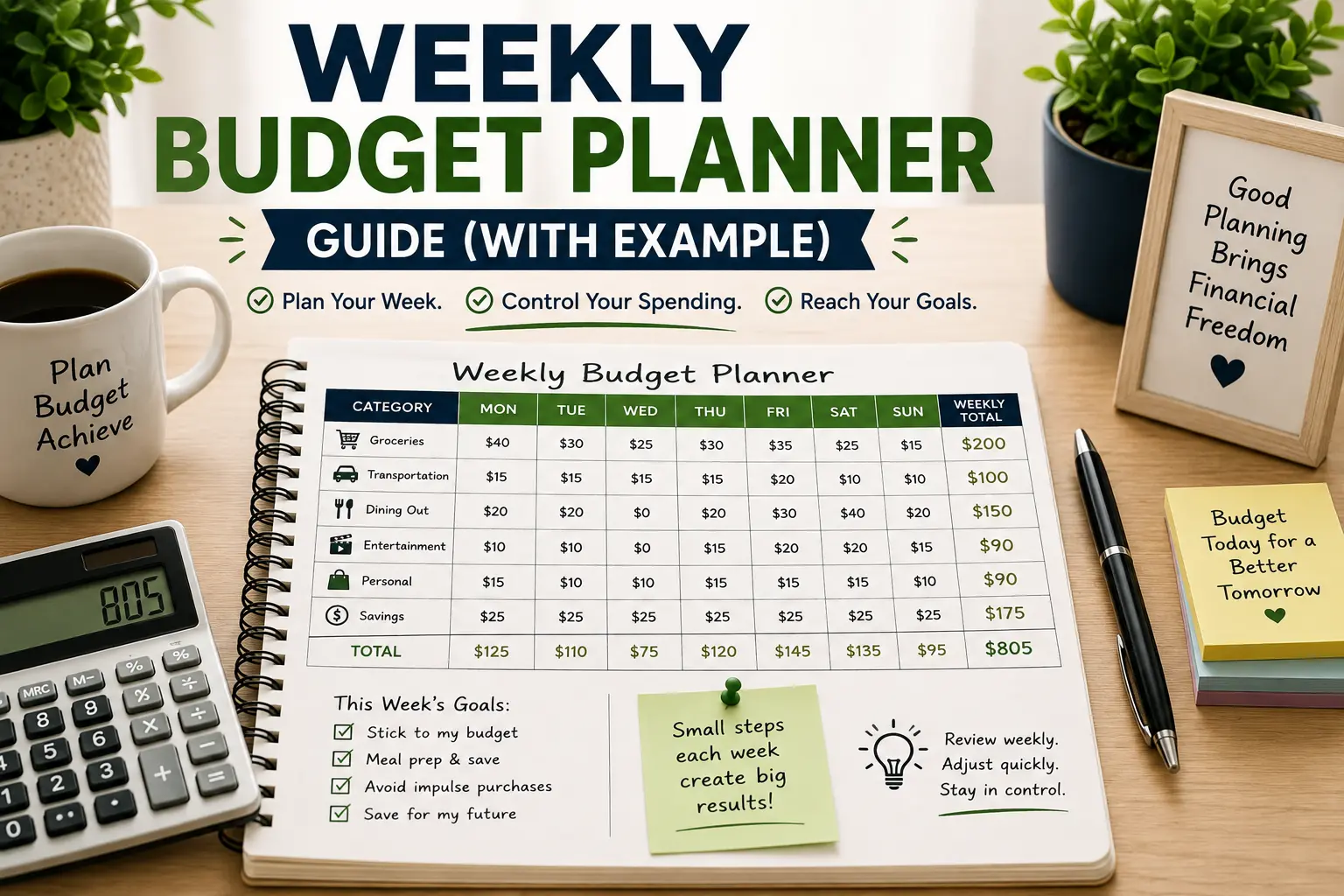
Have you ever reached the end of the week and wondered where all your money went?
Perhaps payday felt exciting on Friday.
You paid a few bills, bought groceries, stopped for coffee a few times, ordered takeout, filled your gas tank, and picked up a few items that seemed inexpensive at the time.
Then, before the next paycheck arrived, your bank account looked much smaller than expected.
For many people, this isn’t caused by one large purchase.
Instead, it’s the result of dozens of small spending decisions that slowly add up throughout the week.
This is exactly why weekly budgeting can be so effective.
While many people focus only on creating a monthly budget, breaking your finances into weekly plans makes your money much easier to manage.
A month can feel like a long time.
Unexpected expenses can happen.
It’s easy to lose track of your spending over four or five weeks.
A weekly budget, however, allows you to check your progress every few days, make adjustments quickly, and avoid unpleasant surprises before your next payday.
Think of it like taking a road trip.
If you only looked at your map once before leaving home, you’d probably miss a few turns along the way.
Checking your direction regularly helps you stay on course.
Your finances work much the same way.
A weekly budget acts as regular financial check-ins, helping you notice small problems before they become expensive ones.
Whether you’re trying to stop living paycheck to paycheck, save for a vacation, build an emergency fund, pay off debt, or simply feel more in control of your finances, a weekly budget planner provides a practical roadmap toward those goals.
The good news is that creating one doesn’t require complicated spreadsheets or advanced math.
Anyone can learn to build a weekly budget using a few simple steps.
In this guide, you’ll learn what a weekly budget planner is, why it works, how to create one, common mistakes to avoid, and see a complete example you can use as a model for your own finances.
💡 Action Moment: Start With Financial Clarity
Before creating a weekly budget, it’s important to understand your complete financial picture.
Ask yourself:
- Do I know exactly how much income I receive each month?
- Where does most of my money go?
- Which expenses are fixed, and which are flexible?
- Am I saving consistently?
- What financial goal am I currently working toward?
Many people discover they can’t build a realistic budget because they don’t yet have a clear picture of their finances.
That’s why 7 Days to Financial Clarity™ is the perfect place to begin.
This free guide walks you through organizing your income, expenses, savings, debt, and financial priorities so you understand exactly where your money is going.
When you understand your finances, budgeting becomes much less stressful because you’re working with facts instead of estimates.
You're already investing time in improving your finances, and that's something to be proud of. Before you continue, download our free 7 Days To Financial Clarity™ workbook and start putting these ideas into action.

Financial clarity creates budgeting confidence.
What Is a Weekly Budget Planner?
A weekly budget planner is a simple financial tool that helps you organize your income and spending into manageable seven-day periods.
Instead of waiting until the end of the month to see whether you stayed within your budget, you review your finances every week.
This allows you to make small adjustments before spending gets out of control.
For example, imagine your monthly grocery budget is $800.
Rather than spending freely and hoping everything works out, you could divide that budget into weekly targets of approximately $200.
If you spend $185 during the first week, you’ll know you’re slightly under budget.
If you spend $245, you’ll immediately recognize that adjustments may be needed during the following week.
The same approach can be used for:
- Groceries.
- Divide your monthly grocery budget into weekly shopping limits.
- Transportation.
- Estimate weekly fuel, public transportation, or rideshare costs.
- Dining out.
- Allocate a realistic weekly amount for restaurants and takeout.
- Entertainment.
- Plan ahead for movies, family outings, hobbies, or social activities.
- Personal spending.
- Give yourself a reasonable weekly allowance for discretionary purchases.
By reviewing your spending weekly instead of monthly, you remain actively involved in your financial decisions instead of reacting after the money has already been spent.
Why Weekly Budgets Often Work Better Than Monthly Budgets
Monthly budgets remain an excellent financial planning tool.
However, many people find them difficult to follow because a month is a long period of time.
Imagine receiving your paycheck on the first day of the month.
The first week goes well.
The second week includes a birthday celebration.
The third week brings an unexpected car repair.
Understanding money is one thing. Seeing your own numbers is where real financial progress begins. Spend one minute using our free Budget Calculator and discover where your money can work harder for you.

The fourth week includes several social events.
By the end of the month, it’s difficult to remember exactly where your money went.
A weekly budget creates smaller checkpoints.
Instead of correcting problems after thirty days, you’re evaluating your finances every seven days.
This provides several advantages.
You’ll notice overspending sooner.
You’ll make corrections before they become larger problems.
You’ll stay more engaged with your financial goals.
You’ll also build greater confidence because budgeting begins to feel manageable instead of overwhelming.
For many beginners, the shorter time frame makes budgeting easier to maintain over the long term.
Weekly Budgeting Helps You Become More Intentional
One of the greatest benefits of a weekly budget isn’t simply spending less money.
It’s becoming more intentional with every dollar you earn.
Without a plan, spending often becomes automatic.
You grab coffee because you’re in a hurry.
You order food because cooking feels inconvenient.
You make impulse purchases because they’re on sale.
Individually, these decisions may seem harmless.
Collectively, they can significantly reduce your ability to save, invest, or pay off debt.
Every financial journey is different. Take our free Financial Goal Assessment to discover which area deserves your attention first and receive a clear direction for your next financial milestone.

A weekly budget encourages you to pause before spending.
Instead of asking, “Can I afford this today?”
You begin asking a much more powerful question:
“Does this purchase fit into my plan for the week?”
That small shift in thinking often leads to much better financial decisions.
It transforms budgeting from a system of restrictions into a tool for making intentional choices that support your long-term goals.
Start With Your Income
Every successful budget begins with one simple question:
How much money do I actually have available?
Many budgeting problems begin because people estimate their income rather than using accurate numbers.
Before planning expenses, identify the income you realistically expect to receive during the week.
If you’re paid weekly, this is straightforward.
If you’re paid every two weeks or monthly, divide your income into weekly amounts to make planning easier.
Using realistic income figures helps ensure your budget is achievable and prevents you from planning to spend money that hasn’t yet arrived.
Separate Needs From Wants
Once you understand your weekly income, the next step is deciding where that money needs to go.
One of the simplest ways to approach this is by separating essential expenses from discretionary spending.
Needs are the expenses that support your basic daily life and financial responsibilities.
These often include housing, groceries, transportation, insurance, utilities, and minimum debt payments.
Wants, on the other hand, improve your lifestyle but are generally optional.
These may include dining out, streaming subscriptions, entertainment, shopping, hobbies, and impulse purchases.
This distinction doesn’t mean wants are bad.
Enjoying your money is an important part of maintaining a balanced financial life.
However, recognizing the difference helps you make thoughtful decisions when money becomes tight.
Rather than cutting everything you enjoy, you can adjust discretionary spending while continuing to meet your essential financial obligations.
Part 2: How to Create a Weekly Budget Planner (Step by Step)
Creating a weekly budget doesn’t require expensive software or advanced accounting skills.
In fact, some of the most successful budgets are surprisingly simple.
The goal isn’t to create a perfect spreadsheet.
The goal is to create a plan that reflects your real life and helps you make better financial decisions every week.
Think of your budget as a living document.
It should change as your income, expenses, and financial goals change.
Some weeks you’ll spend more on groceries.
Other weeks you may spend more on transportation or family activities.
That’s perfectly normal.
A good budget isn’t rigid.
It’s flexible enough to handle life’s changes while still keeping you focused on your long-term goals.
Let’s walk through the process step by step.
Step 1: Calculate Your Weekly Income
Everything begins with knowing how much money you actually have available.
If you’re paid every week, use your average weekly take-home pay.
If you’re paid every two weeks, divide your paycheck by two.
If you’re paid monthly, divide your monthly income into weekly amounts.
For example:
Imagine your monthly take-home pay is $4,400.
Dividing that by approximately four weeks gives you about $1,100 available each week for budgeting purposes.
Using your actual take-home pay—not your gross salary—helps create a budget that’s realistic and easier to follow.
If your income varies from week to week, calculate your average weekly income using the past three to six months.
When in doubt, budget using the lower average.
This creates a financial cushion and reduces the risk of overspending during slower income periods.
Step 2: List Your Essential Weekly Expenses
Once you know how much money is available, identify the expenses that must be paid regardless of your lifestyle choices.
These are your financial priorities.
Examples include:
- Housing costs.
- Rent or mortgage payments divided into weekly amounts if necessary.
- Utilities.
- Electricity, water, internet, and phone expenses.
- Groceries.
- Weekly food shopping for your household.
- Transportation.
- Fuel, public transportation, parking, or rideshare costs.
- Insurance.
- Auto, health, home, or renters insurance.
- Minimum debt payments.
- Credit cards, student loans, or personal loans.
These expenses form the foundation of your weekly budget because they represent your basic financial responsibilities.
Step 3: Plan for Flexible Spending
After covering essential expenses, decide how much money you’d like to allocate toward discretionary spending.
Unlike fixed bills, these expenses are often easier to adjust when necessary.
Examples include:
- Dining out.
- Restaurant meals, takeout, or coffee purchases.
- Entertainment.
- Movies, sporting events, streaming rentals, or hobbies.
- Personal spending.
- Clothing, cosmetics, gifts, or small impulse purchases.
- Recreation.
- Weekend activities, family outings, or social events.
Giving yourself a realistic spending allowance reduces the temptation to overspend because you’ve already planned for these purchases.
Remember, a successful budget shouldn’t eliminate everything you enjoy.
It should help you enjoy those things responsibly.
Step 4: Don’t Forget Savings
One of the biggest budgeting mistakes is treating savings as whatever money happens to remain at the end of the week.
Unfortunately, many weeks there isn’t anything left.
Instead, treat savings like any other important bill.
Schedule it before spending money elsewhere.
Even modest weekly contributions can grow into meaningful savings over time.
For example:
Saving $50 each week may not seem dramatic.
However, over one year, that becomes $2,600—before considering any interest those savings may earn.
Consistency matters far more than perfection.
A Weekly Budget Example
Let’s look at how a simple weekly budget might work for someone earning $1,100 per week after taxes.
Weekly Income
Income: $1,100
Weekly Essential Expenses
| Category | Weekly Amount |
| Housing | $325 |
| Utilities | $60 |
| Groceries | $160 |
| Transportation | $90 |
| Insurance | $55 |
| Debt Payments | $80 |
Total Essential Expenses: $770
Weekly Flexible Spending
| Category | Weekly Amount |
| Dining Out | $50 |
| Entertainment | $35 |
| Personal Spending | $45 |
Total Flexible Spending: $130
Weekly Savings
| Category | Weekly Amount |
| Emergency Savings | $100 |
| Investing | $50 |
| Vacation Fund | $50 |
Total Savings: $200
Weekly Budget Summary
| Category | Amount |
| Weekly Income | $1,100 |
| Essential Expenses | $770 |
| Flexible Spending | $130 |
| Savings | $200 |
Money Remaining: $0
Notice something important.
Every dollar has a purpose.
This doesn’t mean every week will follow the plan perfectly.
It simply means you’ve intentionally decided where your money should go before the week begins.
That approach gives you far greater control over your finances than spending first and hoping everything works out later.
Adjust Your Budget as Life Changes
No budget remains exactly the same forever.
Life changes.
Your income changes.
Expenses change.
Financial priorities evolve.
Perhaps you receive a raise.
Maybe your rent increases.
You purchase a vehicle.
You welcome a new child into your family.
Or you successfully pay off a credit card.
Each of these milestones deserves a budget review.
Updating your weekly budget regularly helps ensure it continues supporting your current financial situation rather than the one you had six months ago.
A flexible budget is usually a sustainable budget.
Budgeting When You’re Paid Biweekly or Monthly
One concern many people have is whether a weekly budget still works if they aren’t paid every week.
The answer is yes.
The budgeting method simply changes slightly.
If you’re paid every two weeks, divide your paycheck into two weekly spending plans.
Rather than viewing the paycheck as one large amount, assign portions of it to each week.
If you’re paid monthly, break your income into four weekly allocations.
This approach helps prevent overspending early in the month and running short before your next paycheck arrives.
Weekly budgeting creates smaller financial checkpoints regardless of how frequently you’re paid.
💡 Action Moment: Connect Your Budget to Your Financial Goals
A budget without a goal often feels restrictive.
A budget connected to a meaningful goal feels purposeful.
That’s why it’s helpful to complete the LookingAtFinance Financial Goal Assessment before finalizing your weekly budget.
The assessment helps you identify which financial objective should receive your greatest attention.
Perhaps your current priority is:
- Becoming debt-free.
- You may choose to allocate more of your weekly income toward extra debt payments.
- Building an emergency fund.
- Increasing your weekly savings can strengthen your financial safety net.
- Saving for a home.
- Setting aside money every week makes large down payment goals feel more achievable.
- Growing your investments.
- Consistent weekly investing can support long-term wealth building.
- Achieving greater financial stability.
- A balanced weekly budget can reduce financial stress while helping you prepare for future opportunities.
When every dollar supports a meaningful goal, budgeting becomes less about restriction and more about progress.
Small Weekly Improvements Create Big Results
Many people believe they need to completely transform their finances overnight.
In reality, lasting financial success usually comes from small improvements repeated consistently.
Imagine reducing unnecessary spending by just $25 each week.
At first, it may not seem significant.
But over the course of a year, that’s $1,300 redirected toward debt repayment, savings, investing, or another important financial goal.
Likewise, increasing your weekly savings by $20, preparing one extra meal at home each week, or avoiding a few impulse purchases can produce meaningful results over time.
Weekly budgeting encourages this mindset.
Instead of chasing perfection, it helps you focus on steady progress.
Those small wins build confidence, and confidence often leads to even stronger financial habits.
Part 3: How to Stick to Your Weekly Budget
Creating a weekly budget is an important first step.
Following it consistently is where lasting financial change happens.
Many people spend hours building a detailed budget, only to abandon it within a few weeks because life doesn’t go exactly as planned.
An unexpected expense appears.
A family celebration comes up.
The car needs repairs.
The grocery bill is higher than expected.
Suddenly, the budget feels impossible to follow.
The truth is that a good budget isn’t designed for perfect weeks.
It’s designed for real life.
Successful budgeting isn’t about avoiding every financial surprise.
It’s about having a plan that helps you respond wisely when surprises happen.
Instead of expecting perfection, focus on building habits that keep you moving in the right direction—even when your week doesn’t unfold exactly as expected.
Expect Unexpected Expenses
One of the most common budgeting mistakes is assuming every week will look exactly the same.
Unfortunately, life rarely works that way.
You may need to replace a tire.
Your child might need supplies for school.
A birthday invitation may require buying a gift.
Your pet could need an unexpected visit to the veterinarian.
These situations don’t necessarily mean your budget has failed.
They simply mean your budget should include flexibility.
One helpful approach is setting aside a small amount each week for miscellaneous expenses.
Even if you don’t spend it immediately, the money continues growing until you need it.
Over time, this small reserve can reduce financial stress because you’re no longer caught completely off guard by life’s inevitable surprises.
Review Your Spending Every Week
One advantage of weekly budgeting is that problems become easier to identify.
Rather than waiting until the end of the month to discover you’ve overspent, you can review your progress every seven days.
Ask yourself a few simple questions:
- Did I stay within my planned grocery budget?
- If not, what caused the difference?
- Were there unexpected expenses?
- Could I prepare differently next time?
- Did I spend money on anything that wasn’t planned?
- Was it worth it, or was it an impulse purchase?
- Did I meet my savings goal?
- If not, what adjustments can I make next week?
These short weekly reviews take only a few minutes, but they help you continuously improve your budgeting skills.
Instead of criticizing yourself for mistakes, use each week as an opportunity to learn.
Track Small Purchases
Many people believe their financial challenges come from large expenses.
Sometimes they do.
More often, however, it’s the smaller purchases that quietly reduce available cash.
A coffee here.
A convenience store snack there.
An online purchase that seemed inexpensive.
A food delivery because cooking felt inconvenient.
Individually, none of these purchases seem significant.
Collectively, they can consume hundreds of dollars each month.
Tracking these smaller expenses doesn’t mean eliminating every enjoyable purchase.
Instead, it helps you become aware of spending patterns you may not have noticed before.
Awareness creates better decision-making.
Budget for Fun Without Feeling Guilty

One reason people abandon budgets is because they make them too restrictive.
If every dollar is allocated toward bills and responsibilities, budgeting can quickly feel discouraging.
A realistic budget includes room for enjoyment.
Whether that’s dining out with friends, watching a movie, pursuing a hobby, or treating yourself occasionally, planned enjoyment is healthier than feeling deprived and eventually overspending out of frustration.
The key is intentional spending.
When entertainment has its own place within your budget, you can enjoy those experiences without feeling guilty afterward.
Budgeting shouldn’t remove joy from your life.
It should help you enjoy your money responsibly.
What Happens If You Go Over Budget?
No budget is perfect.
Eventually, everyone experiences a week when spending exceeds the plan.
The important question isn’t whether it happens.
It’s how you respond.
Avoid viewing one difficult week as failure.
Instead, ask yourself:
What caused the overspending?
Was it an emergency?
Was it poor planning?
Was it an emotional purchase?
Once you understand the reason, you can make adjustments.
Perhaps you’ll reduce discretionary spending next week.
Maybe you’ll increase your grocery budget because your original estimate wasn’t realistic.
Or perhaps you’ll decide to build a larger emergency fund to prepare for similar situations in the future.
Budgets should evolve as you learn more about your spending habits.
Budgeting With Irregular Income
Not everyone receives the same paycheck every week.
Freelancers, business owners, commission-based employees, seasonal workers, and gig workers often experience fluctuating income.
Weekly budgeting still works—it simply requires a more conservative approach.
Many people with irregular income choose to budget using their lowest average weekly earnings.
If they earn more during certain weeks, the extra money can be directed toward savings, debt repayment, or future slower periods.
This approach helps create greater financial stability because you’re planning around what you know you can reasonably expect instead of hoping every week will be your highest-earning week.
Over time, maintaining this buffer can significantly reduce financial stress.
Budgeting as a Couple or Family
A weekly budget becomes even more valuable when multiple people share financial responsibilities.
When couples or families communicate openly about money, budgeting becomes a team effort rather than an individual burden.
Consider scheduling a short budget meeting once each week.
It doesn’t need to be formal.
Simply review:
- Upcoming bills.
- Confirm what needs to be paid before the next meeting.
- Planned activities.
- Budget for birthdays, outings, school events, or travel.
- Savings progress.
- Celebrate milestones together, even if they’re small.
- Unexpected expenses.
- Discuss how they’ll be handled without blame or frustration.
Regular conversations reduce misunderstandings and help everyone work toward shared financial goals.
Build Better Financial Habits One Week at a Time
Financial success rarely comes from dramatic overnight changes.
It usually develops through small habits repeated consistently.
Preparing meals at home a few extra days each week.
Checking your bank balance before making purchases.
Reviewing your budget every Sunday evening.
Automatically transferring money into savings.
Each habit may seem insignificant on its own.
Together, they create a strong financial foundation.
The beauty of weekly budgeting is that it encourages these habits naturally.
Instead of feeling overwhelmed by an entire month’s finances, you’re simply making thoughtful decisions one week at a time.
💡 Action Moment: Put Your Plan Into Action With the Budget Calculator
Creating a budget on paper is helpful.
Testing it with real numbers is even better.
The LookingAtFinance Budget Calculator allows you to personalize your weekly budget based on your own financial situation.
Rather than relying on general examples, you can enter your own income and expenses to see exactly how your money is being allocated.
The calculator helps you:
- Estimate your weekly spending plan.
- Organize your income into essential expenses, discretionary spending, and savings categories.
- Identify opportunities to save more.
- Small adjustments in one category may free up money for more important financial goals.
- Compare different budgeting scenarios.
- Explore how reducing certain expenses or increasing savings could affect your overall financial picture.
- Stay accountable.
- Revisiting your budget regularly makes it easier to track progress and make informed adjustments over time.
Remember, the calculator isn’t there to judge your spending.
It’s there to help you make informed decisions and build a budget that fits your life.
Progress Is More Important Than Perfection
One of the biggest misconceptions about budgeting is that every week must go exactly according to plan.
Real life doesn’t work that way.
Some weeks you’ll spend less than expected.
Other weeks unexpected expenses will force you to adjust.
Neither situation defines your financial future.
What matters is your willingness to continue.
Each week provides another opportunity to improve.
Another opportunity to save.
Another opportunity to make one better decision than you made last week.
Over months and years, those small improvements often produce remarkable financial results.
The goal isn’t to become a perfect budgeter.
The goal is to become someone who consistently manages money with intention, confidence, and purpose.
A Real-Life Example: Two Friends, Two Different Financial Outcomes
Budgeting often sounds simple in theory.
The real difference appears in everyday decisions.
Consider the stories of two fictional friends, Rachel and Nicole.
Both were 32 years old.
Both earned approximately $1,100 per week after taxes.
Both wanted to save for a down payment on their first home within the next five years.
Despite having similar incomes and goals, they approached their finances very differently.
Rachel’s Story
Rachel decided to begin using a weekly budget planner.
Every Sunday evening, she spent about fifteen minutes reviewing the previous week and planning for the next one.
She knew how much she intended to spend on groceries, transportation, entertainment, and personal expenses.
She also scheduled automatic transfers into her savings account every payday.
When unexpected expenses occurred, Rachel adjusted other discretionary categories instead of abandoning her budget altogether.
Some weeks she spent less on dining out.
Other weeks she postponed unnecessary shopping.
She wasn’t perfect.
There were weeks she spent more than planned.
But because she reviewed her finances every week, she noticed problems early and corrected them before they became major setbacks.
Over time, those small weekly decisions became habits.
Those habits helped her steadily grow her savings while reducing financial stress.
Nicole’s Story
Nicole believed budgeting was too restrictive.
Instead of following a spending plan, she simply checked her bank balance occasionally to make sure she still had money available.
Some weeks she spent very little.
Other weeks she made several impulse purchases because “there was still money in the account.”
When unexpected expenses appeared, she often relied on her credit card.
At the end of each month, she promised herself she would budget better next time.
Unfortunately, without a weekly plan, the same spending patterns continued.
Although Nicole earned almost the same income as Rachel, she struggled to build savings because she never consistently told her money where to go.
The Difference Wasn’t Their Income
Rachel didn’t receive a larger paycheck.
She didn’t discover a secret budgeting technique.
She simply made small financial decisions consistently.
Nicole relied on good intentions.
Rachel relied on a plan.
That difference became more significant with every passing week.
After several years, Rachel had accumulated meaningful savings toward her home.
Nicole was still trying to figure out why saving always seemed so difficult.
The lesson isn’t that budgeting makes life perfect.
The lesson is that consistency usually produces better financial results than good intentions alone.
Weekly Budget Success Checklist
Creating a budget is only the beginning.
Use this checklist each week to stay organized, build healthy financial habits, and keep your budget aligned with your long-term goals.
Before the Week Begins
☐ Review your expected income for the week.
☐ List any bills or payments due before your next payday.
☐ Plan your grocery shopping before visiting the store.
☐ Schedule time for meal preparation if possible.
☐ Review any upcoming birthdays, appointments, or special events.
During the Week
☐ Record your spending regularly.
☐ Compare your spending to your weekly budget.
☐ Avoid impulse purchases whenever possible.
☐ Look for opportunities to save on everyday expenses.
☐ Celebrate small budgeting wins without overspending.
End-of-Week Review
☐ Compare your planned spending with your actual spending.
☐ Identify any unexpected expenses.
☐ Decide what adjustments should be made next week.
☐ Transfer money into savings if possible.
☐ Prepare next week’s budget before the new week begins.
Long-Term Financial Habits
☐ Review your financial goals regularly.
☐ Increase savings whenever your income grows.
☐ Reduce unnecessary spending gradually rather than drastically.
☐ Continue learning about personal finance.
☐ Remember that consistent progress matters more than perfect budgeting.
Frequently Asked Questions
Is a weekly budget better than a monthly budget?
Not necessarily.
Both approaches are effective.
Many people simply find weekly budgeting easier because it provides more frequent opportunities to review spending and make adjustments before small problems become larger ones.
Some people even use both—a monthly budget for overall planning and a weekly budget for day-to-day spending.
What if I don’t get paid every week?
A weekly budget still works.
Simply divide your monthly or biweekly income into weekly spending amounts.
This approach creates smaller financial checkpoints and helps prevent overspending early in the pay period.
Should I include savings in my weekly budget?
Absolutely.
Savings should be treated like any other important financial commitment.
By setting aside money each week—even modest amounts—you gradually build emergency savings and make progress toward larger financial goals.
What if I go over budget one week?
Don’t view one difficult week as failure.
Instead, review what caused the overspending.
Was it an emergency?
Was your estimate unrealistic?
Was it an impulse purchase?
Use what you learn to improve next week’s budget rather than giving up altogether.
How detailed should my weekly budget be?
Your budget should be detailed enough to guide your decisions but simple enough that you’ll actually use it.
If tracking dozens of categories feels overwhelming, start with broader groups such as housing, transportation, groceries, entertainment, savings, and miscellaneous expenses.
You can always add more detail as you become comfortable with the process.
How often should I update my budget?
Review your budget every week.
You should also make larger updates whenever your income, living expenses, family situation, or financial goals change.
Keeping your budget current makes it much more useful as a financial planning tool.
Final Thoughts
Budgeting isn’t about saying “no” to everything you enjoy.
It’s about saying “yes” to the things that matter most.
Every dollar you earn gives you a choice.
You can allow your money to disappear without a plan, or you can direct it toward building the future you want.
A weekly budget makes those choices easier.
Instead of wondering where your money went at the end of the month, you’ll know where it’s going every single week.
That awareness often leads to greater confidence, less financial stress, and steady progress toward your goals.
Remember that no budget is perfect.
Some weeks will be more challenging than others.
Unexpected expenses will happen.
Plans will occasionally change.
The important thing is continuing to review, adjust, and move forward.
Financial success isn’t created by one perfect week.
It’s created by hundreds of thoughtful financial decisions repeated over time.
Your Next Steps
Learning how to build a weekly budget is an important first step.
Putting that knowledge into action is what creates lasting financial change.
Here are three practical steps you can take today.
Step 1: Organize Your Financial Life
Download 7 Days to Financial Clarity™ and take time to organize your income, expenses, debts, savings, and financial priorities.
Many budgeting problems begin simply because people don’t have a clear picture of where their money is going.
When you understand your finances, creating a realistic weekly budget becomes much easier.
Step 2: Budget Around Your Financial Goals
Complete the LookingAtFinance Financial Goal Assessment to identify which financial objective deserves your immediate attention.
Whether your priority is:
- Becoming debt-free.
- Building an emergency fund.
- Saving for a home.
- Investing for retirement.
- Creating financial security.
- Achieving greater financial freedom.
Knowing your primary goal helps ensure every dollar in your weekly budget supports something meaningful.
Step 3: Build Your Personal Weekly Budget
Once you’ve identified your goals, use the LookingAtFinance Budget Calculator to create a budget tailored to your own financial situation.
The calculator allows you to:
- Estimate your weekly spending plan.
- Allocate your income across essential expenses, discretionary spending, and savings.
- Identify opportunities to improve your budget.
- Small adjustments can free up money for debt repayment, investing, or future goals.
- Compare different budgeting scenarios.
- Explore how changes in spending habits may affect your financial progress.
- Monitor your progress over time.
- Revisiting your budget regularly helps reinforce healthy financial habits and keeps you focused on your goals.
A budget is more than a list of numbers.
It’s a roadmap that helps you use your income intentionally and confidently.
Key Takeaway
A weekly budget planner helps you take control of your money one week at a time. By reviewing your finances regularly, planning your spending intentionally, and making small adjustments as life changes, you can reduce financial stress, build better money habits, and make steady progress toward your long-term financial goals.
You have invested time learning today. Now take the next step by downloading our free 7 Days To Financial Clarity™ workbook and begin building a stronger financial future.
