
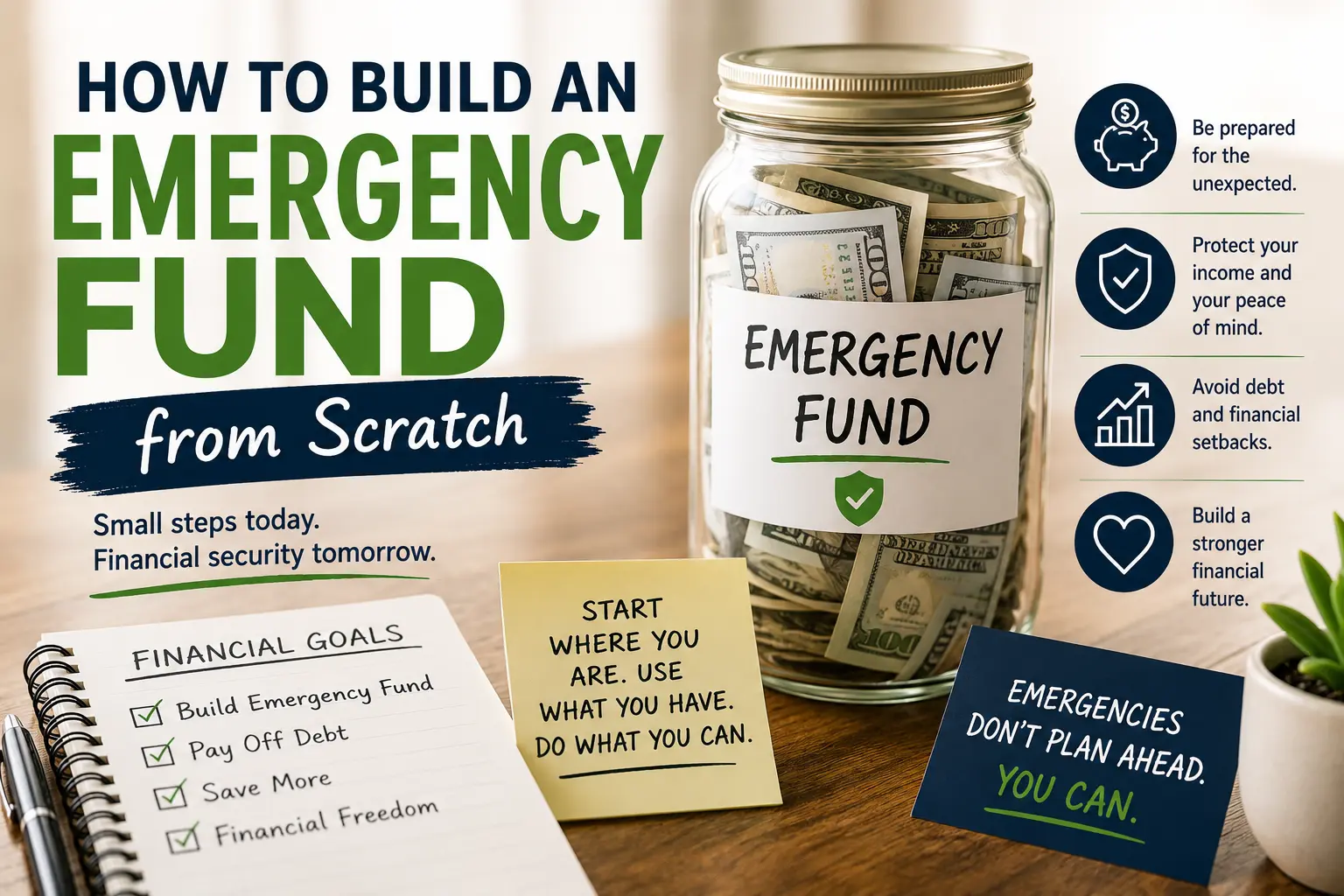
Life has a way of surprising us.
A car breaks down on the way to work.
A refrigerator suddenly stops working.
An unexpected medical expense appears.
A reduction in work hours affects your income.
A family emergency requires immediate travel.
These situations are stressful enough on their own.
When you don’t have money set aside to deal with them, they can quickly become financial crises.
Why an Emergency Fund Can Change Your Financial Life
Many people respond to emergencies by relying on credit cards, personal loans, or borrowing money from family and friends.
While these options may provide temporary relief, they often create additional financial pressure that lasts long after the emergency has passed.
This is where an emergency fund becomes one of the most powerful financial tools you can build.
An emergency fund is money set aside specifically for unexpected expenses or temporary financial setbacks.
Unlike money you’re saving for a vacation, a new car, or holiday shopping, an emergency fund has one purpose: helping you handle life’s surprises without disrupting your long-term financial stability.
The idea sounds simple.
Save money for emergencies.
Yet for many people, especially those living paycheck to paycheck, building an emergency fund can feel almost impossible.
You may be wondering:
“How can I save money when every dollar already has a job?”
That’s a valid question.
The good news is that emergency funds aren’t built overnight.
They’re built one small, consistent step at a time.
You don’t need to save thousands of dollars in your first month.
You simply need to begin.
Every dollar you save today is one less dollar you’ll have to borrow tomorrow.
In this guide, you’ll learn why emergency funds matter, how much you should save, practical ways to build one even on a limited income, common mistakes to avoid, and how to develop saving habits that strengthen your financial future.
Whether you’re starting with zero dollars or rebuilding after a difficult financial season, this guide will help you create an emergency fund from scratch with confidence.
💡 Action Moment: Understand Your Financial Starting Point
Before setting an emergency savings goal, it’s important to understand your current financial situation.
You're already investing time in improving your finances, and that's something to be proud of. Before you continue, download our free 7 Days To Financial Clarity™ workbook and start putting these ideas into action.

Take a few moments to think about questions such as:
- How much do I currently have in savings?
- What unexpected expenses have affected me during the past year?
- Would I be able to cover a major car repair today?
- How long could I pay my essential bills if my income stopped temporarily?
- What financial situations worry me the most?
These questions help identify where you are today and where you’d like to be.
That’s why 7 Days to Financial Clarity™ is the perfect place to begin.
The guide helps you organize your income, expenses, savings, debts, and financial priorities so you can clearly see where an emergency fund fits into your overall financial plan.
When you understand your complete financial picture, creating a realistic savings strategy becomes much easier.
What Is an Emergency Fund?
An emergency fund is money reserved specifically for unexpected financial situations.
It isn’t money for planned purchases.
It isn’t your vacation savings.
It isn’t your holiday shopping budget.
It isn’t money for upgrading your phone simply because a newer model has been released.
An emergency fund exists to protect you from financial shocks that you cannot reasonably predict.
Examples include:
- Unexpected medical expenses.
- Emergency home repairs.
- Major vehicle repairs.
- Temporary job loss.
- Sudden reduction in income.
- Urgent travel for a family emergency.
Because these situations often happen without warning, having money available can make the difference between a manageable inconvenience and a long-term financial setback.
Why an Emergency Fund Is So Important
Many people think of savings as something they’ll focus on after they earn more money.
In reality, emergency savings often become even more important during periods of limited income.
Without savings, even relatively small unexpected expenses can force difficult decisions.
Understanding money is one thing. Seeing your own numbers is where real financial progress begins. Spend one minute using our free Budget Calculator and discover where your money can work harder for you.

Imagine needing a $600 vehicle repair to continue getting to work.
If you don’t have emergency savings, you may need to:
- Use a credit card.
- Borrow money.
- Delay other important bills.
- Take out a high-interest loan.
Each option may solve today’s problem while creating tomorrow’s financial stress.
An emergency fund provides another option.
It allows you to pay for many unexpected expenses without immediately creating new debt.
Financial Security Begins With Small Wins
One reason people delay building an emergency fund is believing they must save several months of expenses immediately.
That expectation often feels overwhelming.
Instead, think about emergency savings as a series of achievable milestones.
Your first goal might simply be saving enough to handle a small unexpected expense.
Once that goal is reached, you build toward the next milestone.
Then the next.
Each step increases your financial confidence.
Small victories matter because they build momentum.
Saving your first $100 demonstrates that consistent progress is possible.
Saving your first $500 provides additional flexibility.
Eventually, those smaller achievements contribute to a much larger financial safety net.
An Emergency Fund Helps You Avoid Expensive Debt
Debt itself isn’t always the problem.
Unexpected borrowing often becomes expensive because emergencies require immediate decisions.
Every financial journey is different. Take our free Financial Goal Assessment to discover which area deserves your attention first and receive a clear direction for your next financial milestone.

Imagine your car suddenly needs repairs before Monday morning.
Without savings, you may feel pressured to accept the first financing option available, regardless of the interest rate.
When emergency savings are available, you have more choices.
You can pay the repair bill directly, compare options more carefully, or avoid high-interest borrowing altogether.
An emergency fund doesn’t simply save money.
It creates financial flexibility.
Peace of Mind Has Financial Value
Emergency savings provide benefits that aren’t measured only in dollars.
Knowing you have money available for unexpected situations often reduces financial anxiety.
Imagine receiving an unexpected repair estimate.
Without savings, the news may create immediate panic.
With an emergency fund, the situation is still inconvenient, but it’s less likely to threaten your entire financial plan.
That peace of mind allows you to make better decisions under pressure.
Instead of reacting emotionally, you’re able to focus on solving the problem.
Financial confidence grows not because emergencies disappear, but because you’re better prepared to handle them.
Emergencies Are Different From Unexpected Opportunities
One common mistake is using an emergency fund for purchases that feel urgent but aren’t true emergencies.
For example, finding a television on sale for half price isn’t an emergency.
Neither is booking a spontaneous vacation because airline tickets are discounted.
An emergency fund should generally remain reserved for situations that are:
- Unexpected.
- You couldn’t reasonably plan for the expense.
- Necessary.
- The situation requires attention rather than simply being desirable.
- Urgent.
- Delaying action could create more serious financial consequences.
Using these three questions can help you decide whether an expense truly belongs in your emergency fund.
Every Emergency Fund Looks Different
There isn’t one emergency fund amount that works for everyone.
A single person renting an apartment may have very different financial responsibilities than a family with children, a mortgage, and multiple vehicles.
Someone with a stable job may feel comfortable maintaining a different level of emergency savings than someone whose income changes from month to month.
Your emergency fund should reflect your own circumstances rather than someone else’s financial journey.
Comparing your progress with others often creates unnecessary frustration.
Instead, focus on building a fund that supports your own life and responsibilities.
Saving Is a Habit, Not a One-Time Event
Building an emergency fund isn’t about making one large deposit.
It’s about creating consistent financial habits.
Even modest contributions made regularly can grow into meaningful savings over time.
Some months you’ll save more.
Other months unexpected expenses may reduce what you’re able to set aside.
That’s perfectly normal.
The important thing is continuing the habit whenever possible.
Financial progress rarely follows a perfectly straight line.
What matters is remaining committed to the process rather than expecting immediate results.
Part 2: How Much Should You Save and How Do You Get Started?
One of the first questions people ask after learning about emergency funds is:
“How much money should I actually save?”
You’ve probably heard advice suggesting you need three months, six months, or even a year’s worth of living expenses.
While those are common guidelines, they aren’t rules that apply equally to everyone.
The right emergency fund isn’t determined by someone else’s financial situation.
It’s determined by yours.
Your income, monthly expenses, family responsibilities, job stability, and financial goals all play a role in deciding how much emergency savings is appropriate.
Instead of worrying about reaching a large number immediately, focus on building your emergency fund one milestone at a time.
Start With Your First Emergency Fund Milestone
One of the biggest mistakes beginners make is believing they need several thousand dollars before their emergency fund is useful.
That belief often prevents them from starting at all.
In reality, even a modest emergency fund can make a meaningful difference.
Imagine receiving a $150 car repair bill.
If you have no savings, you may need to use a credit card or borrow money.
If you’ve already saved $300, however, that same expense becomes much easier to manage.
Your first goal isn’t financial perfection.
It’s reducing the number of emergencies that turn into debt.
Consider building your savings in stages.
- First milestone: $500
- This amount may cover many smaller unexpected expenses, such as minor vehicle repairs, medical costs, or appliance repairs.
- Second milestone: $1,000
- Reaching four figures often provides greater peace of mind and creates a stronger financial cushion for larger emergencies.
- Long-term goal: Several months of essential living expenses
- Once you’ve established consistent saving habits, you can gradually build a larger emergency fund that reflects your personal circumstances and financial responsibilities.
Each milestone strengthens your financial resilience and makes the next goal feel more achievable.
How to Estimate Your Emergency Fund
Rather than choosing a random savings target, begin by understanding your essential monthly expenses.
These are the costs you would still need to pay if your income suddenly stopped.
Examples include:
- Housing costs.
- Rent or mortgage payments remain one of your highest priorities.
- Utilities.
- Electricity, water, internet, and other basic services help keep your household functioning.
- Food.
- Focus on groceries and other essential household items rather than optional dining expenses.
- Transportation.
- Fuel, public transportation, or vehicle costs may be necessary to continue working or meeting family responsibilities.
- Insurance.
- Health, auto, renters, or homeowners insurance often remain important even during financial hardship.
- Minimum debt payments.
- Continuing required payments can help protect your credit and avoid additional penalties.
These essential expenses form the foundation of your emergency savings goal.
Remember, the purpose of an emergency fund isn’t to maintain every aspect of your current lifestyle indefinitely.
It’s to help you continue covering your most important financial responsibilities while you recover from an unexpected setback.
Your Job Stability Matters
Not everyone’s financial situation carries the same level of uncertainty.
Someone with a stable salary and predictable income may feel comfortable maintaining a different emergency fund than someone whose income changes every month.
For example:
A teacher with consistent employment throughout the year may face different financial risks than a self-employed contractor whose workload varies seasonally.
Likewise, someone working on commission may experience larger income fluctuations than someone receiving a fixed salary.
This doesn’t mean one person is managing money better than another.
It simply means that emergency savings should reflect your personal level of financial risk.
The more unpredictable your income, the more valuable a larger emergency fund may become.
Family Responsibilities Affect Your Savings Needs
Your emergency fund should also reflect the people who depend on you.
If you’re responsible only for yourself, your financial obligations may be relatively straightforward.
If you support children, aging parents, or other family members, unexpected expenses may have a greater impact on your household.
For example, a family may need to prepare for situations such as:
- Unexpected childcare costs.
- Emergency medical expenses.
- Home repairs.
- Additional grocery expenses.
- Temporary income disruptions.
Planning for these possibilities doesn’t mean expecting the worst.
It simply means preparing responsibly.
Saving Money on a Low Income Is Still Possible
Many readers may feel discouraged at this point.
They understand why emergency savings matter, but they aren’t sure where the money will come from.
If you’re living paycheck to paycheck, you’re not alone.
Building an emergency fund while managing everyday expenses can feel challenging.
The key is remembering that emergency funds grow through consistent habits rather than dramatic financial changes.
Small contributions matter.
Saving $20 every week may not seem significant today.
However, over the course of a year, those consistent deposits can become a meaningful financial cushion.
Progress isn’t measured only by the size of your balance.
It’s measured by the habit you’re building.
Practical Ways to Start Saving
If you’re unsure where to begin, look for small opportunities to create room in your budget.
For example:
- Automate your savings.
- Setting up automatic transfers helps you save consistently without relying on willpower each month.
- Save unexpected income.
- Tax refunds, bonuses, gifts, or cash rewards can provide opportunities to boost your emergency fund.
- Reduce one unnecessary expense.
- Even temporarily reducing discretionary spending can free up money for savings.
- Round up purchases.
- Some banks and financial apps automatically round purchases to the nearest dollar and transfer the difference into savings.
- Treat savings like a monthly bill.
- Paying yourself first can help make saving a regular financial habit rather than an occasional decision.
None of these strategies require drastic lifestyle changes.
Instead, they encourage steady progress that becomes easier to maintain over time.
💡 Action Moment: Build the Right Emergency Fund for Your Life
It’s easy to compare your savings with someone else’s.
But financial planning isn’t a competition.
The amount you need in your emergency fund depends on your goals, responsibilities, and financial circumstances.
That’s why the LookingAtFinance Financial Goal Assessment is such an important step.
The assessment helps you identify where emergency savings fit within your overall financial priorities.
For example:
- If your highest priority is creating financial stability, building your emergency fund may become your first major savings goal before focusing on long-term investing.
- If you’re working to become debt-free, your assessment can help you balance paying down high-interest debt while still maintaining a reasonable emergency savings cushion.
- If you’re saving for a home, understanding your timeline helps you decide how to balance your emergency fund with your down payment savings.
- If you’re planning for retirement, you’ll see how emergency savings can help protect your long-term investments from being withdrawn during unexpected financial setbacks.
- If your goal is financial freedom, you’ll discover that emergency savings are one of the building blocks that allow you to pursue future opportunities with greater confidence.
There is no perfect emergency fund amount that fits everyone.
The right goal is the one that reflects your unique financial life and gives you greater peace of mind.
Should You Save or Pay Off Debt First?
One of the most common financial dilemmas is deciding whether to build an emergency fund or focus entirely on debt repayment.
The answer often depends on the type of debt you have, the interest rates you’re paying, and your overall financial situation.
For many people, building at least a modest emergency fund before aggressively paying down debt can be beneficial.
Without any savings, even a relatively small unexpected expense may force you to rely on credit again, making it harder to reduce your debt over time.
A balanced approach often works well.
You might build a starter emergency fund while continuing to make required debt payments.
Once that safety net is in place, you can increase your focus on paying off high-interest debt while continuing to contribute to your emergency savings as your financial situation improves.
The right balance depends on your individual circumstances, but having some financial cushion can help prevent unexpected setbacks from undoing your progress.
Where Should You Keep Your Emergency Fund?
Because emergency funds are intended for unexpected situations, accessibility matters.
Many people choose to keep their emergency savings in an account that is separate from their everyday spending money while still allowing relatively quick access if needed.
When deciding where to keep your emergency fund, consider qualities such as:
- Easy access.
- You should be able to reach your money without unnecessary delays during a genuine emergency.
- Safety.
- Emergency savings are generally intended to preserve your money rather than pursue investment growth.
- Separation from daily spending.
- Keeping your emergency fund in a separate account can reduce the temptation to spend it on non-emergency purchases.
The goal isn’t to maximize investment returns with your emergency fund.
The goal is to ensure the money is available when life throws you an unexpected challenge.
Every Dollar Saved Is Progress
It’s easy to become discouraged when your savings goal feels far away.
But remember this:
Your emergency fund doesn’t become valuable only after you reach a certain dollar amount.
Every contribution increases your financial flexibility.
Every deposit reduces the likelihood that you’ll need to rely on debt during an emergency.
Every month of consistent saving strengthens your financial confidence.
The journey from zero to financial security happens one decision at a time.
Keep making those decisions, and over time you’ll build far more than a savings account—you’ll build resilience.
Part 3: Growing and Protecting Your Emergency Fund
By now, you understand what an emergency fund is, why it matters, and how to determine a savings goal that fits your life.
The next challenge is one that almost everyone faces:
How do you keep saving when life keeps getting in the way?
Building an emergency fund isn’t usually difficult because the math is complicated.
It’s difficult because life rarely follows a perfect plan.
Unexpected expenses appear.
Income changes.
Motivation rises and falls.
There may even be months when saving feels impossible.
That’s why successful savers focus less on being perfect and more on building habits they can maintain over the long term.
Let’s look at practical ways to keep your emergency fund growing, even when progress feels slow.
Automate Your Savings Whenever Possible
One of the easiest ways to build an emergency fund is to remove the need to make the same decision every month.
Instead of asking yourself whether you should save after paying your bills, arrange for a set amount to move into your emergency savings automatically whenever you receive income.
Even a modest automatic transfer can make a significant difference over time.
Automation offers several advantages:
- It creates consistency.
- Saving becomes part of your routine instead of depending on motivation.
- It reduces temptation.
- Money transferred to savings is less likely to be spent on impulse purchases.
- It encourages long-term habits.
- Small automatic deposits often add up faster than people expect.
If automatic transfers aren’t possible, you can still create a manual routine by transferring money on the same day each week or month.
The important part is establishing consistency.
Save Windfalls Instead of Spending Them All
Most people occasionally receive unexpected money.
This might include:
- A tax refund.
- A work bonus.
- Birthday or holiday cash gifts.
- Cashback rewards.
- Income from selling unused items.
- Overtime pay.
It’s tempting to treat unexpected money as “extra” spending money.
While enjoying a portion of it is perfectly reasonable, directing at least part of these windfalls toward your emergency fund can dramatically accelerate your progress.
Imagine receiving a $1,200 tax refund.
Rather than spending the entire amount, you might decide to:
- Place $800 into your emergency fund.
- Use $200 toward another financial goal.
- Reserve $200 for something enjoyable.
This balanced approach allows you to enjoy your success while continuing to strengthen your financial security.
Increase Your Savings as Your Income Grows
Many people continue saving the same amount even after receiving raises or increasing their income.
While there’s nothing wrong with enjoying the benefits of higher earnings, it’s also an excellent opportunity to strengthen your emergency fund.
For example:
Suppose you receive a $100 monthly raise after taxes.
Instead of adding the full amount to your regular spending, you might choose to save $50 and enjoy the remaining $50.
This approach allows your lifestyle to improve while ensuring your financial security improves as well.
Small increases made consistently over several years can significantly shorten the time needed to reach your emergency savings goal.
Separate Your Emergency Fund From Everyday Spending
One reason emergency funds disappear is that they’re too easy to spend.
If your emergency savings remain in the same account as your everyday spending money, it’s much easier to dip into those funds for purchases that aren’t true emergencies.
Many people find it helpful to keep emergency savings in a separate account dedicated solely to unexpected expenses.
That separation creates a useful pause.
Before transferring money, you’re more likely to stop and ask:
“Is this really an emergency?”
That brief moment of reflection can prevent many unnecessary withdrawals.
Know When It’s Appropriate to Use Your Emergency Fund
Building an emergency fund is only half the challenge.
Knowing when to use it is equally important.
Sometimes the answer is obvious.
A major car repair that allows you to continue working is generally a genuine emergency.
An unexpected medical expense often qualifies as well.
Other situations require more careful thought.
Before withdrawing money, ask yourself three questions.
Was the expense unexpected?
Could you reasonably have planned for it?
Routine annual expenses, such as holiday shopping or vehicle registration, usually shouldn’t come from your emergency fund because they occur regularly and can often be included in your budget.
Is the expense necessary?
Will delaying the purchase create serious financial, legal, or personal consequences?
Replacing a broken refrigerator may be necessary.
Upgrading to a newer refrigerator because it’s on sale usually isn’t.
Is the expense urgent?
Does the situation require immediate attention?
A leaking roof that could cause extensive property damage is likely urgent.
Buying concert tickets before they sell out isn’t an emergency, even if it feels time-sensitive.
Using these three questions consistently helps preserve your emergency fund for the situations it was designed to handle.
Common Situations That May Qualify as Emergencies
While every situation is unique, many people use their emergency fund for expenses such as:
- Essential medical expenses.
- Unexpected treatment, prescriptions, or emergency care may require immediate payment.
- Necessary vehicle repairs.
- Reliable transportation is often essential for earning an income.
- Critical home repairs.
- Addressing problems such as plumbing leaks or electrical issues quickly may prevent even larger expenses later.
- Temporary loss of income.
- Emergency savings can help cover essential living expenses while searching for new employment or recovering from a temporary setback.
- Emergency travel.
- Unexpected family emergencies sometimes require immediate transportation and accommodation costs.
These examples illustrate the purpose of an emergency fund: protecting your financial stability during circumstances you couldn’t reasonably anticipate.
Situations That Usually Aren’t Emergencies
It’s equally important to recognize expenses that generally belong in separate savings goals.
Examples include:
- Holiday shopping.
- Because holidays occur every year, they can usually be planned for in advance.
- Vacations.
- Travel is enjoyable but should generally have its own dedicated savings fund.
- Electronics upgrades.
- Wanting the newest phone or laptop is different from replacing equipment that is essential and unexpectedly fails.
- Routine maintenance.
- Regular vehicle servicing or annual insurance premiums are predictable expenses that belong in your monthly budget.
Creating separate savings accounts for planned expenses helps protect your emergency fund from being used for everyday financial goals.
💡 Action Moment: Build a Savings Plan That Fits Your Budget
Knowing how much you want to save is only part of the equation.
It’s equally important to understand how long it may take based on your current income and savings habits.
That’s where the LookingAtFinance Emergency Fund Calculator becomes an invaluable planning tool.
Rather than guessing when you’ll reach your goal, the calculator helps you estimate your progress using your own financial information.
You can experiment with factors such as:
- Your emergency fund target.
- Compare different savings goals based on your monthly essential expenses.
- Your current savings balance.
- See how your existing emergency fund shortens the journey.
- Monthly savings contributions.
- Explore how increasing your monthly deposits—even by a small amount—can reduce the time needed to reach your goal.
- Additional one-time deposits.
- Estimate the impact of directing bonuses, tax refunds, or gifts toward your emergency savings.
The calculator isn’t designed to pressure you into saving faster than your budget allows.
Instead, it provides a realistic roadmap so you can see how steady, consistent progress adds up over time.
What If You Have to Use Your Emergency Fund?
One of the biggest mistakes people make is feeling discouraged after using their emergency savings.
Some even feel like they’ve failed.
In reality, using your emergency fund for a genuine emergency means it served its purpose.
Imagine spending several years building your emergency fund and then experiencing an unexpected medical expense.
Without those savings, you might have relied on high-interest debt.
Instead, your emergency fund helped you navigate the situation with greater financial stability.
That’s success—not failure.
The goal isn’t to avoid ever touching your emergency fund.
The goal is to have it available when life genuinely requires it.
Rebuilding After an Emergency
Once the emergency has passed, begin rebuilding your emergency fund as soon as your financial situation allows.
You don’t necessarily need to replace the entire amount immediately.
Instead, return to the same consistent saving habits that helped you build it in the first place.
Consider these steps:
- Review your monthly budget.
- Look for opportunities to restart regular savings contributions.
- Resume automatic transfers.
- Even modest deposits help rebuild your safety net.
- Save future windfalls.
- Unexpected income can accelerate your recovery.
- Celebrate progress.
- Each milestone reached again is another step toward restoring your financial confidence.
Remember, rebuilding is often faster because you’ve already developed the habits that created the fund the first time.
Don’t Let Perfection Stop Progress
Many people postpone saving because they believe they can’t contribute enough.
They think:
“There’s no point in saving $25 this month.”
But imagine repeating that decision month after month.
Small amounts become meaningful over time.
Progress rarely happens through one large deposit.
It happens through hundreds of consistent financial decisions.
Every dollar you save today increases your ability to handle tomorrow’s unexpected challenges.
The important thing isn’t saving perfectly.
It’s saving consistently.
Your Emergency Fund Is More Than a Savings Account
At first glance, an emergency fund may seem like nothing more than money sitting in a bank account.
In reality, it’s much more than that.
It’s a financial buffer.
It’s protection against unexpected setbacks.
It’s flexibility during difficult seasons.
It’s confidence when life becomes unpredictable.
Most importantly, it gives you choices.
Instead of relying immediately on debt or financial desperation, you have resources available to respond thoughtfully.
That sense of security is one of the greatest benefits an emergency fund can provide.
A Real-Life Example: Two Families, Two Different Outcomes
Building an emergency fund doesn’t prevent unexpected expenses.
What it changes is how you respond when those expenses arrive.
Consider the stories of two fictional households: Michael and Sarah.
Both families earned similar incomes.
Both worked hard and paid their monthly bills.
Both wanted to improve their financial future.
The difference wasn’t how much they earned.
It was how they prepared.
Michael’s Story
Michael always intended to save money.
Each month he told himself he would begin “next month.”
Whenever he had extra cash, he spent it on small purchases, weekend outings, or upgrades around the house.
Saving never felt urgent because nothing had gone seriously wrong.
Then one afternoon his vehicle broke down on the way home from work.
The repair bill totaled $1,400.
Unfortunately, Michael had less than $100 in savings.
With no emergency fund available, he had few choices.
He charged the repair to a high-interest credit card.
The monthly payments fit into his budget, but the interest charges meant he paid far more than the original repair cost over time.
Months later, he was still paying for an emergency that had already passed.
The breakdown wasn’t what caused the long-term financial stress.
The lack of preparation did.
Sarah’s Story
Sarah’s income wasn’t significantly different from Michael’s.
She also had regular bills, family responsibilities, and unexpected expenses.
Several years earlier, however, she made a decision.
She would build an emergency fund slowly, even if she could save only a small amount each month.
Some months she saved $25.
Other months she managed $75 or $100.
Whenever she received a tax refund or work bonus, she added part of it to her emergency savings.
Progress felt slow at times.
Still, she continued.
Eventually, her emergency fund grew large enough to cover several months of essential expenses.
Then her water heater suddenly failed.
The replacement cost wasn’t pleasant.
But instead of relying on debt, Sarah paid the bill directly from her emergency fund.
Afterward, she gradually rebuilt her savings.
The emergency was inconvenient.
It wasn’t financially devastating.
The Difference Wasn’t Income
Many people assume financial security depends entirely on earning a high salary.
Income certainly matters.
But preparation matters too.
Michael wasn’t irresponsible.
Sarah wasn’t lucky.
The key difference was that Sarah created a financial buffer before she needed it.
When life became unpredictable, that preparation gave her choices.
Emergency funds don’t eliminate emergencies.
They reduce the financial damage those emergencies can cause.
Emergency Fund Checklist
Before considering your emergency fund complete, review this checklist to make sure you’ve built a strong financial safety net.
Build Your Foundation
☐ Create a realistic monthly budget.
☐ Track your essential monthly living expenses.
☐ Open a separate savings account dedicated to emergencies.
☐ Establish your first emergency savings milestone.
☐ Commit to saving consistently.
Strengthen Your Savings Habits
☐ Automate your savings whenever possible.
☐ Save part of unexpected income, such as bonuses or tax refunds.
☐ Increase your savings as your income grows.
☐ Review your progress regularly.
☐ Celebrate each milestone you achieve.
Protect Your Emergency Fund
☐ Use your emergency fund only for genuine emergencies.
☐ Avoid using it for vacations or planned purchases.
☐ Create separate savings goals for predictable annual expenses.
☐ Rebuild your emergency fund after using it.
☐ Adjust your savings target as your financial responsibilities change.
Frequently Asked Questions
How much should I keep in my emergency fund?
The right amount depends on your financial situation.
Factors such as your monthly essential expenses, income stability, family responsibilities, and personal comfort with financial risk all influence your savings goal.
Many people begin with a smaller milestone before gradually working toward several months of essential living expenses.
Where should I keep my emergency fund?
Many people choose an account that keeps their emergency savings separate from everyday spending while still allowing quick access when a genuine emergency occurs.
The primary purpose of an emergency fund is accessibility and financial security rather than maximizing investment returns.
Should I invest my emergency fund?
Emergency funds generally serve a different purpose than long-term investments.
Because emergencies require immediate access to your money, many people prefer to keep these savings in places designed to preserve capital and provide liquidity rather than exposing them to market fluctuations.
Long-term investments are often better suited for money that won’t be needed in the near future.
What if I can only save a small amount each month?
That’s perfectly normal.
Consistent saving is often more important than the size of any individual contribution.
Saving $25, $50, or $100 regularly can build meaningful financial security over time.
Every dollar saved today increases your ability to handle tomorrow’s unexpected expenses.
What happens if I need to use my emergency fund?
That’s exactly what it’s for.
Using your emergency fund during a genuine emergency isn’t a failure.
It’s evidence that your planning worked.
Once your financial situation stabilizes, begin rebuilding your savings gradually until you reach your target again.
Can I have more than one savings account?
Absolutely.
Many people find it helpful to separate different financial goals.
For example, you might have:
- An emergency fund for unexpected expenses.
- A vacation fund for future travel.
- A home maintenance fund for predictable repairs.
- A holiday savings account for seasonal spending.
- An education or investment savings account for long-term goals.
Separating your savings helps ensure that money intended for emergencies remains available when you truly need it.
Final Thoughts
Building an emergency fund isn’t about expecting disaster.
It’s about preparing for reality.
Unexpected expenses are part of life.
Cars break down.
Appliances wear out.
Medical bills arise.
Jobs change.
Family emergencies happen.
While you can’t control when these events occur, you can influence how prepared you’ll be when they do.
An emergency fund transforms unexpected financial challenges from overwhelming crises into manageable situations.
It gives you breathing room when life becomes unpredictable.
Just as importantly, it helps protect the financial progress you’ve worked hard to achieve.
Without emergency savings, one unexpected expense can interrupt debt repayment, delay investing, or force you to rely on expensive borrowing.
With an emergency fund, you’re more likely to continue moving toward your long-term financial goals, even when life doesn’t go according to plan.
Remember that building financial security isn’t about making one perfect decision.
It’s about making many consistent decisions over time.
Saving a little today may not feel dramatic.
But those small decisions often become the foundation of lasting financial confidence.
Your Next Steps
Reading about emergency funds is valuable.
Building one is even more valuable.
Here’s how to begin.
Step 1: Create Financial Clarity
Download 7 Days to Financial Clarity™ to organize your finances and understand exactly where your money is going.
As you work through the guide, you’ll identify:
- Your income sources.
- Monthly expenses.
- Current savings.
- Outstanding debt.
- Financial priorities.
- Areas where you can begin creating room for consistent savings.
Knowing your starting point makes every future financial decision easier.
Step 2: Identify Your Financial Priorities
Complete the LookingAtFinance Financial Goal Assessment to understand how emergency savings fit within your broader financial plan.
Your assessment may reveal that your current priority is:
- Building financial stability.
- Paying off high-interest debt.
- Saving for a home.
- Preparing for retirement.
- Creating long-term financial security.
- Working toward financial freedom.
Once your priorities are clear, it’s easier to decide how much you can realistically save each month and how emergency savings support your overall goals.
Step 3: Build Your Savings Plan
Use the LookingAtFinance Emergency Fund Calculator to create a realistic savings roadmap.
The calculator helps you estimate:
- Your emergency fund target.
- Base your goal on your essential monthly living expenses.
- Your current progress.
- See how much you’ve already saved and how far you have to go.
- Monthly savings contributions.
- Explore how different contribution amounts affect your timeline.
- Estimated completion date.
- Understand how consistent saving—even in small amounts—moves you closer to financial security.
The calculator isn’t meant to pressure you into saving faster than your budget allows.
Instead, it helps you create a realistic plan that you can confidently follow.
Key Takeaway
An emergency fund is one of the strongest financial foundations you can build. While it won’t prevent unexpected expenses, it can reduce financial stress, help you avoid unnecessary debt, and protect your long-term goals. By saving consistently, using your emergency fund wisely, and rebuilding it after genuine emergencies, you’ll create greater financial confidence and resilience for whatever life brings.
You have invested time learning today. Now take the next step by downloading our free 7 Days To Financial Clarity™ workbook and begin building a stronger financial future.
