
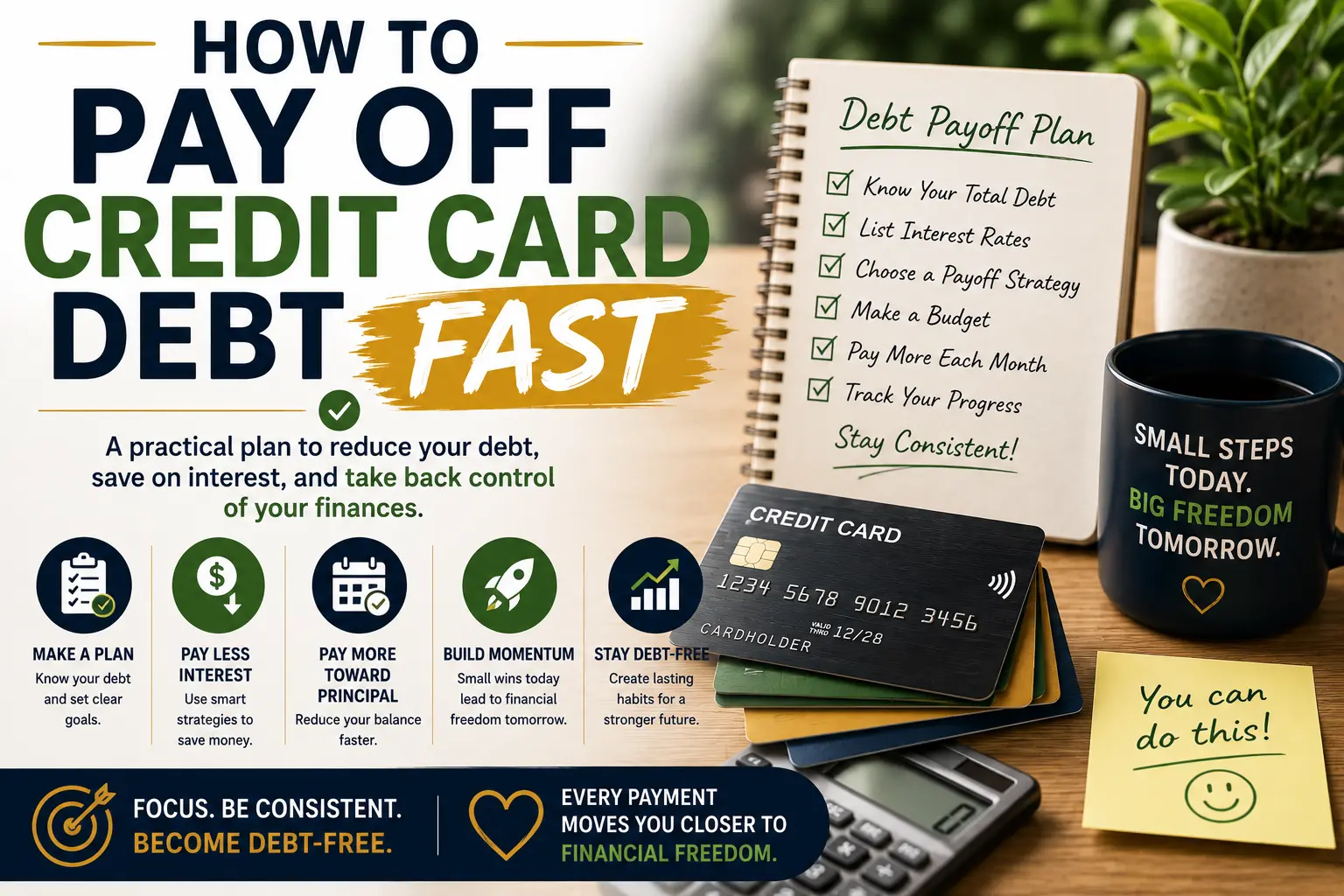
Understanding Credit Card Debt
For many people, credit cards begin as a convenient way to make purchases.
They help cover unexpected expenses, simplify online shopping, and can even offer rewards such as cashback or travel points.
However, when balances aren’t paid in full, credit card debt can grow much faster than many people expect.
What may have started as a manageable balance can gradually become a source of financial stress.
Monthly payments become harder to keep up with.
Interest charges continue adding to the balance.
Financial goals such as buying a home, building an emergency fund, or investing for the future may feel further out of reach.
If this sounds familiar, you’re not alone.
Millions of people carry credit card balances at some point in their lives.
Unexpected medical expenses, job loss, rising living costs, family emergencies, or simply relying on credit to bridge financial gaps can all contribute to debt.
The encouraging news is that credit card debt doesn’t have to be permanent.
With a realistic plan, consistent effort, and patience, many people successfully reduce and eventually eliminate their balances.
The journey looks different for everyone.
Some people repay debt in months.
Others need several years.
The important thing isn’t comparing your progress to someone else’s.
It’s creating a plan that fits your financial situation and consistently moving forward.
In this guide, you’ll learn:
- Why credit card debt grows so quickly.
- How interest charges affect your balance.
- Why minimum payments often keep people in debt longer.
- The most effective repayment strategies.
- Practical ways to find extra money for debt payments.
- Common mistakes to avoid.
- How to stay motivated throughout the repayment process.
By the end of this guide, you’ll have a better understanding of how credit card debt works and how to build a repayment plan that supports your broader financial goals.
💡 Action Moment: Get Clear About Your Debt Before Creating a Plan
Before choosing a repayment strategy, it’s important to understand exactly where you stand.
Many people know they have credit card debt but aren’t completely sure:
- How many cards they have.
- The balance on each card.
- The interest rate for each account.
- The required minimum payment.
- How much of their monthly income is available for debt repayment.
Without this information, it’s difficult to choose the most effective strategy.
That’s why 7 Days to Financial Clarity™ is an excellent place to begin.
The guide helps you organize:
- Your income.
- Knowing how much money comes in each month helps determine what you can realistically put toward debt.
- Your monthly expenses.
- Reviewing your spending often reveals opportunities to free up money for additional payments.
- Your savings.
- Understanding your current savings helps you balance debt repayment with preparing for unexpected expenses.
- Your debts.
- Listing every balance, interest rate, and minimum payment creates a clear picture of your repayment challenge.
- Your financial priorities.
- Debt repayment becomes much easier when it’s connected to meaningful long-term goals.
Financial clarity turns uncertainty into a plan.
Why Credit Card Debt Grows So Quickly
Many people are surprised by how quickly a manageable balance can become a much larger financial burden.
The primary reason is interest.
When you don’t pay your statement balance in full by the due date, your credit card issuer generally begins charging interest on the remaining balance according to the terms of your account.
Over time, these interest charges can significantly increase the total amount you repay.
Imagine borrowing money from a friend who asks you to repay a small additional amount every month until the debt is gone.
The longer it takes to repay, the more extra money you ultimately pay.
Credit card interest works in a similar way, except interest rates are often much higher than many other forms of borrowing.
The longer a balance remains unpaid, the more interest may accumulate.
This is one reason many people prioritize paying off high-interest credit card debt before focusing on other financial goals.
Understanding Credit Card Interest
Interest is the cost of borrowing money.
Credit card companies typically express this cost as an Annual Percentage Rate (APR).
Your APR helps determine how much interest may be charged if you carry a balance beyond the applicable grace period.
Several factors can influence your APR, including:
- Your credit history.
- Borrowers with stronger credit profiles may qualify for lower interest rates.
- The type of credit card.
- Rewards cards, store cards, and secured cards may have different pricing structures.
- Market interest rates.
- Some credit cards have variable APRs that can change as broader interest rates change.
While the details vary by card agreement, the key takeaway is simple:
Higher interest rates generally make debt more expensive over time.
That’s why reducing balances sooner—when possible—may lower the total interest paid over the life of the debt.
Why Minimum Payments Can Keep You in Debt
Every month, your credit card statement shows a minimum payment.
Paying at least this amount is important because it helps you keep the account in good standing and avoid late payment consequences, assuming you pay on time and meet your card issuer’s terms.
However, paying only the minimum payment often results in much slower progress toward becoming debt-free.
Why?
Because a portion of each payment may go toward interest, leaving only part of the payment to reduce the principal balance.
As the balance decreases slowly, interest may continue accumulating.
This cycle can extend the repayment period considerably.
Making more than the minimum payment—when your budget allows—generally reduces the balance faster and may lower the total interest paid over time.
Common Reasons People Accumulate Credit Card Debt
Credit card debt rarely results from a single decision.
More often, it develops gradually through a combination of circumstances.
Understanding these causes can help you avoid similar challenges in the future.
Unexpected Emergencies
Life doesn’t always go according to plan.
Medical bills, emergency car repairs, or urgent home expenses sometimes leave people with few immediate options.
Credit cards can provide temporary financial flexibility during these situations.
Without a repayment plan, however, emergency balances may remain long after the emergency has passed.
Living Beyond Available Income
Sometimes monthly expenses consistently exceed monthly income.
When this happens, credit cards may temporarily fill the gap.
Over time, relying on borrowed money for everyday expenses can become difficult to sustain because new purchases may be added before previous balances are repaid.
Job Loss or Reduced Income
A sudden reduction in income can force people to rely more heavily on available credit while searching for new employment or adjusting their finances.
Even temporary financial setbacks can lead to balances that take much longer to repay.
Lack of Financial Planning
Many people simply never learned how credit cards work.
Without understanding interest charges, minimum payments, or budgeting, it’s easy to underestimate how quickly balances can grow.
Financial education is one of the most powerful tools for preventing future debt.
Impulse Spending
Credit cards make purchases feel immediate while delaying payment until later.
Without a spending plan, small purchases made over weeks or months can accumulate into balances that are much larger than expected.
Creating intentional spending habits can help reduce this risk.
Don’t Let Shame Keep You From Taking Action
One of the biggest obstacles to paying off credit card debt isn’t financial.
It’s emotional.
Many people feel embarrassed or discouraged by their balances.
They may believe they’ve failed or that they’ll never become debt-free.
The truth is that financial setbacks can happen to anyone.
Economic changes, unexpected expenses, family responsibilities, and life transitions affect people from all backgrounds.
Feeling ashamed often causes people to avoid looking at their finances altogether.
Unfortunately, avoiding the problem usually allows it to grow.
Progress begins when you’re willing to face your situation honestly.
Every payment—no matter how small—is a step in the right direction.
The goal isn’t perfection.
The goal is progress.
Build a Realistic Repayment Mindset
Before exploring repayment strategies, it’s helpful to adopt a mindset that supports long-term success.
Keep these principles in mind:
Focus on Consistency
Large, occasional payments are helpful, but consistent monthly progress often produces better long-term results.
Even modest additional payments can make a meaningful difference over time.
Celebrate Small Milestones
Paying off your first credit card.
Reducing a balance below a certain amount.
Making six consecutive on-time payments.
Each milestone deserves recognition because it reflects steady progress.
Celebrating these wins can help you stay motivated throughout a longer repayment journey.
Remember Your “Why”
Debt repayment becomes easier when it’s connected to something meaningful.
Perhaps you want to:
- Sleep better at night without financial stress.
- Qualify for a mortgage.
- Improve your credit profile.
- Save for your children’s education.
- Invest for retirement.
- Achieve greater financial freedom.
Keeping these goals in mind can provide motivation when repayment feels slow.
Every Dollar Has a Purpose
One helpful way to think about debt repayment is to view every dollar as having a job.
Some dollars pay essential living expenses.
Some build savings.
Some support investing.
Some reduce debt.
Being intentional with your money helps ensure your financial decisions align with your long-term priorities rather than short-term impulses.
Credit card debt doesn’t disappear through wishful thinking.
It disappears through thoughtful planning and consistent action.
You’re already investing time in improving your finances, and that’s something to be proud of. Before you continue, download our free 7 Days To Financial Clarity™ workbook and start putting these ideas into action.

Part 2: Choosing Your Debt Repayment Strategy
Once you understand how credit card debt works, the next step is creating a plan to eliminate it.
Many people make the mistake of paying whatever amount feels manageable each month without any overall strategy.
Although every payment helps reduce your balance, having a structured repayment plan can make it easier to stay organized, monitor your progress, and remain motivated.
The good news is that there isn’t only one way to pay off credit card debt.
Several proven approaches exist.
The best strategy depends on your financial situation, personality, and long-term goals.
Before choosing one, gather all the information you need.
Step 1: Organize All Your Credit Card Information
You can’t create an effective repayment plan without knowing exactly what you owe.
Create a list of every credit card account, including:
- Current balance.
- Knowing the balance helps you understand the total amount you need to repay.
- Annual Percentage Rate (APR).
- The interest rate influences how much borrowing costs over time.
- Minimum monthly payment.
- This is the smallest payment required to keep the account in good standing under your card issuer’s terms.
- Payment due date.
- Staying organized helps reduce the risk of missing payments.
- Available credit.
- Understanding your available credit can also help you monitor your credit utilization ratio.
Seeing all of your balances in one place may feel overwhelming at first.
However, clarity is one of your greatest advantages.
Once everything is organized, you can begin making intentional decisions instead of guessing.
The Debt Snowball Method
One of the most popular repayment strategies is the Debt Snowball Method.
Instead of focusing first on the highest interest rate, this approach focuses on paying off your smallest balance first.
Here’s how it works:
- Continue making at least the minimum payment on all of your credit cards.
- Direct any extra money toward the card with the smallest balance.
- Once that balance is paid in full, apply the money you were paying on that card to the next smallest balance.
- Repeat the process until all balances are eliminated.
Each paid-off account creates momentum, much like a snowball growing larger as it rolls downhill.
Advantages of the Debt Snowball
Many people find this method motivating because they experience early victories.
Benefits include:
- Quick psychological wins.
- Eliminating a balance early can increase confidence and motivation.
- Simplified finances.
- Fewer open balances mean fewer accounts to manage.
- Visible progress.
- Watching the number of outstanding debts decrease encourages consistency.
Things to Consider
The Snowball Method doesn’t always minimize the total interest paid because it doesn’t prioritize the highest interest rates first.
However, for many people, the motivational benefits outweigh that trade-off.
The Debt Avalanche Method
Another widely recommended strategy is the Debt Avalanche Method.
Instead of focusing on the smallest balance, this method targets the highest interest rate first.
The process is similar:
- Continue making at least the minimum payment on every account.
- Direct all additional payments toward the card with the highest APR.
- Once it’s paid off, move to the card with the next highest interest rate.
Advantages of the Debt Avalanche
This approach often reduces interest costs more efficiently.
Potential benefits include:
- Lower total interest paid.
- Paying down higher-interest balances sooner may reduce the overall cost of borrowing.
- Potentially faster repayment of total debt.
- More of each future payment can go toward reducing principal rather than interest.
- Financial efficiency.
- The strategy is based primarily on minimizing borrowing costs.
Things to Consider
The highest-interest card isn’t always the smallest balance.
If it takes a long time to eliminate your first account, you may not experience the same early sense of accomplishment that some people find motivating with the Snowball Method.
The Hybrid Approach
Not everyone fits neatly into one repayment strategy.
Some people combine elements of both methods.
For example:
They might pay off one or two small balances first to build momentum.
After experiencing those early successes, they switch to focusing on the highest-interest accounts.
This hybrid approach balances emotional motivation with financial efficiency.
Remember, the “best” repayment strategy is often the one you’ll continue following consistently.
Should You Consider a Balance Transfer?
Some credit card companies offer balance transfer promotions that allow eligible borrowers to move existing balances to a new credit card, sometimes with a promotional introductory APR for a limited period.
For certain borrowers, this may reduce interest costs while they repay debt.
However, balance transfers aren’t automatically the right choice for everyone.
Potential advantages include:
- Lower promotional interest rates.
- Paying less interest during the promotional period may allow more of each payment to reduce the principal balance.
- Simpler repayment.
- Combining balances onto one account may make repayment easier to manage.
Potential drawbacks include:
- Balance transfer fees.
- Many offers charge a fee based on the amount transferred.
- Promotional periods end.
- If the balance isn’t repaid before the promotional rate expires, a higher standard APR may apply according to the card’s terms.
- Qualification requirements.
- Approval often depends on factors such as your credit profile and the issuer’s lending criteria.
Before accepting a balance transfer offer, carefully review all fees, interest rates, and promotional terms.
What About Debt Consolidation?
Debt consolidation generally means combining several debts into one new loan or financing arrangement.
Depending on your circumstances, this may simplify repayment.
Possible benefits include:
- One monthly payment.
- Managing one payment instead of several may reduce administrative complexity.
- Potentially lower interest rates.
- Some borrowers may qualify for lower rates than those charged on credit cards, although eligibility varies.
- Structured repayment.
- Fixed payment schedules may help some people stay on track.
However, debt consolidation doesn’t eliminate debt.
It simply changes how it’s organized.
Without changing spending habits, some people accumulate new credit card balances while still repaying the consolidation loan.
For that reason, consolidation should be viewed as a financial tool—not a complete solution.
Can You Negotiate a Lower Interest Rate?
Many people don’t realize they can contact their credit card issuer to ask whether a lower interest rate is available.
Approval isn’t guaranteed, but it may be worth asking if you have:
- A history of on-time payments.
- Responsible account management may strengthen your request.
- Improved credit.
- A stronger credit profile may increase your chances of qualifying for better terms.
- Multiple years as a customer.
- Long-term relationships with an issuer can sometimes be helpful.
When speaking with your issuer, remain polite and explain your situation honestly.
Even a modest reduction in your APR could lower interest costs over time.
Avoid Creating New Debt During Repayment
Paying off credit card debt becomes much more difficult if new balances continue growing.
Whenever possible, try to avoid adding unnecessary purchases to your credit cards while working through your repayment plan.
Some practical strategies include:
- Use a monthly budget.
- A spending plan helps ensure your money supports your priorities.
- Delay non-essential purchases.
- Waiting a day or two before buying something can reduce impulse spending.
- Pay with cash or a debit card for everyday expenses.
- Using money you already have may help prevent balances from increasing.
- Build a small emergency fund when possible.
- Even modest savings can help cover unexpected expenses without relying entirely on credit.
The goal isn’t to stop using credit forever.
It’s to prevent today’s purchases from making tomorrow’s repayment more difficult.
💡 Action Moment: Connect Debt Repayment to Your Bigger Financial Goals
Becoming debt-free is a significant achievement.
But what comes next?
Many people discover that paying off credit card debt is only one step toward a larger vision for their finances.
The LookingAtFinance Financial Goal Assessment can help you identify what matters most after your debt is under control.
Your priorities might include:
- Building an emergency fund.
- Savings can provide greater financial stability when unexpected expenses arise.
- Improving your credit profile.
- Responsible debt management may contribute to stronger credit over time.
- Saving for a home.
- Reducing debt may improve your ability to prepare for a future down payment.
- Investing for retirement.
- Eliminating expensive debt can create more room in your budget for long-term investing.
- Achieving financial freedom.
- Becoming debt-free is often one of several milestones on the path toward greater financial independence.
When you connect today’s payments with tomorrow’s goals, each payment becomes more than just reducing a balance—it becomes an investment in your future.
The Best Strategy Is the One You Can Stick With
There is no universally perfect debt repayment method.
Some people thrive on the quick wins of the Snowball Method.
Others prefer the financial efficiency of the Avalanche Method.
Some combine elements of both.
What matters most is consistency.
Choosing a realistic strategy—and following it month after month—is often far more effective than constantly switching approaches in search of the “perfect” plan.
Knowing your balance is only the beginning. Use our free Debt Payoff Calculator to build a repayment strategy, compare payoff timelines, and take control of your debt with confidence.

Part 3: Accelerating Your Credit Card Debt Payoff
Choosing a repayment strategy is an important first step.
However, the strategy alone doesn’t eliminate debt.
Progress comes from consistently making payments and, when possible, finding ways to increase the amount you put toward your balances.
Many people assume the only way to pay off debt faster is to earn a much higher income.
While increasing your income can certainly help, it’s only one piece of the puzzle.
Small improvements made consistently can also have a meaningful impact over time.
The goal isn’t to completely transform your finances overnight.
The goal is to steadily create more room in your budget so that more of your money goes toward reducing debt instead of paying interest.
Find Extra Money Within Your Current Budget
Before searching for another job or starting a side business, take a close look at your existing budget.
Many households discover that small adjustments across several spending categories can free up additional money each month.
For example, you might identify opportunities to reduce:
- Subscription services.
- Canceling memberships you rarely use can free up money for debt payments.
- Dining out.
- Preparing more meals at home may reduce monthly food expenses.
- Impulse purchases.
- Waiting before making non-essential purchases can help you distinguish between wants and needs.
- Unused memberships.
- Gym memberships, streaming services, or software subscriptions you no longer use may be worth reviewing.
None of these changes have to be permanent.
The goal is to redirect money toward becoming debt-free.
Once your debt is eliminated, you’ll have greater flexibility to decide how you’d like to use that money in the future.
Increase Your Income
Reducing expenses isn’t the only way to accelerate debt repayment.
Increasing your income can also create opportunities to make larger monthly payments.
Depending on your circumstances, you might consider:
Freelance Work
Many people earn additional income by offering skills they already have.
Examples include:
- Writing.
- Businesses often hire freelance writers for websites, blogs, and marketing materials.
- Graphic design.
- Creative professionals can provide branding, social media graphics, and marketing assets.
- Bookkeeping.
- Small businesses frequently outsource accounting support.
- Consulting.
- Sharing professional expertise can create another income stream.
Part-Time Employment
Temporary or part-time work may provide extra income during your debt repayment journey.
Although working additional hours isn’t ideal forever, some people choose this approach as a temporary strategy to achieve a specific financial goal.
Selling Unused Items
Many households own items they no longer use.
Examples include:
- Electronics.
- Older devices that still function may have resale value.
- Furniture.
- Gently used household items may appeal to local buyers.
- Clothing.
- Quality clothing in good condition can often be sold through resale platforms.
Selling unused possessions won’t solve long-term financial challenges by itself, but it may provide a helpful boost toward reducing debt.
Building Additional Income Streams
Some people begin developing longer-term income opportunities while paying off debt.
Examples include:
- Starting a blog.
- Affiliate marketing.
- Selling digital products.
- Freelancing.
- Online tutoring.
- Virtual assistance.
These opportunities often take time to grow, but they may continue providing value long after your credit card balances have been repaid.
Use Unexpected Money Wisely
Occasionally, people receive money they weren’t expecting.
Examples might include:
- Tax refunds.
- Work bonuses.
- Monetary gifts.
- Rebates.
- Overtime pay.
It can be tempting to spend these funds immediately.
However, directing part—or all—of these unexpected amounts toward your highest-priority debt may reduce your balance more quickly and lower future interest costs.
This doesn’t mean you can never enjoy unexpected money.
Some people choose a balanced approach by using a portion for something meaningful while applying the rest toward their financial goals.
The important thing is making intentional decisions rather than spending impulsively.
Automate Your Payments
Consistency is one of the biggest factors in successful debt repayment.
One way to support consistency is by automating your payments whenever possible.
Automatic payments may help you:
- Avoid missed due dates.
- Paying on time can help you avoid late fees and protect your payment history.
- Reduce financial stress.
- Automation removes the need to remember every due date manually.
- Stay committed to your repayment plan.
- Scheduled payments encourage consistency even during busy months.
If your budget allows, consider automating more than the minimum payment.
Always ensure sufficient funds are available in your account before automatic payments are processed.
Make Extra Payments Whenever Possible
Many people think they must wait until they can make a large payment before making additional progress.
In reality, even modest extra payments can reduce your balance over time.
Imagine adding an extra $25, $50, or $100 whenever your budget comfortably allows.
Although these amounts may seem small individually, consistently applying extra money toward your principal balance can reduce interest costs and shorten the time it takes to become debt-free.
The key is consistency.
Small additional payments made regularly often have a greater long-term impact than occasional large payments followed by long periods of inactivity.
Don’t Close Every Credit Card Immediately
Many people assume they should close every credit card account as soon as it’s paid off.
While this may be the right choice in some situations, it’s not automatically the best decision for everyone.
Closing a credit card can affect factors such as your available credit and the average age of your accounts, which may influence your credit profile.
If you’re considering closing an account, think about:
- Whether the card charges an annual fee.
- Paying an unnecessary fee may not make sense if you no longer use the account.
- Your ability to use credit responsibly.
- Some people prefer keeping a card open for occasional planned purchases that are paid in full each month.
- Your broader financial goals.
- Decisions about credit accounts should support your long-term financial plan.
If you’re unsure what’s appropriate for your situation, consider seeking guidance from a qualified financial professional.
Avoid Common Debt Repayment Mistakes
Many people unintentionally slow their progress by making avoidable mistakes.
Recognizing these challenges early can help you stay on track.
Paying Late
Late payments may result in additional fees, higher interest rates in some cases, and negative effects on your payment history.
Setting reminders or automating payments can help reduce this risk.
Continuing to Add New Debt
Paying off one balance while creating another makes progress much more difficult.
Whenever possible, avoid using credit cards for purchases you can’t reasonably repay.
Ignoring Your Budget
Debt repayment works best when it becomes part of an overall financial plan.
Without a budget, it’s difficult to know whether your spending supports your priorities.
Expecting Instant Results
Credit card balances often accumulate over months or years.
It’s reasonable to expect that paying them off may also take time.
Measuring your progress month by month instead of day by day helps maintain realistic expectations.
Stay Motivated During the Journey
Debt repayment isn’t only a financial challenge.
It’s also an emotional one.
There may be months when your progress feels slow.
Unexpected expenses may temporarily reduce the amount you can pay.
Life circumstances may change.
This doesn’t mean you’ve failed.
Instead of focusing only on the remaining balance, celebrate the progress you’ve already made.
Perhaps you’ve:
- Paid off one credit card.
- Reduced your highest balance significantly.
- Made every payment on time for six months.
- Increased your monthly payment.
- Improved your spending habits.
Each achievement represents meaningful progress toward your long-term financial goals.
Remember why you started.
Every payment moves you one step closer to greater financial freedom.
💡 Action Moment: See How Extra Payments Could Change Your Debt-Free Timeline
Sometimes the biggest motivation comes from seeing how small changes can add up over time.
The LookingAtFinance Debt Payoff Calculator lets you explore different repayment scenarios based on your own goals.
You can compare hypothetical situations by adjusting:
- Monthly payment amounts.
- See how increasing your payment by even a modest amount may affect your payoff timeline.
- Additional principal payments.
- Explore the impact of occasional extra payments made directly toward your balance.
- Interest rates.
- Understand how borrowing costs can influence the total amount repaid over time.
- Repayment timelines.
- Compare different strategies and estimate how long repayment might take under various assumptions.
The calculator isn’t designed to predict your exact future.
Instead, it helps illustrate an important principle:
Consistently paying more than the minimum—when it fits your budget—may reduce both the time it takes to become debt-free and the total interest you pay over the life of the debt.
Every Extra Payment Is Progress
It’s easy to believe that only large payments matter.
In reality, every extra dollar you put toward your credit card balance is working toward the same goal.
Some months you may be able to pay an additional $20.
Other months you might manage $200.
The amount will vary.
What matters most is developing the habit of making steady progress whenever your financial situation allows.
Over time, those consistent decisions can help transform what once felt like an overwhelming balance into a debt-free future.
🎯 Find Your Best Next Step
Every financial journey is different. Take our free Financial Goal Assessment to discover which area deserves your attention first and receive a clear direction for your next financial milestone.

A Real-Life Example: Two Different Debt Repayment Journeys
Credit card debt doesn’t disappear overnight.
It usually takes a series of intentional decisions repeated over time.
To illustrate this, consider two fictional individuals, Marcus and Emily.
Both are 34 years old.
Both have approximately $12,000 in credit card debt spread across several cards.
Both earn similar annual incomes.
Both want to become debt-free.
Yet they approach the challenge very differently.
Marcus’s Story
Marcus knows he needs to reduce his credit card debt.
Every month, he makes the required minimum payments.
Occasionally, when he has extra money, he pays a little more.
However, he doesn’t have a structured repayment plan.
He continues using his credit cards for everyday purchases, assuming he’ll “pay them off later.”
Unexpected expenses often end up on his credit cards because he hasn’t built an emergency fund.
When he receives a work bonus or tax refund, he usually spends most of it on vacations, electronics, or other purchases before putting a small amount toward his debt.
Months pass.
Although his balances decrease occasionally, new purchases often replace much of the progress he has made.
Marcus isn’t irresponsible.
He simply doesn’t have a clear system guiding his financial decisions.
Emily’s Story
Emily begins by organizing every credit card balance, interest rate, and minimum payment.
She creates a realistic monthly budget and chooses the Debt Avalanche Method because she wants to reduce high-interest balances first.
She also commits to several simple habits.
She:
- Pays more than the minimum whenever her budget allows.
- Additional payments help reduce her principal balance faster.
- Redirects money from canceled subscriptions.
- Instead of increasing her spending elsewhere, she applies those savings directly to her debt.
- Uses unexpected income wisely.
- Tax refunds and work bonuses become opportunities to make meaningful extra payments.
- Avoids creating new credit card balances.
- She uses a debit card or cash for most day-to-day purchases while working through her repayment plan.
- Tracks her progress every month.
- Seeing her balances decrease helps her stay motivated.
Emily doesn’t eliminate her debt in a few months.
But each month she makes measurable progress.
Eventually, she pays off her highest-interest card.
Then the next one.
And then another.
As each balance disappears, she redirects those payments toward the remaining cards.
Over time, the momentum grows.
Eventually, Emily becomes debt-free.
Instead of using those former debt payments for additional spending, she redirects them toward her emergency fund and long-term investments.
The Difference Wasn’t Income
Marcus and Emily earned similar salaries.
Neither received a large inheritance.
Neither discovered a secret strategy.
The biggest difference was their approach.
Marcus relied on good intentions.
Emily relied on a structured plan.
Marcus reacted to his finances.
Emily managed them proactively.
Marcus hoped his debt would gradually improve.
Emily intentionally created conditions that allowed steady progress.
That’s an important lesson.
While income certainly matters, the habits you develop often play an equally significant role in your financial future.
Credit Card Debt Payoff Checklist
Use this checklist to monitor your progress as you work toward becoming debt-free.
Understand Your Debt
☐ I know the balance on every credit card.
☐ I know the interest rate for each account.
☐ I understand my minimum monthly payments.
☐ I know my payment due dates.
☐ I review my debt regularly.
Follow a Repayment Plan
☐ I selected a repayment strategy that fits my goals.
☐ I make every payment on time.
☐ I pay more than the minimum whenever possible.
☐ I avoid creating unnecessary new debt.
☐ I monitor my progress each month.
Strengthen My Financial Future
☐ I maintain a monthly budget.
☐ I build an emergency fund as my financial situation allows.
☐ I continue improving my financial knowledge.
☐ I celebrate meaningful milestones.
☐ I have a plan for my money after becoming debt-free.
Frequently Asked Questions
Which debt repayment strategy is best?
There isn’t one strategy that’s right for everyone.
Some people prefer the Debt Snowball Method because paying off smaller balances first provides quick wins that help maintain motivation.
Others choose the Debt Avalanche Method because focusing on higher-interest balances first may reduce the total interest paid over time.
The most effective strategy is generally the one you can follow consistently.
Should I pay more than the minimum payment?
If your budget comfortably allows, paying more than the minimum may help reduce your balance faster and lower the total interest you pay over time.
However, it’s important to continue meeting your essential living expenses and other financial obligations.
Choose a payment amount that is realistic and sustainable for your situation.
Should I stop using my credit cards while paying off debt?
Many people find it easier to avoid adding new balances while focusing on repayment.
Using cash, a debit card, or another planned payment method for everyday purchases can help prevent debt from growing.
The right approach depends on your spending habits and financial circumstances.
Is it better to save money or pay off credit card debt first?
This depends on your financial situation.
Many financial professionals suggest maintaining at least a modest emergency fund while also making progress on high-interest debt.
Having some savings may help you avoid relying on credit cards again when unexpected expenses arise.
Can paying off credit card debt improve my credit score?
Responsible debt repayment may improve several factors that influence credit scores, such as reducing credit utilization and maintaining a positive payment history.
However, credit scores are calculated using multiple factors, and individual results vary.
How long does it take to pay off credit card debt?
There isn’t a universal timeline.
The repayment period depends on factors such as:
- Total debt balance.
- Interest rates.
- Monthly payment amounts.
- Additional debt created during repayment.
- Changes in income or expenses.
The important thing is making consistent progress rather than comparing your timeline to someone else’s.
What should I do after becoming debt-free?
Many people redirect the money they were using for debt payments toward other financial priorities.
Common next steps include:
- Building a larger emergency fund.
- Savings can provide greater financial security during unexpected situations.
- Investing for retirement.
- Long-term investing may help support future financial independence.
- Saving for major goals.
- Examples include buying a home, funding education, or planning future travel.
- Continuing to budget.
- Good financial habits remain valuable even after debt is eliminated.
Becoming debt-free isn’t the finish line—it’s often the beginning of greater financial flexibility.
Final Thoughts
Paying off credit card debt isn’t simply about reducing numbers on a statement.
It’s about creating opportunities.
Every payment you make moves you closer to greater financial freedom.
As your balances decrease, you may gain more flexibility to save, invest, prepare for emergencies, and pursue other meaningful goals.
Remember that debt repayment is rarely a straight line.
Some months you’ll make faster progress than others.
Unexpected expenses may temporarily slow your journey.
Life circumstances may change.
Don’t let temporary setbacks convince you to abandon your plan.
What matters most is returning to your strategy and continuing to move forward.
Every extra payment matters.
Every balanced budget matters.
Every smart financial decision matters.
Consistent progress—not perfection—is what ultimately leads many people to a debt-free future.
Your Next Steps
If you’re ready to take control of your credit card debt, here’s a practical roadmap to help you get started.
Step 1: Gain Complete Financial Clarity
Download 7 Days to Financial Clarity™ and organize every aspect of your finances before creating your repayment plan.
The guide will help you:
- List all of your debts.
- Knowing every balance, interest rate, and minimum payment helps you build a realistic strategy.
- Review your income.
- Understanding your monthly cash flow makes it easier to determine how much you can consistently put toward debt.
- Evaluate your expenses.
- Reviewing your spending often reveals opportunities to redirect money toward repayment.
- Assess your savings.
- Knowing your current emergency savings helps you balance debt repayment with financial preparedness.
- Clarify your priorities.
- Connecting debt repayment to larger financial goals helps maintain motivation.
Step 2: Complete the Financial Goal Assessment
Use the LookingAtFinance Financial Goal Assessment to identify what becoming debt-free makes possible.
Your next goal might be:
- Building an emergency fund.
- Improving your credit profile.
- Buying your first home.
- Investing for retirement.
- Building multiple streams of income.
- Achieving financial freedom.
Debt repayment is often one important milestone within a much larger financial journey.
Step 3: Create Your Personalized Repayment Plan
Use the LookingAtFinance Debt Payoff Calculator to explore different repayment scenarios.
You can compare hypothetical situations by adjusting:
- Monthly payment amounts.
- See how increasing your payment may shorten your repayment timeline.
- Additional principal payments.
- Explore how occasional extra payments could reduce total interest over time.
- Interest rates.
- Better understand how borrowing costs influence repayment.
- Repayment timelines.
- Compare different approaches and build a plan that fits comfortably within your budget.
The calculator is designed to educate and motivate, helping you understand how consistent payments may influence your progress while recognizing that actual results depend on your personal financial circumstances.
Key Takeaway
Paying off credit card debt fast isn’t about finding a secret shortcut—it’s about understanding how debt works, choosing a repayment strategy you can stick with, spending intentionally, making consistent payments, and taking advantage of opportunities to pay more when your budget allows. Every payment brings you one step closer to greater financial confidence, flexibility, and freedom.
🚀 Ready To Keep Going?
You have invested time learning today. Now take the next step by downloading our free 7 Days To Financial Clarity™ workbook and begin building a stronger financial future.
