
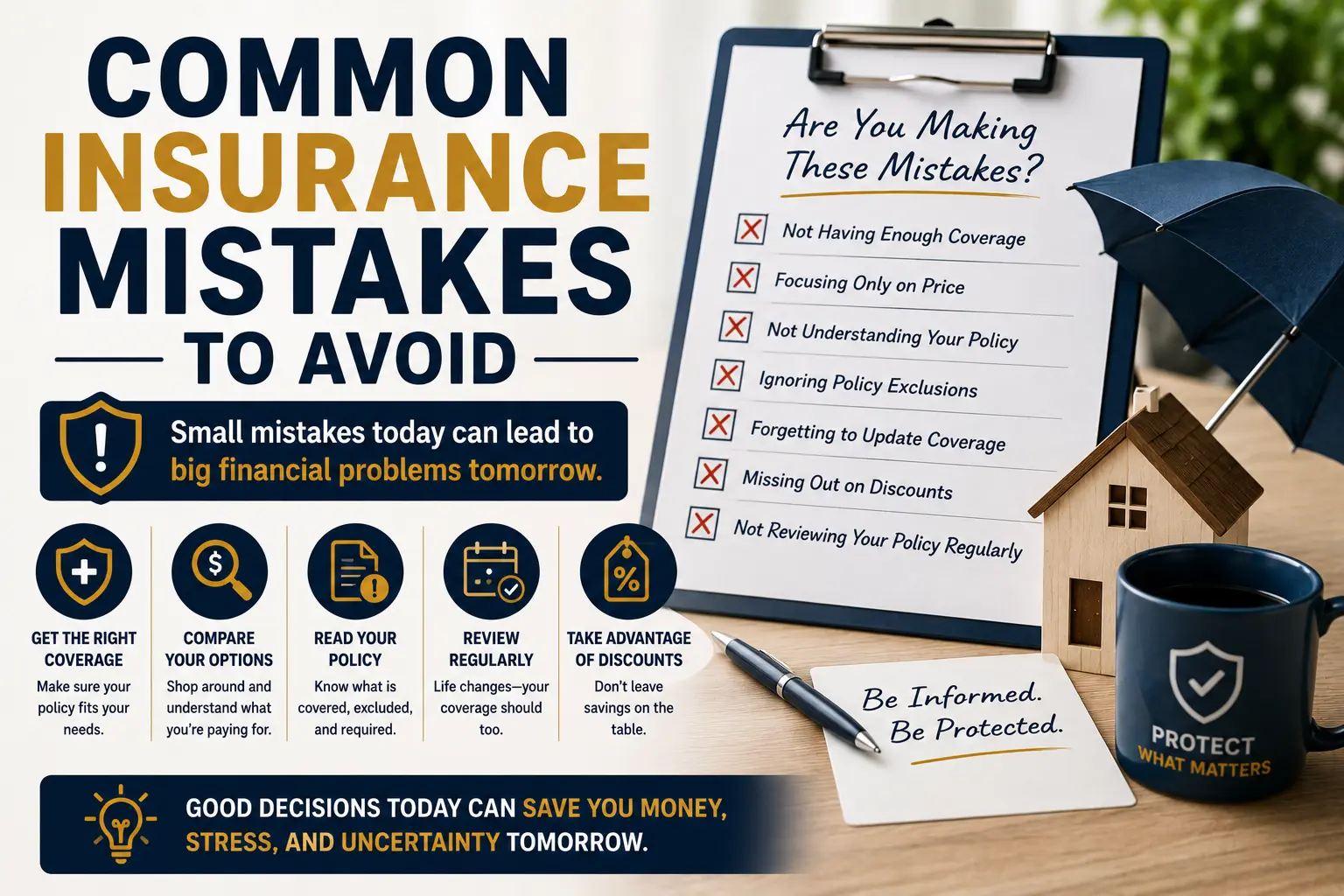
Insurance is one of those financial products that many people don’t think about until something goes wrong.
When life is going smoothly, paying insurance premiums can sometimes feel like another monthly expense that offers little immediate value. After all, if you never file a claim, it may seem as though you’re paying for something you don’t use.
However, that perspective often changes very quickly after an unexpected event.
A serious car accident.
A house fire.
A medical emergency.
A natural disaster.
The unexpected death of a family’s primary income earner.
Moments like these remind us that insurance isn’t designed to make us wealthy. Its purpose is to protect us from financial losses that could otherwise take years—or even decades—to recover from.
The challenge is that simply having insurance doesn’t automatically mean you’re properly protected.
Many people assume that purchasing a policy is enough.
Unfortunately, expensive mistakes are often made long before a claim is ever filed.
Some people buy too little coverage because they’re focused only on lowering their monthly premium.
Others purchase insurance they don’t fully understand.
Some forget to update their policies after major life events.
Others discover important exclusions only after it’s too late.
These mistakes can leave families facing large out-of-pocket expenses at the very moment they expected their insurance to help.
The good news is that most insurance mistakes are completely avoidable.
Understanding how insurance works—and recognizing the common pitfalls before they happen—can help you choose better coverage, avoid unnecessary costs, and protect your financial future with greater confidence.
In this guide, you’ll learn some of the most common insurance mistakes people make, why they happen, and practical steps you can take to avoid them.
Whether you’re purchasing insurance for the first time or reviewing policies you’ve had for years, making informed decisions today can save you significant money, stress, and uncertainty in the future.
💡 Action Moment: Build Financial Clarity Before Choosing Insurance
Before comparing insurance companies or shopping for lower premiums, it’s worth taking a step back to understand your overall financial situation.
Ask yourself:
- If I experienced a major financial emergency tomorrow, how prepared would I be?
- Do I know exactly which insurance policies I currently have?
- Would my family know where to find my insurance information if something happened to me?
- Do I have enough savings to cover deductibles and expenses that insurance may not pay?
- Am I purchasing insurance based on my actual needs—or simply choosing the cheapest option?
These questions often reveal gaps that many people don’t realize exist.
That’s why 7 Days to Financial Clarity™ is such a valuable place to begin.
This free guide helps you organize your income, expenses, savings, debts, and financial priorities while giving you a clearer understanding of how insurance fits into your overall financial plan.
Insurance works best when it’s part of a complete financial strategy—not an isolated purchase made once and forgotten.
Why Insurance Mistakes Can Be So Costly
Unlike many financial decisions, insurance mistakes often remain hidden for years.
You may pay your premiums faithfully every month without realizing that your policy doesn’t provide the protection you expected.
Everything appears fine…
Until you need to file a claim.
That’s when misunderstandings about deductibles, exclusions, policy limits, waiting periods, and coverage conditions can suddenly become very expensive.
Imagine discovering after a major storm that your homeowner’s policy doesn’t cover a specific type of water damage.
Or learning after a vehicle accident that your liability limits aren’t high enough to cover the damages.
Or realizing that your life insurance coverage would replace only a small fraction of your family’s income.
These situations aren’t uncommon.
They’re often the result of decisions made months or years earlier without fully understanding the policy.
Insurance isn’t just about buying protection.
It’s about buying the right protection.
Understanding what your policy covers—and what it doesn’t—is one of the smartest financial habits you can develop.
Mistake #1: Choosing the Cheapest Policy Without Comparing Coverage
Everyone appreciates saving money.
There’s nothing wrong with looking for affordable insurance.
However, choosing a policy based only on the lowest premium can become a costly mistake.
Two insurance policies with similar monthly premiums may provide very different levels of protection.
One policy may include valuable benefits that another excludes entirely.
For example, one auto insurance policy may include roadside assistance, rental vehicle reimbursement, or higher liability limits, while another offers only the minimum required coverage.
Likewise, one homeowners insurance policy may provide replacement-cost coverage, while another pays only the depreciated value of damaged property.
When comparing insurance options, look beyond the monthly premium.
Consider questions such as:
- What exactly is covered?
- What exclusions apply?
- What are the deductibles?
- What are the coverage limits?
- How would this policy protect me in a worst-case scenario?
The goal isn’t simply to spend less today.
It’s to avoid paying significantly more out of your own pocket later.
Mistake #2: Not Understanding Your Deductible
A deductible is the amount you’re responsible for paying before your insurance coverage begins paying eligible claims.
Many people choose a higher deductible to lower their monthly premium.
That decision can make financial sense—but only if you’re prepared to pay the deductible when an emergency occurs.
Imagine selecting a $2,500 deductible to save money each month.
If your vehicle is damaged tomorrow, would you comfortably have $2,500 available?
If not, a lower premium today could create significant financial stress later.
Before choosing a deductible, ask yourself whether you could realistically pay that amount without relying on credit cards or loans.
Insurance should reduce financial stress—not create new financial problems.
Mistake #3: Assuming Everything Is Covered
One of the biggest misunderstandings about insurance is believing that every type of damage or loss is automatically covered.
Every insurance policy contains specific terms, conditions, exclusions, and limitations.
For example, certain policies may exclude:
- Flood damage.
- Earthquake damage.
- Normal wear and tear.
- Business activities conducted from home.
- High-value personal belongings beyond specified limits.
Reading the policy documents may not be exciting, but understanding what isn’t covered can be just as important as understanding what is.
Knowing these limitations allows you to decide whether additional coverage is appropriate for your situation.
Mistake #4: Buying Insurance You Don’t Actually Need
Insurance is valuable when it protects against financial risks you couldn’t comfortably absorb on your own.
However, not every optional policy or add-on provides meaningful value for every individual.
Some people purchase overlapping coverage without realizing they’re already protected elsewhere.
Others purchase extended warranties or optional insurance products simply because they were offered during a purchase.
Before adding new insurance, ask yourself:
- What specific financial risk does this policy protect against?
- Do I already have similar coverage?
- Would paying the premium provide meaningful financial value compared to the potential risk?
Buying appropriate insurance is about balancing protection with cost—not purchasing every available option.
You’re already investing time in improving your finances, and that’s something to be proud of. Before you continue, download our free 7 Days To Financial Clarity™ workbook and start putting these ideas into action.

Part 2: More Insurance Mistakes That Could Leave You Financially Vulnerable
Many insurance mistakes aren’t the result of making a bad decision.
They’re the result of making no decision at all.
Life changes constantly.
People get married.
Families grow.
Children become financially independent.
Homes increase in value.
Careers change.
Businesses are started.
Retirement approaches.
Yet many insurance policies remain exactly the same for years.
The protection that seemed appropriate five or ten years ago may no longer reflect your current financial situation.
Insurance should grow and change alongside your life.
Reviewing your coverage regularly helps ensure your policies continue protecting what matters most.
Mistake #5: Never Reviewing Your Insurance Policies
One of the most common mistakes people make is purchasing insurance and then forgetting about it.
Once the policy is in place, it often remains untouched until renewal notices arrive each year.
Unfortunately, automatically renewing a policy without reviewing it can leave important gaps in your protection.
For example, imagine you purchased homeowners insurance several years ago.
Since then, you’ve renovated your kitchen, built a home office, upgraded expensive electronics, and purchased new furniture.
If your policy hasn’t been updated, your current coverage may not accurately reflect the value of your property.
The same principle applies to life insurance, auto insurance, renters insurance, disability insurance, and even business insurance.
A yearly insurance review gives you the opportunity to ask questions such as:
- Has my income changed significantly?
- Higher income often means greater financial responsibilities and a larger need for protection.
- Have I purchased valuable possessions?
- Jewelry, collectibles, electronics, or home improvements may require additional coverage.
- Have my family responsibilities changed?
- Marriage, children, or caring for aging parents can affect the amount and type of insurance you need.
- Are there new discounts available?
- Insurance companies frequently introduce discounts that existing customers may overlook.
Reviewing your policies annually helps ensure your protection keeps pace with your life.
Mistake #6: Underinsuring Your Home or Personal Property
Many homeowners assume their insurance policy automatically covers the full cost of rebuilding their home or replacing everything they own.
That assumption isn’t always correct.
Construction costs change over time.
Material prices fluctuate.
Labor costs increase.
Inflation affects the replacement cost of furniture, appliances, electronics, and personal belongings.
If your coverage limits haven’t been updated in several years, rebuilding after a major loss could become significantly more expensive than your policy allows.
The same concern applies to valuable personal property.
Items such as:
- Engagement rings.
- Fine jewelry.
- Professional photography equipment.
- Collectibles.
- Musical instruments.
- High-end computers.
may have coverage limits that are lower than their actual value.
Keeping an updated home inventory with photographs and receipts can make the claims process much smoother while helping you determine whether your current coverage remains adequate.
Mistake #7: Choosing Coverage Based Only on Legal Minimums
Many types of insurance have minimum coverage requirements established by law.
For example, drivers are generally required to carry a minimum amount of liability insurance.
While meeting the legal requirement keeps you compliant, it doesn’t necessarily mean you’re adequately protected.
Imagine being involved in a serious accident where the damages exceed your policy limits.
If your liability coverage isn’t sufficient, you could become personally responsible for the remaining costs.
The same principle applies in other areas of insurance.
Minimum coverage often represents the lowest acceptable level—not necessarily the amount that provides meaningful financial security.
Instead of asking:
“What’s the minimum coverage I can buy?”
Consider asking:
“What level of protection would realistically protect my financial future?”
That small shift in thinking can make a significant difference.
Mistake #8: Forgetting to Update Beneficiaries
Life insurance policies and certain retirement accounts allow you to name beneficiaries who will receive benefits after your death.
Unfortunately, many people forget to update these designations after major life events.
Marriage.
Divorce.
The birth of children.
The death of a previously named beneficiary.
These changes can create situations where benefits are distributed differently than you intended.
Reviewing beneficiary designations every few years—and after major life changes—is a simple task that can prevent unnecessary confusion for your family.
Keeping these records current helps ensure your wishes are carried out as intended.
Mistake #9: Assuming Employer Insurance Is Enough
Employer-sponsored insurance benefits can provide valuable protection.
However, relying exclusively on workplace coverage may leave gaps.
For example, many employer life insurance plans provide coverage equal to one or two years of salary.
While helpful, that amount may not provide sufficient long-term financial support for a family with a mortgage, children, or other ongoing financial obligations.
Another consideration is portability.
If you leave your job, change employers, or retire, some workplace insurance benefits may end.
Reviewing your overall insurance needs—not just your employer’s benefits—helps ensure you remain protected regardless of changes in your career.
Mistake #10: Failing to Compare Insurance Companies
Many people remain with the same insurance company for years simply because changing providers feels inconvenient.
Loyalty certainly has value.
However, insurance products, pricing models, and available discounts change regularly.
Shopping around doesn’t necessarily mean switching providers.
Instead, it gives you an opportunity to compare:
- Premium costs.
- Determine whether similar coverage is available at a better value.
- Coverage options.
- Different insurers may include benefits that others charge extra for.
- Customer service.
- Claims support and responsiveness can become extremely important during stressful situations.
- Financial strength.
- Choosing a financially stable insurer provides greater confidence that claims will be handled appropriately.
Reviewing your options every few years helps ensure you’re receiving competitive value while maintaining the protection you need.
💡 Action Moment: Match Your Insurance to Your Financial Goals
Insurance isn’t just about protecting property.
It’s about protecting your progress.
Think about the financial goals you’re working toward.
Perhaps you’re saving for your first home.
Building an emergency fund.
Paying off debt.
Preparing for retirement.
Starting a business.
Supporting your children through college.
Every one of these goals could be disrupted by an unexpected financial emergency if you don’t have appropriate insurance coverage.
That’s why the LookingAtFinance Financial Goal Assessment is such an important step.
It helps you identify your highest financial priority so you can evaluate whether your insurance coverage supports that goal.
For example:
- If your priority is eliminating debt, adequate insurance can prevent unexpected expenses from forcing you deeper into debt.
- If you’re focused on building wealth, proper insurance helps protect the assets you’ve worked hard to accumulate.
- If your goal is financial security for your family, reviewing your life and disability insurance becomes especially important.
Insurance works best when it supports your long-term financial objectives rather than existing as a collection of separate policies.
Good Insurance Decisions Support Financial Confidence
Insurance isn’t about expecting the worst.
It’s about preparing wisely so unexpected events don’t derail your financial future.
Every policy you own represents a promise of protection.
The more carefully you review that promise, the more confident you’ll feel that it will perform when you need it most.
Taking the time to understand your coverage today can help prevent costly surprises tomorrow.
Life is full of unexpected expenses, but being prepared can make all the difference. Use our free Emergency Fund Calculator to discover how much you should save and create a financial cushion that gives you greater peace of mind when life throws you a surprise.

Part 3: How to Make Smarter Insurance Decisions
Avoiding common insurance mistakes isn’t about becoming an insurance expert overnight.
It’s about developing a few practical habits that help you make informed decisions before you need to file a claim.
Insurance is one of the few financial products you hope you’ll never have to use. But if an unexpected event does occur, you’ll be grateful for every hour you spent understanding your coverage.
The goal isn’t to buy the most expensive policy.
The goal is to have the right protection for your unique financial situation.
Making thoughtful decisions today can prevent significant financial hardship in the future.
Understand What You’re Paying For
Many people purchase insurance based primarily on a recommendation or a quick online quote.
While recommendations can be helpful, it’s important to understand exactly what you’re buying.
Insurance policies contain several important components, including:
- Coverage limits
- This is the maximum amount your insurer will pay for a covered claim.
- Deductibles
- The portion of a covered loss you’re responsible for paying before your insurance begins contributing.
- Exclusions
- Specific situations, events, or types of damage that aren’t covered by the policy.
- Conditions
- Requirements you must meet for coverage to apply, such as reporting claims within a certain timeframe or maintaining your property properly.
Understanding these details helps eliminate unpleasant surprises during the claims process.
Never hesitate to ask questions if something in your policy isn’t clear.
Insurance professionals expect these questions and should be able to explain your coverage in language you understand.
Keep Your Insurance Documents Organized
When an emergency happens, finding important documents shouldn’t become another source of stress.
Many people know they have insurance but struggle to locate policy numbers, contact information, or coverage details when they need them most.
Consider creating one secure location for important insurance information.
This might include:
- Copies of your insurance policies.
- Policy numbers.
- Contact information for your insurance companies and agents.
- Photos or videos of valuable belongings.
- Receipts for expensive purchases.
- Records of major home improvements.
- Beneficiary information for life insurance.
Keeping these documents organized makes filing claims much easier and helps your family access important information if you’re unavailable.
Review this information periodically to ensure everything remains current.
Ask Questions Before Signing a Policy
Insurance documents can sometimes feel overwhelming because of unfamiliar terminology.
Many people sign policies without fully understanding what they’ve agreed to simply because they don’t want to appear uninformed.
In reality, asking questions is one of the smartest things you can do.
Before purchasing a policy, consider asking:
- What situations are not covered?
- Are there optional endorsements that may be appropriate for my circumstances?
- How does the claims process work?
- What documentation would I need if I filed a claim?
- Could my premium change after filing a claim?
- What discounts am I currently eligible for?
Taking a few extra minutes to ask these questions can provide much greater confidence in your insurance decisions.
Don’t Wait Until an Emergency to Learn About Your Coverage
Imagine experiencing a major storm that damages your home.
As you’re dealing with repairs, temporary housing, and the emotional stress of the situation, you discover that certain types of damage aren’t covered by your policy.
Unfortunately, this situation happens more often than many people realize.
Insurance is much easier to understand before an emergency than during one.
Reviewing your policy while everything is calm gives you time to ask questions, adjust your coverage if necessary, and prepare financially for deductibles or uncovered expenses.
Preparation reduces panic.
Knowledge builds confidence.
Build Savings Alongside Insurance
Insurance and savings work together.
One should never completely replace the other.
Insurance protects you from major financial losses that could otherwise be devastating.
An emergency fund helps cover smaller unexpected expenses, insurance deductibles, temporary living costs, and situations where insurance doesn’t apply.
For example, if your vehicle requires repairs after an accident, your insurance policy may cover much of the damage.
However, you may still be responsible for:
- Paying your deductible.
- This amount must usually be paid before insurance contributes to covered repairs.
- Covering transportation expenses.
- Depending on your policy, you may need temporary transportation while your vehicle is being repaired.
- Paying for expenses not covered by insurance.
- Certain losses may fall outside the terms of your policy.
Without emergency savings, even insured events can create financial pressure.
Building an emergency fund provides flexibility and helps prevent unexpected expenses from becoming long-term debt.
Review Your Coverage After Major Life Changes
Life rarely stays the same for very long.
As your circumstances evolve, your insurance needs often change as well.
Some of the most common life events that should prompt an insurance review include:
- Getting married.
- Marriage may affect beneficiary designations, property ownership, and the amount of life insurance needed.
- Having children.
- Growing families often require additional financial protection and updated beneficiary information.
- Purchasing a home.
- Homeownership introduces new responsibilities and insurance requirements.
- Starting a business.
- Business activities may require specialized insurance that isn’t covered under standard personal policies.
- Paying off significant debt.
- Reduced financial obligations may change your insurance priorities.
- Approaching retirement.
- Retirement often changes income sources, healthcare considerations, and long-term financial planning.
Rather than waiting until your renewal notice arrives, make it a habit to review your insurance whenever major milestones occur.
Avoid Being Underinsured Because of Inflation
The cost of replacing homes, vehicles, furniture, electronics, and personal belongings changes over time.
Inflation affects nearly every aspect of the economy.
A policy that provided sufficient protection several years ago may no longer fully cover today’s replacement costs.
Regularly reviewing your coverage helps ensure your insurance keeps pace with rising costs.
It’s far better to discover a coverage gap during an annual review than after experiencing a major loss.
Understand the Claims Process Before You Need It
Many people never think about filing a claim until they’re suddenly faced with an emergency.
Knowing what to expect ahead of time can reduce stress and help the process move more smoothly.
Although every insurer has its own procedures, most claims involve similar steps.
You’ll generally need to:
- Notify your insurance company promptly.
- Reporting losses quickly often helps prevent unnecessary delays.
- Document the damage.
- Photos, videos, receipts, and written descriptions provide valuable evidence.
- Complete required paperwork.
- Accurate information helps claims representatives evaluate your situation efficiently.
- Cooperate with inspections.
- Adjusters may need to inspect damaged property before approving payment.
Understanding these steps beforehand helps you feel more prepared if you ever need to file a claim.
💡 Action Moment: Strengthen Your Financial Safety Net
Insurance provides an important layer of protection.
However, even the best insurance policy can’t eliminate every out-of-pocket expense.
That’s why building an emergency fund remains one of the smartest financial habits you can develop.
The LookingAtFinance Emergency Fund Calculator helps you estimate how much emergency savings you may want based on your monthly living expenses and financial responsibilities.
Using the calculator allows you to:
- Estimate an appropriate emergency fund goal.
- Calculate how much you may want to save to cover essential expenses during unexpected situations.
- Set realistic monthly savings targets.
- Breaking your goal into smaller monthly contributions makes it feel more achievable.
- Track your progress over time.
- Watching your emergency fund grow can provide motivation and greater financial confidence.
Think of insurance and emergency savings as partners.
Insurance protects you from catastrophic financial losses.
Your emergency fund helps you manage the smaller expenses and temporary disruptions that often accompany life’s unexpected events.
Together, they create a much stronger financial foundation than either could provide alone.
Financial Confidence Comes From Preparation
One of the greatest benefits of insurance isn’t something you can measure in dollars.
It’s peace of mind.
Knowing you’ve taken the time to review your coverage, understand your policies, build emergency savings, and prepare your family for unexpected situations allows you to focus more confidently on your financial goals.
Preparation doesn’t eliminate uncertainty.
But it does make uncertainty much easier to manage.
The people who feel most confident during difficult times are often those who prepared before those challenges ever arrived.
That preparation starts with informed decisions, thoughtful planning, and regular reviews of your financial protection.
Every financial journey is different. Take our free
Financial Goal Assessment to discover which area deserves your attention first
and receive a clear direction for your next financial milestone.

A Real-Life Example: Two Families, Two Very Different Outcomes
Insurance often feels unnecessary—until it’s needed.
To understand why thoughtful insurance planning matters, consider the stories of two fictional families.
Both had similar incomes.
Both owned homes.
Both had children.
Both believed they were financially responsible.
Yet one unexpected event produced two very different outcomes.
Sarah and David’s Story
Sarah and David viewed insurance as an important part of their overall financial plan.
Every year they scheduled a weekend to review their finances together.
During those reviews they:
- Updated their insurance policies after major life changes.
- As their family grew, they increased their life insurance coverage and reviewed their beneficiaries.
- Reviewed their homeowners and auto insurance.
- They compared their coverage limits to the current value of their home and vehicles.
- Maintained an emergency fund.
- They gradually built savings that could cover deductibles and unexpected expenses.
- Organized their insurance documents.
- Policy numbers, contact information, and important paperwork were stored in one secure location.
Several years later, a severe storm caused significant damage to their home.
Although the experience was stressful, they knew exactly what to do.
Their insurance covered most of the repairs, while their emergency fund paid the deductible and temporary living expenses.
Within a few months, life had returned to normal.
The storm was an inconvenience—not a financial disaster.
Mark and Lisa’s Story
Mark and Lisa also carried insurance.
However, they rarely reviewed their policies.
Their coverage had remained unchanged for nearly a decade.
They assumed everything would be fine because they had never filed a claim.
When a similar storm damaged their property, they discovered several unexpected problems.
Their policy limits no longer reflected current rebuilding costs.
Certain improvements they had made to the home were never added to their coverage.
Their deductible was much higher than they remembered.
They also had very little emergency savings.
As a result, they faced:
- Large out-of-pocket expenses.
- Their insurance covered part of the damage, but they were responsible for significant additional costs.
- Increased financial stress.
- Paying the deductible required using credit cards.
- Delayed repairs.
- Some work had to wait because they couldn’t immediately afford the remaining expenses.
- A longer financial recovery.
- It took years to rebuild both their home and their savings.
The Difference Wasn’t Luck
Both families experienced similar events.
The difference wasn’t the insurance company.
It wasn’t their income.
It wasn’t luck.
The difference was preparation.
Sarah and David regularly reviewed their financial protection before they needed it.
Mark and Lisa assumed everything would take care of itself.
Insurance cannot prevent unexpected events.
It can, however, determine whether those events become temporary setbacks or long-term financial hardships.
Insurance Protection Checklist
Insurance works best when it becomes part of your regular financial routine instead of something you think about only when your renewal notice arrives.
Use this checklist at least once each year.
Review Your Coverage
☐ Read each policy carefully.
☐ Confirm your coverage limits are still appropriate.
☐ Review deductibles and ensure you could comfortably afford them.
☐ Understand the major exclusions in every policy.
☐ Ask questions about anything you don’t fully understand.
Keep Information Current
☐ Update beneficiaries after major life events.
☐ Review your home inventory.
☐ Save receipts for valuable purchases.
☐ Record home improvements.
☐ Keep contact information for your insurance companies up to date.
Protect Your Financial Future
☐ Compare insurance quotes periodically.
☐ Bundle policies if appropriate.
☐ Review available discounts.
☐ Increase coverage when your financial responsibilities grow.
☐ Remove unnecessary duplicate coverage.
Strengthen Your Financial Safety Net
☐ Build an emergency fund.
☐ Organize important financial documents.
☐ Review your financial goals annually.
☐ Discuss insurance plans with your family.
☐ Schedule a yearly insurance review.
Frequently Asked Questions
How often should I review my insurance policies?
A good rule of thumb is to review your insurance coverage at least once each year.
You should also review your policies after significant life events such as getting married, purchasing a home, changing jobs, starting a business, having children, or retiring.
Regular reviews help ensure your protection keeps pace with your changing financial circumstances.
Is the cheapest insurance policy always the best choice?
Not necessarily.
A lower premium may also mean lower coverage limits, higher deductibles, or more exclusions.
The goal is to find insurance that provides appropriate protection for your financial situation—not simply the lowest monthly payment.
Looking at value instead of price alone often leads to better long-term financial outcomes.
Do I need an emergency fund if I already have insurance?
Yes.
Insurance and emergency savings serve different purposes.
Insurance protects against significant financial losses covered by your policy.
An emergency fund helps pay deductibles, temporary living expenses, unexpected costs that aren’t covered, and emergencies that fall outside your insurance protection.
Having both provides greater financial stability.
Why are deductibles important?
Your deductible represents the amount you must pay before your insurance company begins paying a covered claim.
Choosing a higher deductible often reduces your monthly premium.
However, you should always be confident that you could comfortably afford that deductible if an emergency occurred tomorrow.
Should I stay with the same insurance company forever?
Not necessarily.
If you’re satisfied with your insurer’s service and pricing, remaining with the same company may make sense.
However, periodically comparing coverage and premiums from other providers helps ensure you’re still receiving competitive value.
Even if you decide to stay, reviewing your options keeps you informed.
What is the biggest insurance mistake people make?
One of the most common mistakes is purchasing insurance and then never reviewing it again.
As life changes, your insurance needs often change as well.
Regular reviews help ensure your policies continue protecting what matters most.
Final Thoughts
Insurance isn’t exciting.
It doesn’t provide instant gratification, and unlike a new car or a dream vacation, you may never feel the immediate benefit of paying your premiums.
Yet insurance quietly performs one of the most important jobs in your financial life.
It protects the progress you’ve worked so hard to achieve.
Every dollar you’ve saved.
Every investment you’ve made.
Every home improvement you’ve completed.
Every financial milestone you’ve reached.
Insurance helps reduce the risk that one unexpected event could undo years of careful planning.
That doesn’t mean you need every insurance product available.
It means choosing appropriate coverage, understanding what your policies include, reviewing them regularly, and combining them with healthy financial habits such as budgeting and building emergency savings.
Financial confidence doesn’t come from hoping nothing bad will happen.
It comes from knowing you’ve prepared wisely if something does.
Your Next Steps
Learning about insurance is valuable.
Putting that knowledge into action is what strengthens your financial future.
Here are three practical steps you can take today.
Step 1: Get a Complete Picture of Your Finances
Download 7 Days to Financial Clarity™ and organize your income, expenses, savings, debts, and insurance policies in one place.
Many people discover financial gaps simply by taking time to review everything together.
Clarity helps you make smarter insurance decisions because you understand exactly what you’re protecting.
Step 2: Identify What Matters Most
Complete the LookingAtFinance Financial Goal Assessment to determine which financial objective should receive your immediate attention.
Whether your priority is:
- Protecting your family.
- Becoming debt-free.
- Buying your first home.
- Building wealth.
- Preparing for retirement.
- Increasing financial security.
Understanding your primary goal makes it easier to choose insurance coverage that supports your long-term plans.
Step 3: Strengthen Your Emergency Fund
Even excellent insurance doesn’t eliminate every unexpected expense.
Use the LookingAtFinance Emergency Fund Calculator to estimate how much emergency savings you may want based on your monthly living expenses.
The calculator helps you:
- Estimate your emergency savings goal.
- Build a target based on your essential monthly expenses.
- Create a monthly savings plan.
- Break a large goal into manageable monthly contributions.
- Track your progress.
- Watching your savings grow helps reinforce consistent financial habits and provides greater peace of mind.
Insurance protects you from major financial losses.
An emergency fund helps you recover from life’s smaller—but still important—financial surprises.
Together, they provide a stronger financial foundation than either one alone.
Key Takeaway
The biggest insurance mistakes usually aren’t made during an emergency—they’re made long before one happens. By reviewing your coverage regularly, understanding your policies, maintaining adequate protection, and building emergency savings, you can reduce financial uncertainty and protect the future you’ve worked so hard to build.
🚀 Ready To Keep Going?
You have invested time learning today. Now take the next step by downloading our free 7 Days To Financial Clarity™ workbook and begin building a stronger financial future.
