
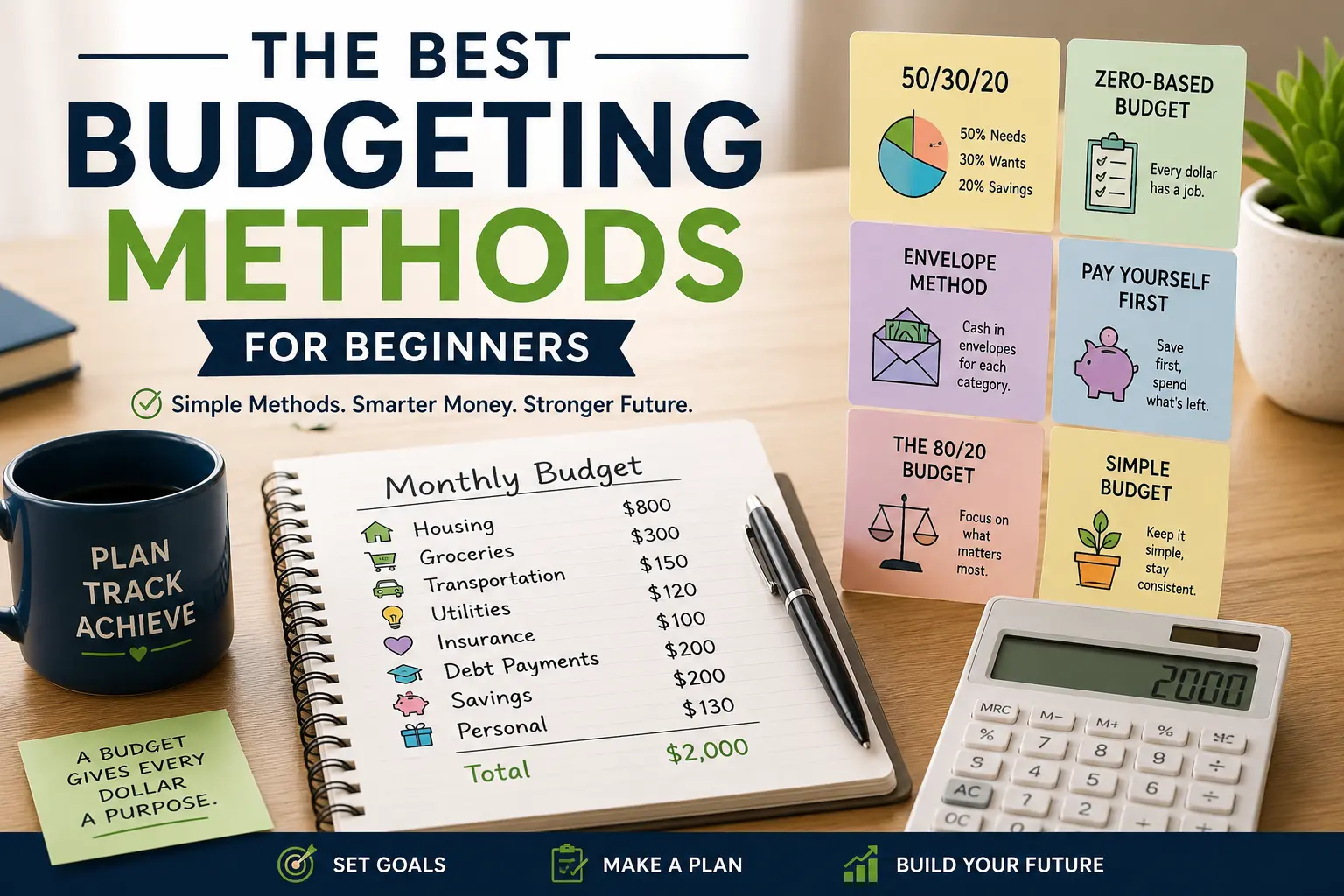
For many people, the word budget brings to mind images of strict spending limits, saying “no” to everything enjoyable, or tracking every penny with complicated spreadsheets.
Because of these misconceptions, budgeting often feels intimidating before people even begin.
The truth is much simpler.
A budget isn’t about restricting your life—it’s about giving your money a purpose.
Without a budget, it’s easy to wonder where your paycheck went at the end of each month. Small purchases add up, unexpected expenses appear, and important financial goals like building an emergency fund or saving for a home can feel increasingly out of reach.
A well-designed budget changes that.
Instead of reacting to your finances, you begin making intentional decisions about how your money should work for you.
Whether your goal is:
- Paying off debt
- Saving for a vacation
- Building an emergency fund
- Buying your first home
- Investing for retirement
- Reducing financial stress
a budget provides the roadmap that helps you get there.
The good news is that there isn’t just one way to budget.
Some people enjoy detailed planning.
Others prefer simple systems they can maintain with minimal effort.
The best budgeting method is the one you can realistically stick with over time.
In this guide, you’ll learn:
- What a budget really is.
- Why budgeting matters.
- Common budgeting mistakes.
- The most popular budgeting methods.
- How to choose the right budgeting system.
- How to build your first budget.
- Tips for staying consistent.
By the end of this article, you’ll understand that successful budgeting isn’t about perfection—it’s about creating a plan that supports your financial goals while still allowing you to enjoy life.
💡 Action Moment: Know Where Your Money Is Going First
Many people struggle with budgeting not because they lack discipline, but because they don’t have a clear picture of their current finances.
Before choosing a budgeting method, take time to understand:
- How much money you earn each month.
- Where your money is currently going.
- Which expenses are essential.
- Which spending habits could be improved.
- What financial goals matter most to you.
That’s exactly why 7 Days to Financial Clarity™ was created.
This free guide helps you organize your income, expenses, savings, and financial priorities so you can build a realistic budget based on actual numbers—not estimates or guesswork.
A clear understanding of your finances is the first step toward making confident financial decisions.
What Is a Budget?
A budget is a plan for how you’ll use your money over a specific period, usually one month.
It helps you decide in advance how much money will be allocated toward:
- Housing
- Food
- Transportation
- Utilities
- Insurance
- Debt payments
- Savings
- Investing
- Entertainment
- Personal spending
Rather than wondering where your money went after you’ve spent it, a budget allows you to decide where your money should go before you spend it.
Think of a budget as a roadmap.
Just as a map helps guide you toward your destination, a budget helps guide your financial decisions toward your goals.
Without one, it’s much easier to drift off course.
Why Every Financial Plan Starts With a Budget
Nearly every financial goal depends on one simple question:
You're already investing time in improving your finances, and that's something to be proud of. Before you continue, download our free 7 Days To Financial Clarity™ workbook and start putting these ideas into action.

Where will the money come from?
Want to save for retirement?
Your budget determines how much you can invest.
Want to pay off debt?
Your budget helps identify money that can be redirected toward extra payments.
Want to build an emergency fund?
Your budget creates space for regular savings.
Want to travel more?
Your budget helps you set aside money before booking your trip.
No matter your goal, budgeting provides the structure needed to turn intentions into action.
Why Budgeting Matters
A budget does much more than track your spending.
It gives you greater awareness, control, and confidence in your financial decisions.
Here are some of the biggest benefits.
Reduces Financial Stress
Money uncertainty is a common source of stress.
When you don’t know whether you’ll have enough money to cover bills or unexpected expenses, it’s easy to feel overwhelmed.
A budget helps reduce that uncertainty by showing you:
Understanding money is one thing. Seeing your own numbers is where real financial progress begins. Spend one minute using our free Budget Calculator and discover where your money can work harder for you.

- What money is coming in.
- What bills are due.
- How much is available for savings.
- Where adjustments may be needed.
Knowing your financial situation often provides peace of mind—even if you’re still working toward larger goals.
Helps You Save Consistently
Saving money doesn’t usually happen by accident.
Most successful savers treat savings as a planned expense rather than waiting to see what’s left over at the end of the month.
A budget allows you to prioritize savings alongside your other financial responsibilities.
Even small, regular contributions can grow into meaningful savings over time.
Helps Prevent Overspending
Without a spending plan, it’s easy for small purchases to quietly consume a significant portion of your income.
Coffee here.
Streaming subscription there.
An online sale you didn’t plan for.
Individually these purchases may seem minor, but together they can reduce the money available for your larger financial goals.
Budgeting increases awareness and encourages more intentional spending.
Supports Financial Goals
Every dollar you save or invest begins with a budgeting decision.
Whether you’re planning to:
- Buy a home.
- Start a business.
- Travel.
- Pay off debt.
- Retire comfortably.
your budget helps ensure your daily spending aligns with your long-term priorities.
Builds Financial Confidence
One of the greatest benefits of budgeting isn’t financial—it’s emotional.
Knowing you have a plan often creates a greater sense of confidence and control.
Instead of avoiding your finances, you become actively involved in shaping your financial future.
Common Budgeting Mistakes Beginners Make
Even the best budgeting system won’t work if it’s built on unrealistic expectations.
Every financial journey is different. Take our free Financial Goal Assessment to discover which area deserves your attention first and receive a clear direction for your next financial milestone.

Let’s look at some common mistakes and how to avoid them.
Guessing Your Expenses
Many people underestimate how much they spend each month.
Without reviewing bank statements, receipts, or account activity, it’s easy to overlook recurring expenses.
Before creating a budget, spend some time tracking where your money actually goes.
Real numbers lead to realistic budgets.
Forgetting Irregular Expenses
Not every bill arrives monthly.
Some expenses occur only a few times each year.
Examples include:
- Vehicle registration.
- Holiday gifts.
- School supplies.
- Annual insurance premiums.
- Home maintenance.
- Medical expenses.
Planning for these costs throughout the year can help prevent financial surprises.
Creating an Unrealistic Budget
Some beginners eliminate every enjoyable expense in an attempt to save as much money as possible.
While this may seem like a good idea, overly restrictive budgets are often difficult to maintain.
A sustainable budget should leave room for both financial responsibility and reasonable enjoyment.
The goal is balance—not perfection.
Never Reviewing the Budget
A budget isn’t something you create once and forget.
Life changes.
Income changes.
Expenses change.
Financial goals change.
Reviewing your budget regularly allows you to adjust as your circumstances evolve.
Giving Up After One Difficult Month
Very few people create the perfect budget on their first attempt.
Unexpected expenses happen.
Some months cost more than others.
That doesn’t mean budgeting has failed.
Instead of quitting, treat each month as an opportunity to learn and improve.
Every adjustment brings your budget closer to reflecting your real life.
The Most Popular Budgeting Methods for Beginners
One of the biggest misconceptions about budgeting is that everyone should use the same system.
In reality, budgeting is personal.
A method that works well for someone with a steady salary may not work for someone with irregular freelance income.
Likewise, a detailed budget that one person enjoys maintaining may feel overwhelming to someone who prefers a simpler approach.
The goal isn’t to find the “perfect” budgeting method.
The goal is to find a budgeting system that you can realistically maintain month after month.
Let’s look at some of the most popular budgeting methods used by beginners.
The 50/30/20 Budget
The 50/30/20 Budget is one of the simplest budgeting methods and is often recommended for people who are just getting started.
The basic idea is to divide your after-tax income into three categories:
- 50% for Needs
- 30% for Wants
- 20% for Savings and Debt Repayment
How It Works
50% – Needs
Needs include expenses that are generally necessary for everyday living.
Examples include:
- Rent or mortgage
- Utilities
- Groceries
- Transportation
- Insurance
- Minimum debt payments
- Essential healthcare
These are expenses that are difficult to avoid.
30% – Wants
Wants are expenses that improve your lifestyle but aren’t essential for basic living.
Examples include:
- Dining out
- Streaming services
- Entertainment
- Hobbies
- Vacations
- Shopping
- Gym memberships
Including room for enjoyable spending can make a budget easier to maintain over time.
20% – Savings and Financial Goals
The final portion is directed toward improving your financial future.
Examples include:
- Emergency savings
- Retirement investing
- Extra debt payments
- Investment accounts
- Saving for major purchases
This portion helps ensure you’re making progress toward long-term financial security.
Advantages
- Simple to understand.
- Easy to maintain.
- Flexible.
- Great for beginners.
Challenges
- Doesn’t work perfectly for everyone.
- High-cost living areas may require more than 50% for necessities.
- People with significant debt may need to allocate more than 20% toward repayment.
Best For
- First-time budgeters.
- Salaried employees.
- Individuals seeking a straightforward budgeting system.
Zero-Based Budgeting
Zero-based budgeting assigns every dollar of income a specific purpose before the month begins.
This doesn’t mean your bank account reaches zero.
Instead, it means every dollar is allocated to categories such as:
- Housing
- Food
- Transportation
- Savings
- Investing
- Entertainment
- Debt repayment
By the end of the planning process:
Income – Expenses – Savings = $0
Every dollar has a job.
Advantages
- Provides a detailed financial plan.
- Encourages intentional spending.
- Helps identify unnecessary expenses.
- Excellent for aggressive financial goals.
Challenges
- Requires more planning.
- Needs regular updates.
- Can feel time-consuming initially.
Best For
- People paying off debt.
- Individuals with detailed financial goals.
- Anyone who enjoys tracking finances closely.
Pay Yourself First
Instead of saving whatever money remains at the end of the month, this method prioritizes savings immediately after you receive your income.
The process is simple:
- Receive your paycheck.
- Move a predetermined amount into savings or investments.
- Use the remaining money for monthly expenses.
By treating savings like any other bill, many people find it easier to build wealth consistently.
Advantages
- Encourages regular saving.
- Builds positive financial habits.
- Easy to automate.
Challenges
- Requires discipline if income varies.
- Savings targets may need adjustment during difficult financial periods.
Best For
- People focused on growing savings.
- Long-term investors.
- Anyone building an emergency fund.
Envelope Budgeting
Envelope budgeting is one of the oldest budgeting methods and remains popular because of its simplicity.
Traditionally, cash was divided into physical envelopes labeled with spending categories such as:
- Groceries
- Fuel
- Dining Out
- Entertainment
- Clothing
Once an envelope was empty, spending in that category stopped until the next budgeting period.
Today, many people use digital banking tools or budgeting apps to apply the same principle electronically.
Advantages
- Encourages spending awareness.
- Helps prevent overspending.
- Easy to understand.
Challenges
- Using cash isn’t convenient for everyone.
- Less practical for online shopping and automatic payments.
Best For
- People trying to control discretionary spending.
- Anyone working to break overspending habits.
Cash-Only Budget
The cash-only budget expands on the envelope concept.
Instead of using credit or debit cards for everyday purchases, many expenses are paid using cash.
Because handing over physical cash often feels more tangible than tapping a card, some people become more mindful of their spending.
Advantages
- Increases spending awareness.
- Helps reduce impulse purchases.
- Makes overspending more difficult.
Challenges
- Not practical for every expense.
- Less convenient than electronic payments.
- Doesn’t suit everyone’s lifestyle.
Best For
- Individuals trying to reduce unnecessary spending.
- People rebuilding healthy financial habits.
Reverse Budgeting
Reverse budgeting flips the traditional budgeting process.
Rather than tracking every individual expense, you focus first on achieving your financial goals.
The process usually looks like this:
- Save or invest a predetermined amount.
- Pay essential bills.
- Spend the remaining money responsibly.
This method emphasizes consistent progress toward long-term goals instead of closely monitoring every purchase.
Advantages
- Simple to maintain.
- Encourages regular saving.
- Less time spent tracking expenses.
Challenges
- Doesn’t provide detailed spending analysis.
- May not be suitable for people struggling with overspending.
Best For
- People with established spending habits.
- Individuals focused primarily on saving and investing.
Values-Based Budgeting
Values-based budgeting focuses less on rigid categories and more on aligning spending with what matters most to you.
Instead of asking,
“Can I afford this?”
you also ask,
“Does this purchase support my priorities?”
For example:
Someone who values family experiences may choose to spend more on travel while reducing spending on luxury shopping.
Someone pursuing financial independence may prioritize investing over frequent dining out.
The emphasis is on intentional spending rather than eliminating enjoyment.
Advantages
- Aligns spending with personal priorities.
- Encourages thoughtful financial decisions.
- Creates flexibility.
Challenges
- Requires honest self-reflection.
- Can be difficult if priorities aren’t clearly defined.
Best For
- Individuals seeking balance.
- Long-term planners.
- People who prefer flexibility over rigid rules.
The Anti-Budget
Despite its name, the Anti-Budget isn’t about avoiding financial responsibility.
Instead, it focuses on one simple habit:
Save first.
Spend the rest without worrying about detailed categories.
As long as you’ve:
- Paid your bills.
- Saved toward your goals.
- Met your financial obligations.
you have greater flexibility with the remaining money.
Advantages
- Extremely simple.
- Low maintenance.
- Reduces budgeting fatigue.
Challenges
- Less effective for people who frequently overspend.
- Doesn’t provide detailed insights into spending patterns.
Best For
- Experienced savers.
- Individuals with consistent spending habits.
- People who dislike detailed budgeting.
💡 Action Moment: Choose a Budget That Supports Your Financial Goals
After learning about these budgeting methods, you may notice that no single system is “best” for everyone.
The right choice depends on what you’re trying to accomplish.
For example:
- If your priority is paying off debt, a Zero-Based Budget may help you direct every available dollar toward repayment.
- If you’re working on building an emergency fund, the Pay Yourself First method can make saving a consistent habit.
- If you’re focused on long-term wealth, Reverse Budgeting or Values-Based Budgeting may better support regular investing.
- If you’re new to budgeting and want a simple starting point, the 50/30/20 Budget can provide an easy framework.
If you’re unsure which financial goal should come first, complete the LookingAtFinance Financial Goal Assessment.
It can help you identify your highest priorities so you can choose a budgeting method that supports your current stage of your financial journey rather than following someone else’s plan.
Remember: Your Budget Can Change
One of the biggest mistakes people make is believing they must use the same budgeting method forever.
Your financial life will evolve.
You may:
- Change careers.
- Get married.
- Start a family.
- Buy a home.
- Launch a business.
- Retire.
As your circumstances change, your budgeting system may need to change as well.
The most successful budget isn’t the one that’s the most detailed or the most popular.
It’s the one that continues helping you make confident financial decisions while adapting to the different seasons of your life.
How to Choose the Best Budgeting Method for You
Now that you’ve learned about several popular budgeting methods, you might be wondering:
“Which one should I actually use?”
The answer is simple:
Choose the budgeting method that you’ll realistically continue using.
A budget only works if you stick with it.
The most detailed budgeting system won’t help if it feels too overwhelming to maintain.
Likewise, a budget that’s too simple may not provide enough structure if you’re trying to eliminate debt or gain better control of your spending.
Instead of searching for the “perfect” budgeting method, consider how each option fits your personality, financial situation, and long-term goals.
Consider Your Personality
Everyone manages money differently.
Some people enjoy planning every detail.
Others prefer flexibility.
If you enjoy organization and detailed planning, you may appreciate methods like:
- Zero-Based Budgeting
- Envelope Budgeting
If you prefer a simpler approach, you may feel more comfortable with:
- 50/30/20 Budget
- Pay Yourself First
- Reverse Budgeting
Choosing a budgeting style that feels natural increases the likelihood that you’ll continue using it.
Consider Your Income
Your budgeting needs may depend on how predictable your income is.
If You Receive a Regular Paycheck
Budgeting is often more straightforward because you know approximately how much money you’ll receive each month.
Methods such as:
- 50/30/20
- Reverse Budgeting
- Pay Yourself First
may be relatively easy to implement.
If Your Income Changes Each Month
Freelancers, commission-based workers, seasonal employees, and small business owners often experience fluctuating income.
In these situations, flexibility becomes more important.
You may benefit from:
- Estimating income conservatively.
- Building a larger emergency fund.
- Adjusting spending categories each month.
- Prioritizing essential expenses before discretionary spending.
A flexible budgeting approach can help you adapt to changing income while still making progress toward your goals.
Consider Your Financial Goals
Different budgeting methods support different priorities.
For example:
If Your Goal Is Paying Off Debt
A Zero-Based Budget may help you identify additional money that can be directed toward extra debt payments.
If Your Goal Is Saving More Money
Pay Yourself First encourages automatic saving before other spending occurs.
If Your Goal Is Financial Simplicity
The 50/30/20 Budget provides an easy framework that many beginners find approachable.
If Your Goal Is Long-Term Investing
Reverse Budgeting or Values-Based Budgeting can help prioritize consistent investing while still allowing flexibility in everyday spending.
Your budget should always support your financial goals—not compete with them.
Consider Your Family Situation
Budgeting for one person is very different from budgeting for an entire household.
Families often have additional considerations such as:
- Childcare.
- School expenses.
- Medical costs.
- Groceries.
- Transportation.
- Family activities.
The more people involved, the more important regular communication becomes.
If you’re budgeting with a spouse or partner, reviewing the budget together can help ensure everyone understands the family’s financial priorities.
Remember That You Can Change Methods
Many people assume they must commit to one budgeting system forever.
That’s simply not true.
As your life changes, your budget should evolve too.
For example:
A recent graduate may begin with a simple 50/30/20 Budget.
Later, after purchasing a home, they may switch to Zero-Based Budgeting for greater control.
Eventually, as investments grow, Reverse Budgeting may become a better fit.
Your budgeting method should adapt to your life—not the other way around.
How to Build Your First Budget
Choosing a budgeting method is only the beginning.
The next step is creating a budget based on your actual financial situation.
Let’s walk through the process one step at a time.
Step 1: Calculate Your Monthly Income
Start by determining how much money you actually receive each month.
Include reliable income sources such as:
- Salary or wages.
- Self-employment income.
- Pension income.
- Government benefits (if applicable).
- Other consistent income sources.
If your income varies from month to month, estimate conservatively using an average based on recent months.
Using realistic income figures helps prevent overspending.
Step 2: List Your Monthly Expenses
Next, write down everything you typically spend money on.
Begin with fixed expenses.
These usually remain relatively consistent each month.
Examples include:
- Rent or mortgage.
- Utilities.
- Insurance.
- Internet.
- Loan payments.
- Childcare.
Then list variable expenses.
Examples include:
- Groceries.
- Fuel.
- Dining out.
- Entertainment.
- Clothing.
- Personal care.
Seeing your expenses in one place often reveals spending patterns that might otherwise go unnoticed.
Step 3: Separate Needs From Wants
One of the simplest ways to improve your budget is to distinguish between essential and discretionary spending.
Needs generally include:
- Housing.
- Food.
- Transportation.
- Insurance.
- Healthcare.
- Utilities.
Wants often include:
- Streaming services.
- Dining out.
- Vacations.
- Premium subscriptions.
- Entertainment.
- Luxury purchases.
This doesn’t mean eliminating all wants.
Instead, it helps ensure your essential responsibilities are covered before spending on optional items.
Step 4: Set Clear Financial Goals
Your budget should reflect what you’re trying to accomplish.
Examples include:
Short-term goals:
- Build a $1,000 emergency fund.
- Pay off a credit card.
- Save for a vacation.
Long-term goals:
- Purchase a home.
- Invest for retirement.
- Start a business.
- Achieve greater financial independence.
Specific goals make budgeting feel more meaningful because every dollar has a purpose.
Step 5: Choose Your Budgeting Method
Now apply the budgeting system that best fits your needs.
Remember:
There is no universal “best” method.
The best budget is the one that helps you consistently make progress toward your goals.
Don’t be afraid to experiment.
If one approach doesn’t fit your lifestyle, adjust it until it does.
💡 Action Moment: Put Your Budget Into Practice
Creating a budget on paper is a great first step.
Putting it into action is where real progress begins.
The LookingAtFinance Budget Calculator makes it easy to organize your monthly income and expenses in one place.
By entering your financial information, you can:
- See where your money is going.
- Compare income with expenses.
- Identify areas where you may be able to save.
- Track your financial progress over time.
Instead of relying on estimates, the calculator helps you build a budget based on your actual financial situation, making it easier to stay organized and make informed decisions.
Step 6: Review Your Budget Every Month
A budget should never be considered “finished.”
Your financial situation changes.
Your budget should change with it.
At the end of each month, ask yourself:
- Did I stay within my planned spending?
- Were there unexpected expenses?
- Did I make progress toward my goals?
- Which categories need adjustment?
Regular reviews help your budget become more accurate over time.
Step 7: Adjust Without Feeling Discouraged
Many beginners become frustrated when they exceed their budget in one category.
Remember:
A budget is a planning tool—not a scorecard.
Going over budget occasionally doesn’t mean you’ve failed.
Instead, ask:
- Why did this happen?
- Was the expense unexpected?
- Do I need to adjust my spending limits?
- Should I prepare differently next month?
Successful budgeting is built through continuous improvement—not perfection.
Practical Tips for Sticking With Your Budget
Creating a budget is only half the challenge.
The real success comes from maintaining it consistently.
Here are a few habits that can make budgeting easier.
Automate What You Can
If possible, automate recurring actions such as:
- Savings transfers.
- Investment contributions.
- Bill payments.
Automation can reduce the temptation to spend money that you’ve already designated for other priorities.
Review Your Spending Weekly
Rather than waiting until the end of the month, spend a few minutes each week reviewing your expenses.
Small adjustments are often much easier to make than large corrections after several weeks have passed.
Leave Room for Enjoyment
A budget that removes every enjoyable expense is often difficult to maintain.
Including reasonable spending for hobbies, entertainment, or dining out can help make your budget sustainable over the long term.
The goal isn’t to eliminate enjoyment—it’s to spend intentionally.
Celebrate Progress
Every financial milestone deserves recognition.
Whether you’ve:
- Saved your first $500.
- Paid off a credit card.
- Stayed within your budget for three months.
- Built an emergency fund.
Take time to acknowledge your progress.
Celebrating small wins helps maintain motivation as you work toward larger financial goals.
Budgeting Is a Skill That Improves Over Time
No one creates the perfect budget on their first attempt.
Like any valuable skill, budgeting becomes easier with practice.
Each month teaches you something new about your spending habits, priorities, and financial goals.
Instead of striving for perfection, focus on building consistency.
Over time, those consistent choices can lead to greater financial confidence, stronger saving habits, and meaningful progress toward the future you want to create.
Real-Life Example: Two Different Approaches to Budgeting
Let’s compare two fictional individuals who both decide it’s time to take control of their finances.
Although they have similar incomes, the way they approach budgeting leads to very different outcomes.
Sarah’s Approach
Sarah realizes she’s been living paycheck to paycheck despite earning a steady income.
Instead of feeling discouraged, she decides to understand where her money is actually going.
She begins by:
- Tracking her monthly expenses.
- Completing a financial review.
- Choosing the 50/30/20 Budget because it feels simple and manageable.
- Setting up automatic transfers into her savings account.
- Reviewing her budget at the end of each month.
After a few months, Sarah notices several positive changes.
She spends less on impulse purchases.
She builds an emergency fund.
She feels more confident paying her monthly bills.
Most importantly, she no longer wonders where her paycheck disappeared each month because every dollar has a purpose.
Her budget isn’t perfect every month, but she continues making small adjustments that keep her moving toward her goals.
Michael’s Approach
Michael also wants to improve his finances.
He creates a detailed budget one weekend and promises himself he’ll never overspend again.
For the first week, everything goes well.
Then reality sets in.
He forgets to budget for:
- Car maintenance.
- Birthday gifts.
- Dining out with friends.
- Unexpected household expenses.
When his spending exceeds his budget, he becomes frustrated.
Instead of adjusting the budget to reflect reality, he assumes budgeting simply doesn’t work for him.
Within a month, he abandons the process entirely.
Months later, he’s still asking the same question:
“Where did all my money go?”
The Lesson
Sarah and Michael didn’t have dramatically different incomes.
They simply approached budgeting differently.
Sarah treated budgeting as an ongoing process.
Michael expected perfection from the beginning.
Successful budgeting isn’t about creating the perfect plan.
It’s about consistently improving your financial decisions over time.
Common Budgeting Mistakes to Avoid
Even with the best intentions, budgeting mistakes can slow your progress.
Fortunately, most are easy to avoid once you recognize them.
Trying to Change Everything at Once
Some people attempt to completely transform their spending habits overnight.
They eliminate every unnecessary expense and create an extremely restrictive budget.
While the enthusiasm is admirable, this approach often becomes difficult to maintain.
Instead, focus on making gradual improvements.
Small, sustainable changes are usually more effective than dramatic short-term sacrifices.
Ignoring Small Purchases
It’s easy to overlook small daily expenses.
Examples include:
- Coffee.
- Snacks.
- Food delivery.
- App purchases.
- Convenience store visits.
Individually these purchases may seem insignificant.
Together they can noticeably affect your monthly budget.
Being aware of these habits helps you make intentional choices without eliminating every small pleasure.
Forgetting to Plan for Irregular Expenses
Many budgets work well until an expense arrives that wasn’t expected.
Examples include:
- Vehicle repairs.
- Holiday shopping.
- School expenses.
- Home maintenance.
- Annual subscriptions.
Including these occasional expenses in your annual financial plan can help reduce surprises throughout the year.
Comparing Your Budget to Someone Else’s
Every person’s financial situation is different.
Income.
Family size.
Housing costs.
Financial goals.
Lifestyle.
Because of these differences, your budget shouldn’t look exactly like someone else’s.
Focus on creating a plan that works for your circumstances instead of trying to copy another person’s budget.
Giving Up Too Soon
No budget works perfectly the first time.
You’ll probably forget expenses.
You’ll likely underestimate some categories.
Unexpected costs will happen.
That’s normal.
The important thing isn’t avoiding every mistake.
It’s learning from each month and making improvements going forward.
Beginner Budget Checklist
Use this checklist as you begin building and maintaining your budget.
Before You Create Your Budget
☐ Calculate your monthly income.
☐ Review recent bank and credit card statements.
☐ List all monthly expenses.
☐ Identify irregular annual expenses.
☐ Decide what financial goals you’re working toward.
Build Your Budget
☐ Choose a budgeting method.
☐ Separate needs from wants.
☐ Include savings as part of your plan.
☐ Allow room for occasional enjoyment.
☐ Leave some flexibility for unexpected expenses.
Maintain Your Budget
☐ Review your spending every week.
☐ Update your budget monthly.
☐ Adjust categories when life changes.
☐ Celebrate progress instead of chasing perfection.
☐ Continue learning about personal finance.
Frequently Asked Questions
Which budgeting method is best for beginners?
There isn’t one budgeting method that’s best for everyone.
Many beginners start with the 50/30/20 Budget because it’s straightforward and easy to understand.
Others may prefer Zero-Based Budgeting if they want more detailed control over their spending.
The most effective budget is the one you’ll consistently use.
How often should I review my budget?
A quick weekly review can help you stay aware of your spending, while a more detailed monthly review allows you to compare your budget with your actual expenses and make adjustments as needed.
Regular reviews help your budget stay relevant as your financial situation changes.
What if my income changes every month?
If your income varies, begin by estimating a conservative monthly income based on previous earnings.
Prioritize essential expenses first, maintain flexibility in discretionary spending, and consider building a larger emergency fund to help manage months when income is lower.
Should couples have one shared budget?
Many couples find it helpful to create a budget together because it encourages communication and shared financial planning.
The exact approach will depend on each couple’s preferences, financial responsibilities, and goals.
The most important factor is maintaining open communication about money.
Can budgeting help me pay off debt?
Yes.
A budget can help you identify money that may be redirected toward additional debt payments while ensuring that essential expenses and savings remain part of your overall financial plan.
Do I need budgeting software?
Not necessarily.
Some people prefer budgeting apps.
Others use spreadsheets.
Many successfully budget using pen and paper.
The best budgeting tool is the one you’ll consistently use.
Final Thoughts
Budgeting is one of the most valuable financial skills you can develop.
Not because it limits your spending—but because it helps you make intentional decisions with your money.
Every financial goal begins with knowing where your money is going.
Whether you’re building an emergency fund, paying off debt, saving for a home, investing for retirement, or creating additional income streams, your budget provides the structure that helps turn those goals into reality.
Remember that budgeting isn’t about perfection.
Some months will go exactly as planned.
Others won’t.
Unexpected expenses will happen.
Income may change.
Priorities will evolve.
That’s perfectly normal.
The key is to review your budget regularly, adjust it when necessary, and keep moving forward.
Over time, consistent budgeting can reduce financial stress, strengthen your confidence, and help you make decisions that support the future you want to build.
Your Next Steps
Now that you understand the different budgeting methods available, here are three practical steps you can take today to begin putting them into action.
1. Organize Your Financial Picture
Download 7 Days to Financial Clarity™ to better understand your income, expenses, savings, and spending habits.
A clear understanding of your finances is the foundation of every successful budget.
2. Identify Your Financial Priorities
Complete the LookingAtFinance Financial Goal Assessment to determine what deserves your attention first.
Whether your goal is:
- Paying off debt
- Building an emergency fund
- Saving for a major purchase
- Investing for the future
- Achieving greater financial stability
your budget should be designed to support those priorities.
3. Build Your Budget With Confidence
Use the LookingAtFinance Budget Calculator to organize your monthly income and expenses.
Seeing your financial information in one place can help you:
- Track your spending.
- Identify opportunities to save.
- Monitor progress toward your goals.
- Make informed financial decisions month after month.
Remember, a budget isn’t something you create once and forget—it’s a tool that grows with you as your life changes.
Key Takeaway
The best budgeting method isn’t the most complicated one—it’s the one you can consistently follow while making steady progress toward your financial goals.
By understanding your spending habits, choosing a budgeting system that fits your lifestyle, and reviewing your plan regularly, you can build healthier financial habits, reduce stress, and create a stronger foundation for long-term financial success.
You have invested time learning today. Now take the next step by downloading our free 7 Days To Financial Clarity™ workbook and begin building a stronger financial future.
