
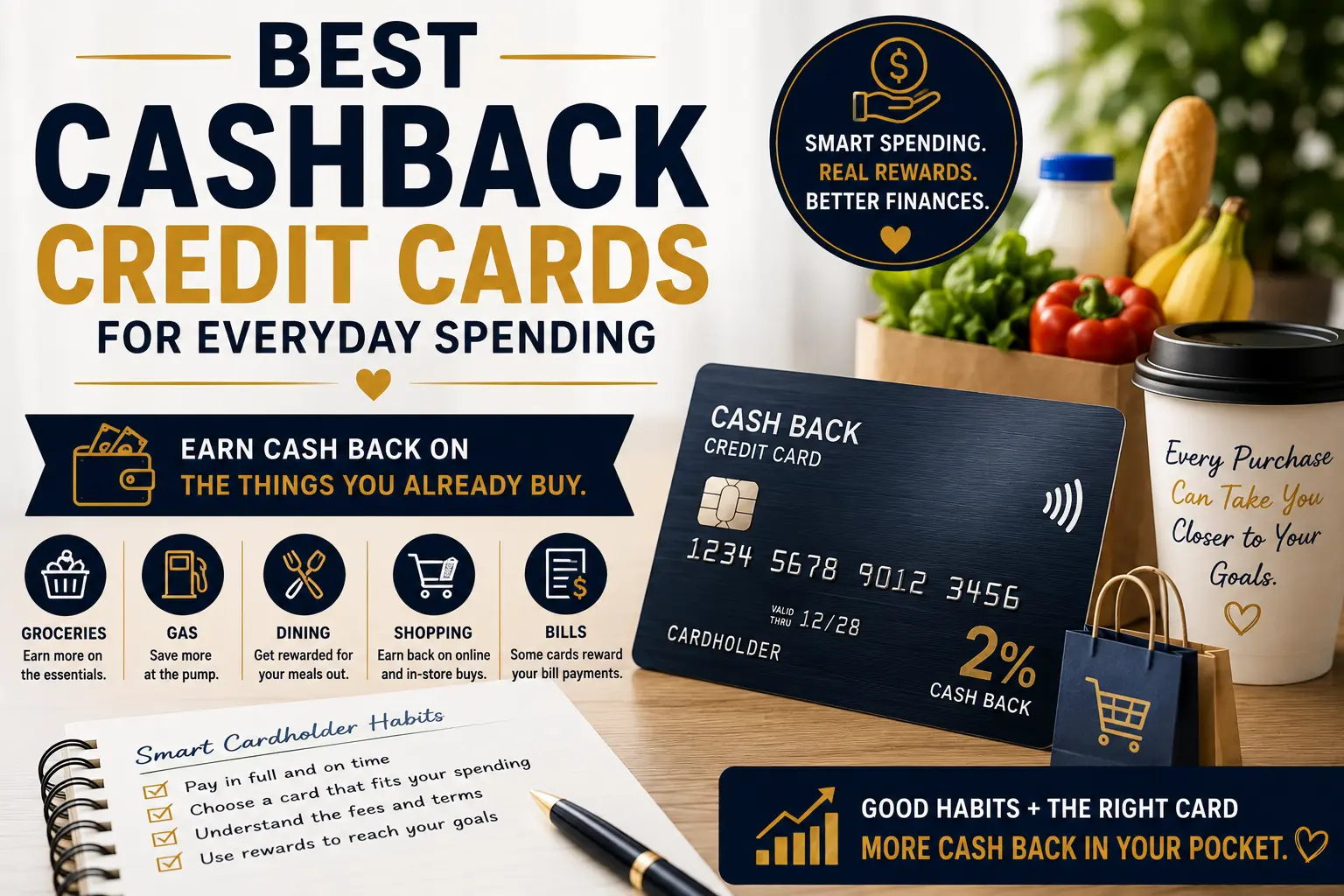
For many people, everyday expenses make up the largest portion of their monthly budget.
Whether you’re buying groceries, filling up your gas tank, dining at local restaurants, shopping online, or paying household bills, these purchases can add up quickly.
What if some of that spending could work in your favor?
That’s where cashback credit cards come in.
Unlike some rewards programs that require you to redeem points for travel or merchandise, cashback credit cards allow you to earn a percentage of your eligible purchases back as cash or cash-equivalent rewards.
Used responsibly, cashback rewards can help reduce the overall cost of your everyday spending.
However, it’s important to remember one thing:
Cashback is a bonus—not free money.
A credit card should never become an excuse to spend more than you normally would.
In fact, carrying a balance and paying high interest charges can easily outweigh any rewards you earn.
That’s why understanding how cashback cards work is just as important as choosing the right one.
In this guide, you’ll learn:
- What cashback credit cards are.
- How cashback rewards work.
- The different types of cashback cards available.
- How to compare cashback features.
- Common mistakes to avoid.
- Practical strategies for maximizing your rewards while maintaining healthy financial habits.
By the end of this article, you’ll understand how to evaluate cashback credit cards confidently and choose one that aligns with your everyday spending patterns and financial goals.
💡 Action Moment: Build Good Financial Habits Before Chasing Rewards
Cashback rewards are most valuable when they’re built on healthy financial habits.
Before applying for a new credit card, it’s worth taking a closer look at your current financial situation.
Ask yourself:
- Where is most of my money going each month?
- Do I consistently pay my bills on time?
- Am I already carrying credit card debt?
- Would a cashback card help me, or should I focus on paying down existing balances first?
These are exactly the kinds of questions explored in 7 Days to Financial Clarity™.
The guide helps you organize your income, expenses, savings, and financial priorities so you can make informed decisions about using credit responsibly.
A cashback card works best as part of a solid financial plan—not as a substitute for one.
What Is a Cashback Credit Card?
A cashback credit card is a type of rewards credit card that gives you a percentage of eligible purchases back after you spend money.
Instead of earning airline miles or hotel points, you receive rewards that can often be redeemed as:
- Statement credits.
- Direct deposits into eligible bank accounts.
- Reward balances.
- Checks.
- Gift cards.
- Purchases through the card issuer’s rewards portal.
The amount you earn depends on the card’s reward structure.
Some cards provide the same cashback percentage on every purchase.
Others offer higher rewards in specific spending categories, such as groceries, restaurants, or fuel.
The goal is simple:
Continue making purchases you would have made anyway while earning modest rewards in return.
How Do Cashback Rewards Work?
Every cashback program has its own rules, but the basic concept is straightforward.
When you make an eligible purchase using your cashback credit card, the card issuer calculates a percentage of that purchase and credits it to your rewards balance.
For example:
If your card earns 2% cashback on eligible purchases and you spend $100, you would typically earn $2 in cashback rewards.
Those rewards may accumulate until you redeem them according to your card issuer’s redemption options and minimum requirements.
It’s important to remember that rewards generally apply only to eligible purchases and may exclude items such as cash advances, balance transfers, fees, interest charges, or certain other transactions.
Always review the card’s terms and conditions to understand exactly how rewards are earned.
Common Ways to Redeem Cashback
Although redemption options vary by card issuer, many cashback credit cards allow you to redeem rewards in several convenient ways.
Statement Credits
A statement credit applies your rewards toward reducing your credit card balance.
For example, if you’ve accumulated $50 in cashback rewards, you may be able to apply that amount directly to your account.
This can lower the amount you owe, though you’ll still need to make at least the required minimum payment unless the statement credit covers your full balance.
Direct Deposit
Some credit card issuers allow cashback rewards to be transferred directly into an eligible checking or savings account.
This option offers flexibility because you can use the money however you choose.
For example, you might:
- Add it to your emergency fund.
- Contribute to your savings goals.
- Pay household expenses.
- Invest for the future.
Gift Cards
Many rewards programs let you exchange cashback for gift cards from participating retailers.
In some cases, gift cards may be offered at promotional values, allowing your rewards to stretch a little further.
However, this varies by issuer and promotion.
Shopping Through Rewards Portals
Some issuers allow you to use cashback rewards to purchase products, travel, or services through their online rewards marketplace.
Before redeeming this way, compare the value of your rewards to other redemption options to ensure you’re receiving fair value.
Types of Cashback Reward Structures
Not every cashback credit card works the same way.
Understanding the different reward structures can help you choose a card that matches your spending habits.
Flat-Rate Cashback
A flat-rate cashback card earns the same percentage on nearly every eligible purchase.
For example:
- 1.5% on all eligible purchases.
- 2% on all eligible purchases.
Advantages
- Easy to understand.
- No category tracking.
- Consistent rewards.
Potential Drawbacks
- May earn less in categories where specialized cards offer higher rewards.
Best For
People who prefer simplicity and make purchases across many different categories.
Tiered Cashback
Tiered cashback cards offer different reward percentages depending on the type of purchase.
For example, a card might provide higher cashback on groceries and dining while offering a lower rate on other purchases.
Advantages
- Greater rewards in common spending categories.
- Good for households with predictable spending patterns.
Potential Drawbacks
- Requires understanding category rules.
- Spending outside bonus categories may earn lower rewards.
Best For
People whose spending is concentrated in a few everyday categories.
Rotating Category Cashback
Some cashback cards feature categories that change throughout the year.
Examples might include:
- Grocery stores.
- Gas stations.
- Restaurants.
- Home improvement stores.
- Online shopping.
In many cases, cardholders must activate these bonus categories each quarter to receive the higher reward rate.
Advantages
- Opportunity to earn higher cashback during promotional periods.
- Encourages strategic spending on planned purchases.
Potential Drawbacks
- Categories change periodically.
- Activation may be required.
- Bonus rates may apply only up to certain spending limits.
Best For
Organized users who don’t mind tracking changing reward categories.
Customized Cashback
Some card issuers allow cardholders to choose the spending category where they earn the highest cashback.
Depending on the issuer, you may be able to adjust your preferred category periodically.
Advantages
- Greater flexibility.
- Rewards can match changing spending habits.
Potential Drawbacks
- Available only from certain issuers.
- Category options and change frequency vary.
Best For
People whose spending priorities change throughout the year.
Why Cashback Credit Cards Are So Popular
Cashback credit cards continue to be among the most popular rewards cards because they’re easy to understand and practical for everyday life.
Unlike travel rewards, which often require planning or specific redemption rules, cashback can usually be used for almost any financial need.
Some of the most common reasons people choose cashback cards include:
- Rewards on everyday purchases.
- Flexible redemption options.
- Straightforward reward structures.
- Potential to offset regular expenses.
- No need to travel to benefit from rewards.
For many households, cashback provides a simple way to receive modest value from purchases they already planned to make.
You’re already investing time in improving your finances, and that’s something to be proud of. Before you continue, download our free 7 Days To Financial Clarity™ workbook and start putting these ideas into action.

Cashback Credit Cards for Different Spending Habits
One of the biggest mistakes people make when choosing a cashback credit card is assuming that the highest advertised reward percentage automatically makes it the best choice.
In reality, the value of a cashback card depends largely on how you spend your money.
A card that works well for someone who spends heavily on groceries may not be the best fit for someone whose largest expenses are dining out or commuting.
Before comparing cards, take a moment to review where most of your monthly spending goes.
Understanding your spending habits can help you choose a rewards structure that offers the greatest long-term value.
Flat-Rate Cashback Cards
Flat-rate cashback cards earn the same reward percentage on nearly every eligible purchase.
Rather than tracking bonus categories, every qualifying purchase earns a consistent rate.
For example, a flat-rate card may offer:
- A consistent cashback percentage on eligible purchases.
- Straightforward redemption.
- Simple reward tracking.
Advantages
- Easy to understand.
- No need to remember bonus categories.
- Consistent rewards across everyday purchases.
- Suitable for people with varied spending habits.
Potential Challenges
- May earn less in categories where specialized cards provide higher rewards.
- Doesn’t reward concentrated spending in specific areas.
Best For
Flat-rate cashback cards are often ideal for:
- First-time credit card users.
- Busy households.
- People who want simplicity.
- Individuals with spending spread across many categories.
Grocery Cashback Cards
For many households, groceries represent one of the largest monthly expenses.
Some cashback cards provide enhanced rewards for purchases made at eligible grocery stores.
Depending on the card issuer, grocery rewards may apply to:
- Supermarkets.
- Neighborhood grocery stores.
- Certain online grocery purchases.
It’s important to remember that warehouse clubs, discount retailers, or specialty stores may be treated differently under some reward programs.
Always review the issuer’s category definitions before applying.
Advantages
- Rewards on essential monthly spending.
- Particularly useful for families.
- Easy to earn rewards through regular grocery shopping.
Potential Challenges
- Spending caps may apply.
- Some grocery retailers may not qualify.
Best For
- Families.
- Individuals who cook at home regularly.
- People with predictable grocery spending.
Gas Cashback Cards
If you drive frequently, fuel costs can become a significant monthly expense.
Gas-focused cashback cards provide increased rewards on eligible fuel purchases.
Depending on the issuer, eligible purchases may include:
- Traditional gas stations.
- Certain electric vehicle charging networks.
- Convenience stores attached to gas stations (subject to the issuer’s classification).
Because fuel purchases are often recurring, these rewards can add up over time.
Advantages
- Rewards on regular transportation expenses.
- Helpful for commuters.
- Can offset part of ongoing fuel costs.
Potential Challenges
- Best suited for people who drive regularly.
- Spending caps or merchant restrictions may apply.
Best For
- Daily commuters.
- Families with multiple vehicles.
- Drivers with long travel distances.
Dining Cashback Cards
Dining rewards cards offer higher cashback on eligible restaurant purchases.
This may include:
- Sit-down restaurants.
- Cafés.
- Fast-food establishments.
- Food delivery services (depending on the issuer).
If dining out is already part of your monthly budget, earning rewards on those purchases can provide additional value.
However, it’s important not to increase restaurant spending simply to earn more cashback.
Advantages
- Rewards on everyday dining.
- Useful for people who travel or eat out frequently.
- May include food delivery services.
Potential Challenges
- Dining purchases can quickly exceed a planned budget.
- Merchant classifications vary by issuer.
Best For
- Frequent restaurant visitors.
- Business travelers.
- Individuals who regularly order takeout.
Online Shopping Cashback Cards
As online shopping continues to grow, some cashback cards now offer bonus rewards on eligible online purchases.
These cards may reward spending at:
- Online retailers.
- Digital marketplaces.
- Select subscription services.
Eligibility depends on how purchases are processed, so reviewing the issuer’s terms can help you understand which transactions qualify.
Advantages
- Rewards on online purchases.
- Useful for frequent online shoppers.
- May complement modern shopping habits.
Potential Challenges
- Bonus categories may exclude certain merchants.
- Overspending online can become tempting.
Best For
- Regular online shoppers.
- People who prefer purchasing household items online.
- Individuals comfortable managing online spending responsibly.
Wholesale Club Cashback Cards
Many families save money by purchasing household goods in bulk.
Some cashback credit cards provide rewards for eligible purchases at wholesale clubs.
Before choosing one of these cards, consider:
- Whether you already shop at wholesale clubs.
- Membership fees.
- How frequently you make bulk purchases.
Higher rewards are valuable only if they align with your normal shopping habits.
Advantages
- Rewards on larger household purchases.
- Useful for families and bulk shoppers.
- Can complement grocery savings.
Potential Challenges
- Requires shopping at participating wholesale clubs.
- Membership fees may reduce overall value.
Best For
- Large households.
- Families.
- Frequent warehouse club shoppers.
Rotating Category Cashback Cards
Some cashback cards feature categories that change throughout the year.
For example, bonus categories might include:
- Grocery stores.
- Gas stations.
- Home improvement stores.
- Streaming services.
- Restaurants.
In many cases, you’ll need to activate these categories before earning the higher reward rate.
Advantages
- Opportunity for higher cashback.
- Encourages strategic use of the card.
- Can increase rewards throughout the year.
Potential Challenges
- Categories change regularly.
- Activation requirements may be easy to forget.
- Higher reward rates often apply only up to specified spending limits.
Best For
- Organized cardholders.
- People willing to monitor changing categories.
- Those who enjoy maximizing rewards.
Premium Cashback Cards
Some cashback cards charge an annual fee but offer enhanced rewards or additional benefits.
These benefits may include:
- Higher cashback percentages in certain categories.
- Travel protections.
- Purchase protection.
- Extended warranties.
- Exclusive shopping offers.
A premium cashback card can make sense if the value of the rewards and benefits exceeds the annual fee.
However, this isn’t true for everyone.
Before paying an annual fee, compare:
- Expected cashback earnings.
- Annual fee amount.
- Additional benefits you’ll realistically use.
Best For
- Higher spenders.
- Individuals who regularly use premium card benefits.
- People who calculate whether the benefits outweigh the cost.
Other Features to Compare
Cashback percentage is important—but it shouldn’t be the only factor you consider.
Several additional features can significantly affect the overall value of a credit card.
Annual Fee
Some cashback cards charge no annual fee.
Others charge a yearly fee in exchange for higher rewards or additional benefits.
Ask yourself:
Will I realistically earn enough rewards to justify paying this fee?
If not, a no-annual-fee card may be a better choice.
Annual Percentage Rate (APR)
The APR represents the interest rate charged if you carry a balance beyond the grace period.
This is one of the most important features to understand.
Even generous cashback rewards can quickly be offset by interest charges if balances are not paid in full.
For many people, avoiding interest is more valuable than earning additional rewards.
Redemption Flexibility
Not every rewards program works the same way.
Some allow you to redeem cashback:
- At any amount.
- Once minimum thresholds are reached.
- As statement credits.
- Through direct deposits.
- For gift cards.
- Through online shopping portals.
A flexible redemption process often makes rewards easier to use.
Foreign Transaction Fees
If you travel internationally or make purchases from overseas merchants, consider whether the card charges foreign transaction fees.
Even small percentage-based fees can reduce the value of your rewards when shopping abroad.
Welcome Offers
Some cashback cards provide introductory bonuses after new cardholders meet certain spending requirements within a specified timeframe.
These offers can be attractive, but they should never encourage unnecessary spending.
If you wouldn’t normally make the required purchases, the bonus may not provide real financial value.
💡 Action Moment: Choose a Card That Matches Your Financial Priorities
By now, you’ve seen that different cashback credit cards are designed for different spending patterns.
Instead of asking:
“Which cashback card is the best?”
consider asking:
- Where do I spend most of my money?
- Do I prefer simple rewards or category bonuses?
- Am I willing to track rotating reward categories?
- Will I always pay my balance in full?
- Does an annual fee make sense for my situation?
The LookingAtFinance Financial Goal Assessment can help you answer these questions.
For example:
- If you’re working to pay off existing credit card debt, focusing on repayment may be more beneficial than opening another rewards card.
- If you’re building your credit history, a simple cashback card with responsible use may be a practical choice.
- If you’re financially stable and consistently pay your balance in full, maximizing cashback on everyday spending may help you get more value from purchases you already planned to make.
Choosing a credit card that supports your financial goals—not just your spending habits—can help you build healthier long-term financial habits.
Cashback Rewards Should Complement Your Budget
The most successful cashback users don’t spend more simply because rewards are available.
Instead, they use cashback as a small bonus on purchases they were already planning to make.
Think of cashback as one piece of a broader financial strategy that includes:
- Spending within your budget.
- Paying your balance on time.
- Avoiding unnecessary debt.
- Building savings.
- Working toward long-term financial goals.
When those habits are in place, cashback becomes a helpful reward rather than the primary reason for using a credit card.
Knowing your balance is only the beginning. Use our free Debt Payoff Calculator to build a repayment strategy, compare payoff timelines, and take control of your debt with confidence.

How to Maximize Cashback Without Spending More
One of the biggest myths about cashback credit cards is that earning more rewards automatically means you’re saving money.
In reality, cashback only provides value if you’re using your credit card responsibly.
If you’re buying things you wouldn’t normally purchase simply to earn rewards, you’re likely spending more—not saving more.
The most successful cashback users don’t change their spending habits to earn rewards.
Instead, they earn rewards on purchases they already planned to make.
Let’s look at several practical strategies that can help you maximize your cashback while protecting your overall financial health.
Pay Your Balance in Full Every Month
If there’s one habit that has the greatest impact on the value of a cashback credit card, it’s paying your statement balance in full each month.
Why?
Because interest charges can quickly erase the rewards you’ve earned.
Imagine earning cashback on several purchases throughout the month but then carrying a balance that accrues interest.
Depending on your card’s Annual Percentage Rate (APR), the interest could easily exceed the value of your cashback rewards.
Paying your balance in full helps you:
- Avoid interest charges on purchases during the grace period (when applicable).
- Keep more of your cashback.
- Build positive payment history.
- Maintain healthier financial habits.
For many people, paying the full balance each month is the difference between a cashback card saving money and costing money.
Use Your Card for Planned Purchases
Cashback works best when it’s attached to spending that was already part of your budget.
Examples include:
- Groceries.
- Fuel.
- Utility bills (where accepted and without added fees).
- Streaming subscriptions.
- Insurance premiums (if accepted).
- Household necessities.
These are purchases you would likely make regardless of whether rewards were available.
Using your cashback card for planned expenses allows you to earn rewards without increasing your overall spending.
Match Your Card to Your Spending Habits
Not every cashback card rewards the same purchases.
If most of your monthly spending goes toward groceries, a card with enhanced grocery rewards may provide greater value than one focused on dining.
Likewise:
If you commute daily, gas rewards may be more valuable.
If you frequently shop online, an online shopping rewards card may better match your spending.
Choosing a card that aligns with your normal purchasing habits allows your rewards to accumulate naturally.
Avoid Carrying a Balance for Rewards
Some people mistakenly believe that carrying a balance helps them earn more rewards.
It doesn’t.
Cashback is generally earned when eligible purchases are made—not because a balance remains unpaid.
Carrying a balance often results in interest charges that reduce the overall financial benefit of your rewards.
Whenever possible, treat your credit card like a convenient payment tool rather than a source of borrowed money.
Redeem Your Cashback Regularly
Many people allow rewards to sit unused for long periods.
While there’s nothing inherently wrong with this, it’s worth reviewing your rewards periodically.
Depending on your card’s policies, you may be able to redeem cashback as:
- A statement credit.
- A direct deposit.
- A check.
- Gift cards.
- Eligible purchases through the rewards portal.
Some programs may have minimum redemption amounts or expiration rules, so understanding your issuer’s policies can help you make the most of your rewards.
Monitor Rotating Reward Categories
If you use a rotating-category cashback card, staying organized can significantly increase your rewards.
Simple reminders can help you remember to:
- Activate new bonus categories.
- Use the appropriate card during promotional periods.
- Stay within any spending limits that apply to bonus rewards.
Missing an activation period could mean earning a lower cashback rate than expected.
Review Your Card Each Year
Your financial needs don’t stay the same forever.
The card that suited you a few years ago may no longer be the best fit today.
Once a year, consider reviewing:
- Your spending habits.
- Annual fees.
- Reward categories.
- Interest rates.
- New features offered by your issuer.
If your lifestyle has changed, another cashback structure may better support your current spending.
💡 Action Moment: Make Sure Interest Doesn’t Cost More Than Your Cashback
Earning cashback feels rewarding—but it’s important to look at the complete financial picture.
Imagine earning $150 in cashback over the course of a year.
Now imagine paying $400 in interest charges because you carried a balance on that same card.
Even though you earned rewards, you would still be spending significantly more than you received back.
That’s why responsible repayment matters just as much as earning cashback.
The LookingAtFinance Credit Card Payoff Calculator can help you estimate:
- How long it could take to pay off your balance.
- How much interest you may pay over time.
- How increasing your monthly payment may reduce both repayment time and total interest costs.
Understanding these numbers can help you make more informed decisions and ensure your cashback remains a genuine financial benefit rather than being offset by interest charges.
Responsible Habits That Help You Earn More Over Time
Maximizing cashback isn’t only about rewards.
It’s also about building healthy financial habits that can benefit you for years to come.
Here are several practices worth developing.
Pay On Time Every Month
Making payments by the due date is one of the most important responsibilities of any credit card user.
Consistent on-time payments can help you:
- Avoid late payment fees.
- Reduce the risk of penalty interest rates.
- Maintain a positive payment history.
- Build healthy credit habits.
Setting up automatic payments or calendar reminders can make staying on schedule easier.
Stay Within Your Budget
A cashback card should support your budget—not replace it.
Before making a purchase, ask yourself:
- Was I already planning to buy this?
- Can I afford to pay for it when my statement arrives?
- Am I purchasing this because I need it, or simply because it earns rewards?
These questions can help prevent impulse spending.
Track Your Spending
Even responsible credit card users benefit from reviewing their spending regularly.
Monthly reviews can help you identify:
- Spending categories that have increased.
- Subscription services you no longer use.
- Opportunities to reduce expenses.
- Areas where cashback rewards are strongest.
Being aware of your spending habits allows you to make informed adjustments before small expenses become larger financial challenges.
Understand Your Credit Limit
Your credit limit isn’t a spending target.
It’s the maximum amount your issuer allows you to borrow.
Treating your limit as permission to spend can quickly lead to unnecessary debt.
Instead, use only what you can comfortably repay.
Keep Learning About Credit
Financial products evolve over time.
Reward programs change.
Interest rates change.
Credit scoring models may also change.
Continuing to learn about responsible credit management can help you make better decisions throughout your financial journey.
Common Cashback Credit Card Mistakes
Even experienced cardholders occasionally make mistakes.
Recognizing these common pitfalls can help you avoid unnecessary costs.
Spending More Just to Earn Rewards
Perhaps the most common mistake is purchasing items simply because they earn cashback.
Remember:
Spending $100 to earn $2 in cashback still leaves you $98 out of pocket if the purchase wasn’t necessary.
Rewards should be a bonus on planned spending—not the reason for the purchase.
Focusing Only on Reward Percentages
A card advertising higher cashback may seem attractive, but reward percentages tell only part of the story.
Also consider:
- Annual fees.
- Interest rates.
- Redemption flexibility.
- Spending caps.
- Eligible purchase categories.
A slightly lower reward rate with fewer costs may provide better overall value.
Ignoring the Annual Fee
Premium cashback cards sometimes charge annual fees.
Before paying one, calculate whether the rewards and benefits you expect to receive are likely to outweigh that cost.
If not, a no-annual-fee card may be the more practical choice.
Missing Payments
Late payments can lead to:
- Late fees.
- Additional interest.
- Negative effects on your credit history.
Protecting your payment history is generally far more valuable than earning a little extra cashback.
Applying for Too Many Cards at Once
Opening several credit cards in a short period can make managing payments more complicated and may affect your credit profile.
Instead of collecting numerous rewards cards, focus on using one or two responsibly.
For many beginners, simplicity leads to better financial habits.
Cashback Is a Reward for Good Financial Habits
The people who benefit most from cashback credit cards usually have one thing in common:
They don’t chase rewards.
They focus on responsible money management.
They:
- Spend intentionally.
- Pay their balances on time.
- Avoid unnecessary debt.
- Review their spending regularly.
- Let rewards accumulate naturally.
Cashback isn’t the goal.
Healthy financial habits are.
The cashback is simply a welcome bonus along the way.
Every financial journey is different. Take our free
Financial Goal Assessment
to discover which area deserves your attention first and receive a clear direction for your next financial milestone.

Real-Life Example: Two Cashback Cardholders
Let’s compare two fictional cardholders who both choose cashback credit cards.
Although they have similar incomes and spending habits, the way they use their cards leads to very different financial outcomes.
Emma’s Approach
Emma uses her cashback credit card for expenses she already planned to make each month.
These include:
- Groceries.
- Fuel.
- Utility bills (where accepted).
- Streaming subscriptions.
- Household essentials.
Before making purchases, she asks herself one simple question:
“Would I buy this if I didn’t earn cashback?”
If the answer is yes, she uses her cashback card.
If the answer is no, she skips the purchase.
Every month she:
- Pays her statement balance in full.
- Reviews her spending.
- Redeems cashback periodically.
- Tracks her budget carefully.
Over time she earns a modest amount of cashback each year.
More importantly, she never pays interest because she avoids carrying a balance.
The cashback becomes a genuine financial bonus that she uses to grow her emergency fund.
Ryan’s Approach
Ryan also enjoys earning cashback.
However, he begins making extra purchases simply because they earn rewards.
He thinks:
“If I earn more cashback, I’m saving money.”
Unfortunately, that’s not how cashback works.
Soon he begins:
- Dining out more often.
- Buying items he didn’t plan to purchase.
- Carrying balances from month to month.
- Paying only the minimum payment.
Although Ryan earns cashback throughout the year, he also pays substantial interest charges.
By the end of the year, the interest he paid is significantly greater than the cashback he earned.
Instead of saving money, he’s actually spending more.
The Lesson
Emma and Ryan used similar credit cards.
The difference wasn’t the rewards program.
It was their financial habits.
Emma viewed cashback as a bonus for responsible spending.
Ryan viewed cashback as a reason to spend more.
Cashback rewards work best when they support good financial decisions—not replace them.
Cashback Credit Card Success Checklist
If you’re considering a cashback credit card, use this checklist to help you make informed decisions.
Before Applying
☐ Review your monthly spending habits.
☐ Decide which spending categories make up most of your budget.
☐ Compare annual fees.
☐ Review the card’s APR.
☐ Understand how rewards are earned and redeemed.
☐ Read the card’s terms and conditions.
After Receiving Your Card
☐ Set up online account access.
☐ Enable payment reminders or automatic payments.
☐ Understand your billing cycle.
☐ Learn how to redeem your cashback.
☐ Review your first statement carefully.
Maximize Your Rewards
☐ Use the card only for planned purchases.
☐ Match spending to bonus categories.
☐ Redeem rewards according to your financial goals.
☐ Review your rewards periodically.
☐ Reevaluate your card each year.
Protect Your Financial Health
☐ Pay your statement balance in full whenever possible.
☐ Avoid unnecessary purchases.
☐ Stay within your monthly budget.
☐ Monitor your spending regularly.
☐ Keep learning about responsible credit management.
Frequently Asked Questions
Are cashback credit cards worth it?
For many people, yes.
A cashback credit card can provide additional value on purchases you already planned to make.
However, the benefits are greatest when you consistently pay your balance in full and avoid unnecessary interest charges.
Do cashback rewards expire?
That depends on the card issuer.
Some rewards remain available as long as your account stays open and in good standing, while others may have expiration dates or redemption requirements.
Review your card’s terms to understand how your rewards program works.
Will a cashback credit card improve my credit score?
Simply having a cashback credit card doesn’t automatically improve your credit score.
However, using it responsibly—such as making payments on time and managing your balances carefully—can contribute to healthy credit habits over time.
Should beginners choose a cashback card?
Many beginners find cashback credit cards easier to understand than more complex rewards programs.
A simple cashback structure combined with responsible use can make it easier to develop positive credit habits.
Is an annual fee worth paying?
It depends.
If the value of the rewards and benefits you expect to receive exceeds the annual fee, it may be worthwhile.
If not, a no-annual-fee cashback card may provide better overall value.
Can I have more than one cashback credit card?
Yes.
Some people use multiple cashback cards to earn higher rewards in different spending categories.
However, managing multiple payment due dates and rewards programs requires organization.
If you’re new to credit cards, starting with one well-managed card is often the simpler approach.
Final Thoughts
Cashback credit cards can be a practical financial tool when they’re used thoughtfully.
They allow you to earn modest rewards on purchases you already planned to make, helping you get additional value from your everyday spending.
But it’s important to keep those rewards in perspective.
The true value of a cashback card isn’t measured by how much cashback you earn.
It’s measured by whether your overall financial position improves.
If earning rewards encourages unnecessary spending or leads to carrying a balance, the costs can quickly outweigh the benefits.
On the other hand, if you:
- Spend intentionally.
- Stay within your budget.
- Pay your balance on time.
- Avoid unnecessary debt.
- Review your spending regularly.
cashback becomes a small but meaningful reward for healthy financial habits.
Remember, the goal isn’t to maximize spending.
The goal is to maximize financial confidence.
Your Next Steps
Now that you understand how cashback credit cards work, here are three practical steps you can take before applying for your next card.
1. Understand Your Financial Picture
Download 7 Days to Financial Clarity™ to organize your income, expenses, savings, and current financial commitments.
Knowing where your money goes each month makes it much easier to choose a credit card that supports your lifestyle rather than complicates it.
2. Clarify Your Financial Priorities
Complete the LookingAtFinance Financial Goal Assessment to determine what should come next in your financial journey.
For example, your priority may be:
- Paying off existing credit card debt.
- Building your credit history.
- Growing an emergency fund.
- Reducing monthly expenses.
- Maximizing cashback on everyday purchases.
Your financial goals should guide your credit card decisions—not the other way around.
3. Make Sure Rewards Don’t Cost More Than They Save
Before relying on cashback rewards, use the LookingAtFinance Credit Card Payoff Calculator to understand how interest can affect the true cost of carrying a balance.
The calculator can help you estimate:
- How long it may take to pay off your balance.
- The total interest you could pay over time.
- How increasing your monthly payment may reduce both interest costs and repayment time.
Seeing these numbers can help reinforce one of the most important lessons in this guide:
Avoiding interest is often more valuable than earning additional cashback.
Key Takeaway
The best cashback credit card isn’t the one with the biggest rewards—it’s the one that matches your spending habits, fits your financial goals, and helps you earn rewards without paying unnecessary interest.
By using your credit card responsibly, paying your balance on time, and treating cashback as a bonus rather than an incentive to spend more, you can make everyday purchases work a little harder for your financial future.
You have invested time learning today. Now take the next step by downloading our free 7 Days To Financial Clarity™ workbook and begin building a stronger financial future. Discover practical strategies to save more, improve your credit, protect your finances, and build lasting wealth with confidence.
