
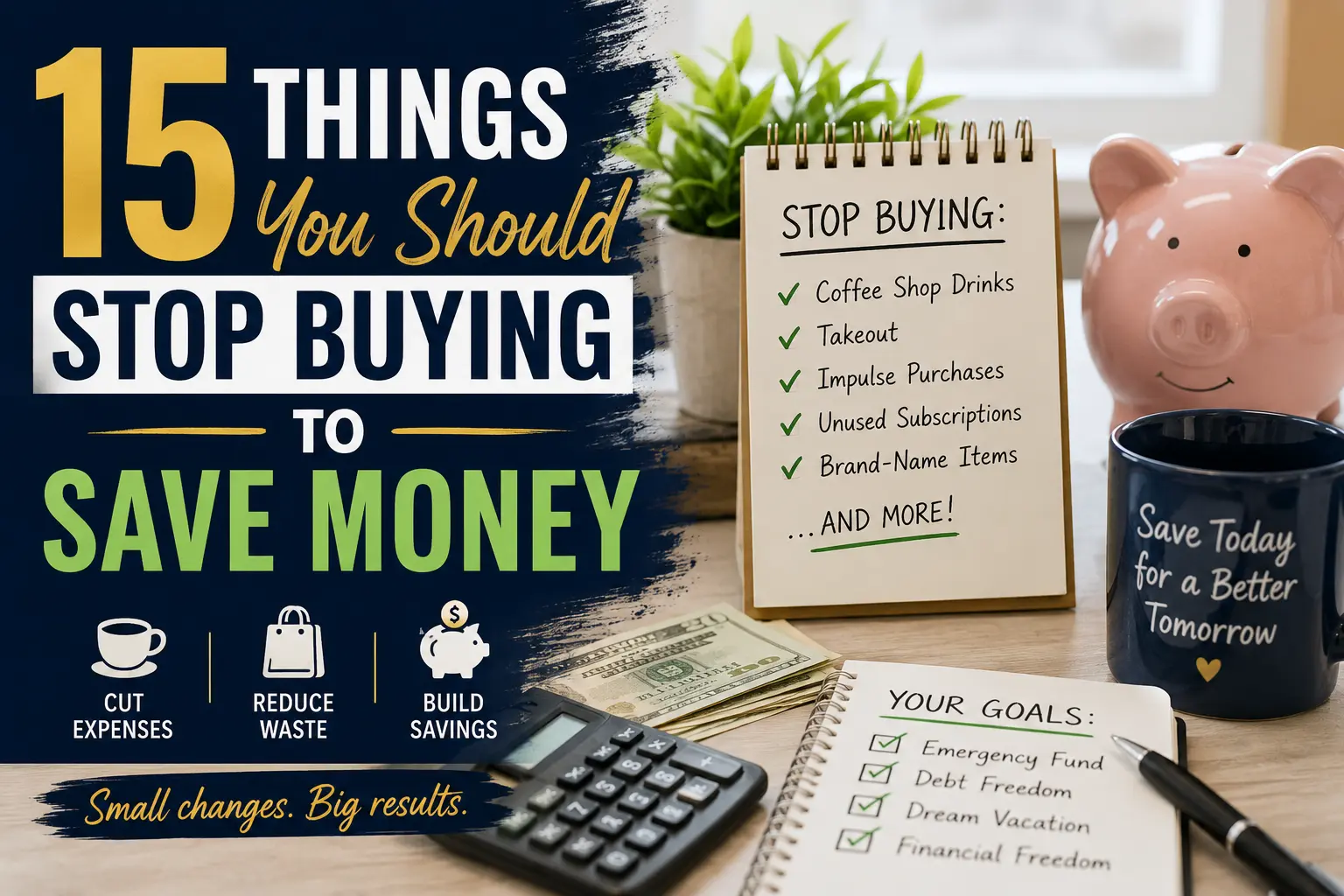
Have you ever reached the end of the month and wondered where all your money went?
You paid your bills.
You didn’t make any major purchases.
You weren’t shopping for expensive electronics or taking luxury vacations.
Yet somehow, your bank account still seems smaller than expected.
For many people, the problem isn’t one large expense—it’s dozens of small purchases that quietly add up over time.
A coffee here.
A food delivery there.
A streaming subscription you forgot about.
An impulse purchase that seemed like a bargain.
Individually, these expenses may not seem significant.
Together, however, they can cost hundreds or even thousands of dollars every year.
The encouraging news is that saving money doesn’t always require a higher salary or drastic lifestyle changes.
Often, the biggest improvements come from making small, intentional decisions about everyday spending.
By identifying purchases that don’t add much value to your life, you can free up money for things that truly matter, such as:
- Building an emergency fund
- Paying off debt
- Saving for a home
- Investing for the future
- Taking a family vacation
- Reducing financial stress
The goal isn’t to stop enjoying life.
It’s to spend your money in ways that support your priorities instead of draining your finances without you noticing.
💡 Action Moment
Before reading further, think about one purchase you make almost every week.
Now ask yourself:
“If I stopped buying this for one year, how much money could I save?”
Instead of guessing, use the LookingAtFinance Savings Goal Calculator to estimate the total. Even a small weekly expense can grow into a surprisingly large amount over twelve months.
Throughout this guide, you’ll find similar Action Moments to help you turn ideas into real financial progress.
In this article, you’ll discover:
- Why small purchases matter more than most people realize
- Fifteen common expenses you may be able to reduce or eliminate
- Practical alternatives that can save money without sacrificing quality of life
- How to build better spending habits
- How to use the LookingAtFinance Savings Goal Calculator to measure your potential savings
By the end, you’ll have a clear plan for cutting unnecessary expenses and keeping more of your hard-earned money.
Why Small Purchases Matter More Than You Think
When people think about saving money, they often focus on big financial decisions.
They consider buying a cheaper car, moving to a less expensive home, or negotiating a higher salary.
While those choices can certainly make a difference, many people overlook something much more common:
You're already investing time in improving your finances, and that's something to be proud of. Before you continue, download our free 7 Days To Financial Clarity™ workbook and start putting these ideas into action.

Small daily purchases.
A few dollars spent here and there rarely feels like a problem.
After all, what’s the harm in buying one coffee or ordering takeout after a busy day?
The problem is that these purchases don’t happen just once.
They become habits.
And habits have a way of quietly shaping our financial future.
The Latte Effect Explained
Financial experts sometimes refer to this idea as the Latte Effect.
The concept is simple.
A small purchase made consistently can add up to a surprisingly large amount over time.
For example, spending:
- $5 every weekday on coffee equals about $25 each week.
- Over one month, that’s approximately $100.
- Over one year, that’s roughly $1,200.
The coffee isn’t the problem.
The habit is.
This principle applies to many everyday expenses—not just coffee.
Small Costs Add Up
Imagine spending just:
- $4 on bottled water
- $10 on an unused subscription
- $15 on impulse purchases
These amounts don’t seem life-changing.
Combined, however, they could represent hundreds or even thousands of dollars each year.
Understanding money is one thing. Seeing your own numbers is where real financial progress begins. Spend one minute using our free Budget Calculator and discover where your money can work harder for you.

That’s money that could instead be used to:
- Build savings
- Pay off debt
- Invest for retirement
- Reach personal financial goals
Small changes repeated consistently often produce bigger results than dramatic changes that are difficult to maintain.
The Psychology of Everyday Spending
One reason these purchases are so easy to overlook is because they usually feel affordable.
Most people don’t hesitate to spend $5.
But they would think carefully before spending $1,500 all at once.
Ironically, many people spend far more than $1,500 throughout the year simply because the purchases happen little by little.
Our brains tend to evaluate purchases individually rather than collectively.
That’s why tracking spending habits is so important.
When you see the annual cost of a recurring expense, it becomes much easier to decide whether it’s worth keeping.
Why Most People Never Notice the Money Leaving
Many everyday expenses happen automatically.
Examples include:
- Monthly subscriptions
- Coffee stops during the morning commute
- Food delivery after work
- Online impulse purchases
- Convenience store snacks
Because these purchases become routine, they rarely feel like financial decisions.
They’re simply part of daily life.
Over time, however, those routines shape your financial future.
Changing just a few of them can create meaningful progress without making you feel deprived.
💡 Action Moment
Choose one recurring expense from your own life.
It might be:
- A daily coffee
- A weekly takeaway meal
- A streaming service you rarely use
- Bottled water
- Frequent online impulse buys
Now enter that amount into the LookingAtFinance Savings Goal Calculator.
Every financial journey is different. Take our free Financial Goal Assessment to discover which area deserves your attention first and receive a clear direction for your next financial milestone.

Adjust the time period to one year and see how much that single habit costs.
Many readers are surprised to discover that one small change could help fund an emergency reserve, reduce debt, or move them closer to an important financial goal.
1. Daily Coffee Shop Purchases
For many people, stopping at a coffee shop has become part of the morning routine.
It’s convenient.
It’s enjoyable.
And for some, it’s the perfect way to start the day.
There’s nothing wrong with buying coffee occasionally.
The problem arises when a small daily habit quietly becomes one of your largest annual discretionary expenses.
A $5 coffee purchased every weekday can add up to more than $1,200 per year.
That same money could be used to:
- Build an emergency fund
- Make extra debt payments
- Start investing
- Save for a vacation
- Cover unexpected expenses
The goal isn’t necessarily to stop buying coffee forever.
Instead, consider reducing how often you buy it or preparing coffee at home several days each week.
Many people discover they enjoy the savings just as much as the coffee.
Homemade Alternatives
Brewing coffee at home often costs a fraction of buying it from a café.
You can still enjoy quality coffee while significantly reducing your monthly spending.
Even replacing just two or three coffee shop visits each week can make a noticeable difference over the course of a year.
💡 Action Moment
Use the LookingAtFinance Savings Goal Calculator to compare the cost of buying coffee five days a week versus two days a week.
The difference may be enough to fund one of your financial goals without making a major lifestyle sacrifice.
Annual Savings Example
Imagine you save just $15 each week by making coffee at home a few extra mornings.
Over one year, that’s approximately $780 in potential savings.
It’s a great reminder that improving your finances often starts with small, consistent choices—not dramatic changes.
2. Bottled Water
Buying bottled water occasionally is perfectly reasonable.
However, for many households, it has become a daily habit that quietly increases monthly spending.
A single bottle may only cost a few dollars.
Purchased every day, that expense can grow much larger than most people realize.
If one person spends approximately $3 per day on bottled water, that’s:
- Around $21 per week
- Approximately $90 per month
- More than $1,000 per year
For a family of four, the annual cost could be several thousand dollars.
Why It Costs More Than You Think
Most people don’t notice bottled water spending because each purchase feels inexpensive.
It often happens:
- At the gas station
- During lunch
- After the gym
- While shopping
- On the way to work
Because these purchases are spread throughout the week, they rarely stand out on a bank statement.
Together, however, they can consume money that could be used for more meaningful financial goals.
Better Alternatives
Reducing bottled water doesn’t necessarily mean giving it up completely.
Consider alternatives such as:
- A reusable water bottle
- A home water filtration system
- Filling reusable bottles before leaving home
These options can significantly reduce costs while also helping the environment.
💡 Action Moment
Open the LookingAtFinance Savings Goal Calculator and enter what you typically spend on bottled water each week.
Now compare that amount over one year.
Would you rather have bottled water—or an extra $1,000 toward your emergency fund, vacation, or debt repayment?
Seeing the numbers often makes the decision much easier.
3. Multiple Streaming Services
Streaming services have made entertainment more convenient than ever.
The challenge is that many people subscribe to several services at the same time.
One subscription might cost:
- $10
- $15
- $20
Individually, these amounts don’t seem significant.
Combined, however, they can become one of the largest recurring entertainment expenses in a household budget.
Entertainment Budget Review
Take a moment to list every subscription you currently pay for.
Examples include:
- Movie streaming
- Television streaming
- Music streaming
- Sports packages
- Premium video platforms
Many people are surprised to discover they have forgotten about one or two subscriptions they rarely use.
Choosing What You Actually Watch
Ask yourself:
- Which service do I use every week?
- Which service have I not opened in months?
- Could I rotate subscriptions instead of paying for all of them year-round?
Cancelling one unused subscription doesn’t mean giving up entertainment.
It simply means paying for what you actually enjoy.
💡 Action Moment
This is a perfect opportunity to use the LookingAtFinance Budget Calculator.
Enter your monthly subscription expenses into the calculator and see exactly how much of your monthly budget is going toward entertainment.
Many readers discover that cancelling just one unused subscription creates room for savings without affecting their lifestyle.
Afterward, enter the cancelled subscription amount into the Savings Goal Calculator to see what that decision could be worth after one year.
4. Impulse Online Shopping
Online shopping has never been easier.
With just a few taps or clicks, almost anything can be delivered directly to your door.
Convenience is wonderful.
Impulse buying is not.
Many purchases happen because something looks interesting—not because it’s actually needed.
One-Click Spending
Retailers are experts at making buying feel effortless.
Features such as:
- Saved payment methods
- One-click ordering
- Limited-time offers
- Flash sales
- Free shipping thresholds
encourage quick decisions.
Unfortunately, quick decisions often become expensive habits.
Waiting 24 Hours Before Buying
One of the simplest money-saving techniques is the 24-Hour Rule.
Instead of purchasing immediately:
- Add the item to your cart.
- Leave it there.
- Return the next day.
Often, you’ll realize you don’t actually want or need the item.
This simple pause helps separate emotional purchases from intentional ones.
💡 Action Moment
Open your banking app or recent online shopping history.
Estimate how much you’ve spent on impulse purchases over the past month.
Now enter that amount into the LookingAtFinance Budget Calculator.
Seeing these purchases grouped into one category often reveals spending patterns that aren’t obvious day to day.
Then use the Savings Goal Calculator to see how much you could save over the next twelve months by cutting those purchases in half.
Even reducing—not eliminating—impulse spending can make a meaningful difference.
5. Extended Warranties
Extended warranties are commonly offered when purchasing electronics, appliances, and other expensive items.
Sometimes they provide valuable protection.
Other times, they simply increase the total purchase price without providing much additional benefit.
When They’re Worth It—and When They’re Not
Before purchasing an extended warranty, ask yourself:
- Does the product already include a manufacturer’s warranty?
- Will my credit card provide additional purchase protection?
- Is repairing the item likely to cost less than the warranty itself?
- Am I buying peace of mind or something I genuinely need?
There’s no universal answer.
Some warranties are worthwhile.
Others may never be used.
Making an informed decision can help avoid unnecessary spending.
💡 Action Moment
If you frequently purchase warranties, review your receipts or online purchase history.
Estimate how much you’ve spent on warranties over the past year.
Use the LookingAtFinance Savings Goal Calculator to see what those dollars could become if redirected toward your financial goals instead.
Sometimes self-insuring by building a healthy emergency fund can provide greater long-term flexibility than paying for multiple extended warranties.
A Quick Check Before Moving On
So far we’ve looked at five common spending habits:
✔ Daily coffee
✔ Bottled water
✔ Multiple streaming subscriptions
✔ Impulse online shopping
✔ Extended warranties
Individually, none of these purchases may seem financially significant.
Combined, however, they can represent thousands of dollars every year.
💡 Mini Financial Challenge
Before continuing, open the LookingAtFinance Budget Calculator and estimate how much you currently spend each month on these five categories.
Then use the Savings Goal Calculator to project what reducing those expenses by just 25% could mean over the next year.
Many readers are surprised to discover that they don’t need to eliminate everything—they simply need to become more intentional with their spending.
6. Brand-Name Products
Many shoppers automatically reach for well-known brands without comparing alternatives.
Sometimes that’s the right choice.
In many cases, however, generic or store-brand products offer similar quality at a much lower price.
Choosing a less expensive option doesn’t mean sacrificing quality.
It simply means making your money work harder.
Generic Alternatives
Walk through almost any grocery store and you’ll find store-brand versions of:
- Cereal
- Pasta
- Rice
- Cleaning products
- Paper products
- Over-the-counter medications
- Frozen foods
Many of these products are made to similar quality standards as their brand-name counterparts.
While some branded products may be worth the extra cost, others offer little difference beyond the packaging.
Real-Life Grocery Savings
Imagine a family that saves just $20 each week by choosing generic products for a few everyday items.
That equals approximately:
- $80 per month
- Nearly $1,040 per year
Without changing what they eat or how much they buy, they simply become more intentional about the brands they choose.
💡 Action Moment
The next time you shop, compare the price of five brand-name products with their store-brand alternatives.
Then enter your estimated weekly savings into the LookingAtFinance Savings Goal Calculator.
Small grocery decisions made consistently can produce surprisingly large annual savings.
7. Fast Food Several Times a Week
Life gets busy.
After a long day at work, grabbing takeout often feels easier than cooking.
Occasional convenience isn’t the problem.
The problem begins when fast food becomes the default instead of the exception.
Meal Planning Instead
Preparing meals at home doesn’t require becoming a professional chef.
Simple planning can reduce both stress and spending.
Consider:
- Preparing lunches the night before
- Cooking larger meals with leftovers
- Planning dinners for the week
- Keeping quick, healthy options at home
These habits can save both time and money.
Monthly Savings Example
Suppose you spend:
$15 on lunch four times each week.
That’s approximately:
- $60 per week
- Around $240 per month
- Nearly $2,900 per year
Even replacing two restaurant meals each week with homemade meals could save well over $1,000 annually.
💡 Action Moment
Use the LookingAtFinance Budget Calculator to estimate how much your household spends on restaurant meals, takeout, and food delivery each month.
Then use the Savings Goal Calculator to see how much you could save by reducing that amount by just 20%.
Notice that the goal isn’t to eliminate dining out—it’s to make it an intentional treat instead of a routine habit.
8. Lottery Tickets
Many people buy lottery tickets hoping for a life-changing jackpot.
While dreaming can be fun, it’s important to remember that the odds of winning major prizes are extremely small.
The money spent on lottery tickets is guaranteed to leave your wallet.
Winning is not guaranteed.
Small Chances, Big Costs
Buying a few tickets occasionally may not have much impact.
Buying them every week for years can become surprisingly expensive.
For example:
- $10 per week
- Around $40 per month
- More than $500 per year
Over ten years, that’s more than $5,000, without considering any investment growth those dollars could have earned.
Redirecting That Money Toward Savings
Imagine directing that same weekly amount into your savings account instead.
Over time, you build financial security instead of relying on luck.
While saving money may not be as exciting as imagining a jackpot, it offers something far more valuable:
Progress you can control.
💡 Action Moment
Enter your average lottery spending into the LookingAtFinance Savings Goal Calculator.
Now imagine redirecting that money toward:
- An emergency fund
- Paying off debt
- A vacation
- A home deposit
- Retirement savings
Sometimes the most rewarding investment is simply investing in yourself.
9. Unused Gym Memberships
Joining a gym often begins with great intentions.
You feel motivated.
You imagine healthier habits.
You commit to a monthly membership.
The challenge comes when life gets busy and the membership continues to renew—even though you rarely go.
Pay for What You Actually Use
Ask yourself:
- How often do I actually visit the gym?
- Am I getting value from this membership?
- Would another option better suit my lifestyle?
Alternatives may include:
- Walking
- Home workouts
- Community recreation centres
- Pay-per-visit fitness classes
The goal isn’t to stop exercising.
It’s to make sure you’re paying for something you actually use.
💡 Action Moment
Review your bank statement and identify any memberships or subscriptions you haven’t used in the past month.
Enter those monthly costs into the LookingAtFinance Budget Calculator.
Then use the Savings Goal Calculator to see what cancelling just one unused membership could save over the next year.
10. Expensive Bank Fees
Many people accept monthly banking fees without ever questioning them.
Because they’re automatically deducted, they often go unnoticed.
Over time, however, these fees can quietly reduce your savings.
Monthly Charges That Add Up
Common banking costs include:
- Monthly account fees
- ATM fees
- Overdraft charges
- Paper statement fees
- Transaction fees
Individually, they may seem minor.
Collectively, they can become a recurring drain on your finances.
How to Reduce Banking Costs
Consider reviewing your banking options.
You may be able to:
- Switch to a lower-fee account
- Maintain the required minimum balance to avoid monthly charges
- Use in-network ATMs
- Enable account alerts to prevent overdrafts
- Take advantage of digital statements if they’re free
Even modest reductions in banking fees can create long-term savings.
💡 Action Moment
Open the LookingAtFinance Budget Calculator and add up every banking fee you’ve paid over the past month.
Many readers are surprised by the total.
Next, enter that monthly amount into the Savings Goal Calculator to discover how much those fees could cost over one year—or how much you could save by reducing or eliminating them.
Progress Check
You’re now halfway through this guide.
So far we’ve covered ten common spending habits that quietly reduce your ability to save money:
✔ Daily coffee shop visits
✔ Bottled water
✔ Multiple streaming subscriptions
✔ Impulse online shopping
✔ Extended warranties
✔ Brand-name products
✔ Frequent fast food
✔ Lottery tickets
✔ Unused gym memberships
✔ Expensive bank fees
💡 Midway Financial Challenge
Take ten minutes to use the LookingAtFinance Budget Calculator and estimate how much you currently spend each month across these ten categories.
Then enter the amount you believe you could realistically reduce into the Savings Goal Calculator.
You don’t have to cut every expense completely.
Even reducing unnecessary spending by 10% to 20% could free up hundreds—or even thousands—of dollars each year.
The goal isn’t perfection.
The goal is progress.
11. Trendy Gadgets You Don’t Need
Technology is constantly evolving.
Every year, companies release new smartphones, smartwatches, headphones, tablets, and other gadgets promising faster performance or exciting new features.
While innovation is exciting, upgrading every time a new product is released can become an expensive habit.
Many devices still work perfectly well long after a newer version becomes available.
The question isn’t whether the latest gadget is impressive.
The question is whether it genuinely improves your life enough to justify the cost.
Wants vs. Needs
Before making a technology purchase, ask yourself:
- Does my current device still work well?
- Am I replacing it because I need to or because I want to?
- Will this purchase improve my daily life in a meaningful way?
- Could I wait another six months or a year?
Delaying upgrades often allows prices to drop while helping you avoid impulse spending.
Avoiding Lifestyle Inflation
As income increases, many people naturally begin spending more.
This is known as lifestyle inflation.
Instead of using additional income to build wealth, every raise is quickly absorbed by newer products and more expensive habits.
Choosing to keep a perfectly functional device for another year can free up hundreds of dollars that could be invested or saved instead.
💡 Action Moment
Think about the last gadget you purchased.
Could your previous device have lasted another year?
Enter the purchase price into the LookingAtFinance Savings Goal Calculator and imagine investing or saving that amount instead.
Sometimes delaying one purchase creates enough room in your budget to reach a financial goal much sooner.
12. Excessive Food Delivery
Food delivery apps have made ordering meals incredibly convenient.
Unfortunately, convenience often comes with additional costs.
Besides the meal itself, many orders include:
- Delivery fees
- Service fees
- Small order fees
- Driver tips
These extra charges can significantly increase the total cost.
Convenience vs. Cost
Ordering dinner once in a while can be a nice treat.
Ordering several times each week can quietly consume a large portion of your monthly budget.
For example, spending an extra $12 in delivery-related fees three times each week adds up to:
- Around $36 per week
- Approximately $144 per month
- More than $1,700 per year
That’s before considering the cost of the food itself.
Meal Prep Ideas
Reducing delivery doesn’t mean eating boring meals.
Simple strategies include:
- Preparing meals in advance
- Cooking larger portions with leftovers
- Keeping quick freezer meals available
- Planning meals before grocery shopping
A little preparation can save both time and money.
💡 Action Moment
Use the LookingAtFinance Budget Calculator to estimate how much you spend on food delivery in an average month.
Then use the Savings Goal Calculator to see how much you could save by cutting just one delivery order each week.
Many readers discover they don’t need to eliminate food delivery—they simply need to use it more intentionally.
13. Clothes You Rarely Wear
Many wardrobes contain clothing that’s been worn only once—or never at all.
Sales, changing trends, and impulse purchases often lead us to buy clothing we don’t truly need.
Instead of asking:
“Is this a good deal?”
Ask:
“Will I actually wear this?”
Building a Smarter Wardrobe
A smaller wardrobe filled with versatile, frequently worn items often provides more value than a closet full of rarely used clothing.
Before buying something new, consider:
- Can I wear it with several outfits?
- Will I still like it next year?
- Am I replacing something I need, or simply adding more?
Buying fewer, higher-quality items often saves money over time.
Cost Per Wear Explained
A useful way to evaluate clothing purchases is by calculating the cost per wear.
For example:
- A $100 jacket worn 100 times costs about $1 per wear.
- A $40 shirt worn only twice costs $20 per wear.
The cheapest purchase isn’t always the one with the lowest price tag.
It’s the one that provides the most value over time.
💡 Action Moment
Review your last few clothing purchases.
Estimate how many times you’ve actually worn each item.
Then enter the total amount spent on impulse clothing purchases into the Savings Goal Calculator to see what redirecting those dollars could mean over the next year.
14. Buying Items on Sale Just Because They’re Discounted
Sales can be tempting.
Seeing “50% OFF” or “Limited-Time Offer” creates a sense of urgency.
Retailers understand this psychology very well.
The truth is simple:
You don’t save money by buying something you never needed.
You simply spend less than the original price.
Saving vs. Spending
Before making any purchase, ask yourself one simple question:
“Would I buy this if it were full price?”
If the answer is no, the discount may not actually represent savings.
It may simply encourage unnecessary spending.
The 30-Day Rule for Bigger Purchases
For larger non-essential purchases, consider waiting 30 days before buying.
This waiting period helps separate emotional decisions from thoughtful ones.
Many people discover that the excitement fades and the purchase no longer feels necessary.
💡 Action Moment
Think about the last item you bought because it was on sale.
Now imagine you had skipped that purchase.
Enter the amount into the LookingAtFinance Savings Goal Calculator and see how much that decision could be worth after one year.
Small decisions repeated consistently create meaningful financial results.
15. Paying Interest Because of Credit Card Debt
This may be the most expensive item on the entire list.
The surprising part?
You never actually buy it.
You pay for it through interest.
Credit card interest can quietly consume hundreds—or even thousands—of dollars every year.
Unlike groceries or clothing, interest doesn’t provide anything you can use or enjoy.
It’s simply the cost of carrying debt.
The Hidden Cost of Interest
Suppose you carry a balance from month to month.
Interest charges continue to accumulate.
The longer the balance remains unpaid, the more expensive it becomes.
Over time, interest can cost far more than the original purchase itself.
Why Interest Prevents Wealth Building
Every dollar spent on interest is a dollar that cannot be used to:
- Build savings
- Invest for retirement
- Pay down other debt
- Reach financial goals
Reducing high-interest debt often provides one of the fastest ways to improve your overall financial health.
💡 Action Moment
If you’re carrying credit card debt, try using the LookingAtFinance Debt Payoff Calculator to estimate how quickly you could become debt-free by making extra monthly payments.
Then use the Savings Goal Calculator to see what you could save once those interest payments are eliminated.
Many readers are surprised to discover how quickly small additional payments can shorten their repayment timeline.
Bringing It All Together
You’ve now explored fifteen common spending habits that quietly reduce your ability to save money.
The encouraging news is that you don’t need to eliminate every one of them.
Instead, focus on identifying the habits that provide the least value while costing the most over time.
💡 Financial Progress Challenge
Take a few minutes to:
- Use the Budget Calculator to identify your biggest monthly spending leaks.
- Choose three expenses you can realistically reduce.
- Enter those savings into the Savings Goal Calculator.
- If debt is preventing you from saving, use the Debt Payoff Calculator to create a plan for becoming debt-free faster.
Small improvements made consistently often produce extraordinary results over time.
Create Your Own 30-Day Savings Challenge
Reading about saving money is a great first step.
Taking action is what creates lasting change.
Instead of trying to eliminate every unnecessary expense overnight, challenge yourself to make a few manageable improvements over the next 30 days.
Small, consistent actions are far easier to maintain than dramatic lifestyle changes.
Step 1: Identify Three Expenses to Reduce
Look back through the fifteen spending habits discussed in this guide.
Choose three that apply to your lifestyle.
For example:
- Brew coffee at home three days each week.
- Cancel one unused streaming subscription.
- Reduce food delivery from three times a week to once a week.
Pick changes that feel realistic rather than overwhelming.
Remember, the goal is progress—not perfection.
Step 2: Set a Savings Goal
Every successful financial plan begins with a clear objective.
Ask yourself:
- Am I building an emergency fund?
- Saving for a vacation?
- Paying off debt?
- Buying my first home?
- Starting to invest?
Having a specific purpose makes it much easier to stay motivated.
💡 Action Moment
Open the LookingAtFinance Savings Goal Calculator and enter the amount you expect to save each month from your three spending changes.
Then calculate how long it will take to reach your savings goal.
Seeing your progress on paper turns an idea into a realistic plan.
Step 3: Review Your Budget Every Week
One of the easiest ways to lose control of your spending is to stop paying attention.
Set aside just 10 to 15 minutes each week to review your finances.
Ask yourself:
- Did I stay within my budget?
- Which expenses surprised me?
- What can I improve next week?
Small weekly adjustments are much easier than trying to fix an entire month of overspending.
💡 Action Moment
Use the LookingAtFinance Budget Calculator every week to review your spending categories.
You may discover new opportunities to save without sacrificing the things that matter most.
Step 4: Celebrate Small Wins
Saving your first $100 may not seem life-changing.
Neither does your first $500.
But those small milestones build confidence.
Financial success rarely happens overnight.
It’s built through hundreds of smart decisions repeated consistently over time.
Celebrate your progress along the way.
Recognizing your achievements helps you stay motivated for the journey ahead.
Common Mistakes People Make When Trying to Save Money
Saving money sounds simple.
In practice, many people struggle because they approach it in ways that are difficult to maintain.
Avoiding these common mistakes can make your savings plan much more successful.
Trying to Change Everything at Once
It’s tempting to overhaul your entire budget after reading an article like this.
Unfortunately, drastic changes often lead to frustration and burnout.
Instead, focus on one or two habits at a time.
Once those changes become routine, move on to the next improvement.
Having No Clear Savings Goal
Saving “just because” rarely provides lasting motivation.
People are far more likely to stick with a savings plan when they know exactly what they’re working toward.
Whether your goal is a new home, financial security, retirement, or becoming debt-free, keeping that goal in mind makes everyday spending decisions easier.
Ignoring Small Purchases
Many people only pay attention to large expenses.
However, recurring small purchases often have the biggest long-term impact.
Tracking everyday spending helps reveal opportunities that are easy to overlook.
Forgetting to Review Progress
Saving money isn’t a one-time decision.
It’s an ongoing habit.
Review your budget regularly.
Adjust when necessary.
Celebrate improvements.
The more often you monitor your finances, the easier it becomes to stay on track.
Giving Up After One Bad Month
Everyone experiences unexpected expenses.
A car repair.
Medical bills.
A family emergency.
One difficult month doesn’t erase the progress you’ve already made.
The important thing is to restart as soon as possible instead of giving up entirely.
Financial success isn’t about being perfect.
It’s about remaining consistent over time.
Real-Life Example
How Small Changes Created Big Results
Meet Sarah, a 32-year-old office administrator.
She often felt frustrated because she couldn’t understand why she struggled to save money despite working full-time.
After reviewing her monthly spending, she noticed several habits that were quietly draining her income:
- Buying coffee every weekday
- Ordering food delivery several times a week
- Paying for two streaming services she rarely used
- Frequently purchasing clothing during sales
- Buying bottled water almost every day
None of these expenses seemed significant on their own.
Together, however, they represented hundreds of dollars every month.
Rather than eliminating everything, Sarah made a few realistic changes.
She brewed coffee at home most mornings.
She packed lunch three days a week.
She cancelled one streaming subscription.
She carried a reusable water bottle.
She paused before buying clothing she didn’t truly need.
Each change felt small.
Combined, they created meaningful savings.
Using the LookingAtFinance Budget Calculator, Sarah tracked where her money was going each month.
She then entered her monthly savings into the Savings Goal Calculator and realized she could build a solid emergency fund much sooner than she had imagined.
The lesson isn’t that Sarah became perfect.
The lesson is that small, intentional choices added up to significant financial progress.
Beginner Savings Checklist
Before finishing this guide, review this simple checklist.
✔ Identify three unnecessary expenses you can reduce.
✔ Create a realistic monthly savings goal.
✔ Track your spending using the Budget Calculator.
✔ Measure your progress with the Savings Goal Calculator.
✔ Review your budget every week.
✔ Celebrate each savings milestone.
✔ Continue improving one habit at a time.
✔ Remember that consistency matters more than perfection.
Final Thoughts
Saving money isn’t about depriving yourself of everything you enjoy.
It’s about making thoughtful choices that align with your long-term goals.
Every dollar you don’t spend unnecessarily becomes a dollar that can work toward something more meaningful.
Whether that’s building an emergency fund, paying off debt, investing for retirement, or simply reducing financial stress, the journey begins with small decisions made consistently.
You don’t need to stop buying everything on this list.
You simply need to recognize which expenses provide the least value while costing the most over time.
Start with one habit.
Then another.
Then another.
Months from now, you’ll likely look back and realize that meaningful financial progress didn’t come from one huge decision.
It came from dozens of small, intentional choices repeated day after day.
That’s how lasting financial freedom is built.
Frequently Asked Questions
What should I stop buying first to save money?
Start with expenses that you won’t miss very much, such as unused subscriptions, frequent food delivery, bottled water, or daily coffee shop visits. Small changes are often easier to maintain than drastic cuts.
How much money can I realistically save?
The answer depends on your current spending habits. Use the LookingAtFinance Savings Goal Calculator to estimate how much reducing everyday expenses could save over a month or a year.
Should I stop eating out completely?
Not necessarily. The goal is to spend intentionally, not eliminate enjoyment. Reducing restaurant meals by even one or two each week can create meaningful savings.
Why should I track my spending?
Tracking your spending helps you identify habits that may be preventing you from reaching your financial goals. The LookingAtFinance Budget Calculator makes it easier to see exactly where your money is going.
Is buying generic products really worth it?
Often, yes. Many store-brand products provide similar quality at a lower cost. Choosing generic alternatives for everyday items can result in significant savings over time.
What’s the easiest way to stop impulse buying?
Try using the 24-hour rule for smaller purchases and the 30-day rule for larger non-essential purchases. Giving yourself time to think often reduces emotional spending.
Can small changes really make a difference?
Absolutely. Financial improvement usually comes from consistent habits rather than dramatic one-time changes. Saving a few dollars each day can add up to hundreds or even thousands of dollars over the course of a year.
Where should I begin?
Start by reviewing your monthly spending with the LookingAtFinance Budget Calculator. Then use the Savings Goal Calculator to create a realistic plan based on the expenses you decide to reduce. Taking one small step today is often the beginning of lasting financial success.
You have invested time learning today. Now take the next step by downloading our free 7 Days To Financial Clarity™ workbook and begin building a stronger financial future.
